Sicilian Volcano Disrupts Summer Travel as Ash Cloud Reaches North Africa
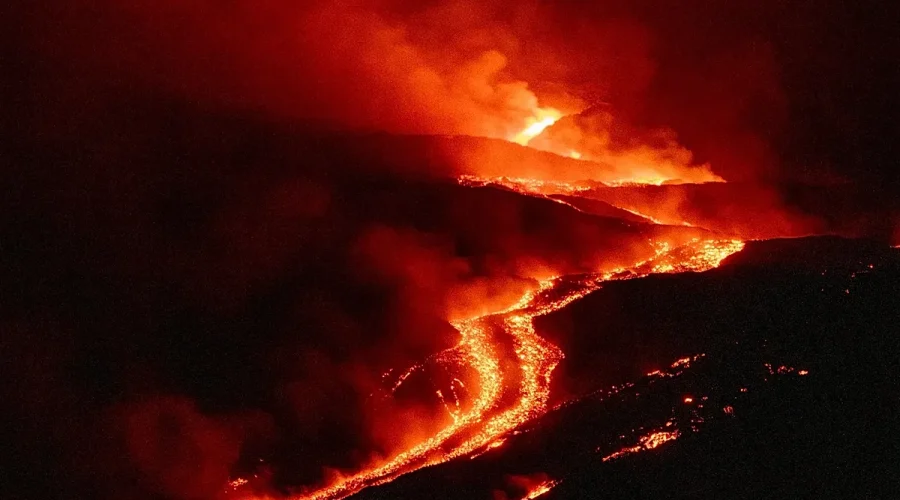
Usagevpn.com – The ongoing eruption of Mount Etna has created significant challenges for travelers across southern Europe, with the volcano now in its sixth consecutive day of activity. Located on the eastern coast of Sicily, this powerful natural force has brought air travel to a standstill during what is typically the busiest period for tourism on the Mediterranean island. The situation has grown increasingly complex as ash clouds have drifted beyond Italian territory, affecting destinations as far away as Libya.
Wednesday marked another difficult day for Catania–Fontanarossa Airport, which suspended all flight operations until 6 pm local time. The closure comes amid a peak summer season when the island welcomes millions of visitors annually. Flight tracking data reveals that approximately 55 outbound journeys were cancelled on Wednesday alone, adding to the substantial disruption already underway. Since the eruption began, roughly 388 departures have been scrapped entirely, while dozens more flights have been rescheduled or rerouted to alternative airports across the region.
Regional Airports Feel the Impact
The volcanic activity has not been confined to Catania. Several neighboring airports have experienced their own challenges. Comiso, located in southern Sicily, temporarily halted all operations for several hours on Wednesday morning, remaining closed until 10 am as ash settled over the area. Once conditions improved, the airport gradually restored both arrivals and departures. Trapani and Palermo have also absorbed diverted flights, though specific numbers for these locations remain less documented.
Mount Etna holds the distinction of being Europe’s most active volcano, positioned approximately 220 kilometers north of Malta. This geographic proximity means that even relatively minor eruptions can have outsized effects on Maltese aviation. Aircraft arriving at and departing from Malta have been forced to modify their flight paths, creating additional delays and fuel consumption for airlines operating in the region.
Local Celebrations Disrupted
The volcanic interference extends beyond transportation networks into community life. The Socjeta Muzikali La Stella Levantina of Attard made the difficult decision to postpone a fireworks display originally scheduled for Tuesday evening. The event was part of the Feast of Santa Marija, a significant local celebration. Organizers explained that the fireworks launch site sits near the runway approach path, and after consulting with aviation authorities, they chose to delay the display until airport restrictions ease.
This is not the first time volcanic activity has disrupted Maltese celebrations. The combination of ash clouds and operational restrictions creates a challenging environment for outdoor events that depend on clear skies and predictable weather patterns.
Ash Cloud Tracking and Regional Effects
The Volcanic Ash Advisory Centre in Toulouse has been monitoring the situation closely. Their latest bulletin, issued Tuesday evening, indicates that the ash cloud continues its southward and southwestward drift. While the densest concentration of volcanic particles remains over Sicily, lighter levels have been detected stretching from eastern Malta all the way to northern Libya. This wide-reaching dispersion demonstrates the powerful atmospheric currents at work during major eruptions.
The repeated closures of Catania airport in recent weeks have sparked renewed discussion about infrastructure planning. The airport’s location, just a few kilometers from the volcano, has proven both convenient for passengers and vulnerable to natural forces. During the height of summer, when tourist numbers peak, these disruptions carry significant economic consequences for local businesses and the broader tourism sector.
Political Debate Reignited
Nello Musumeci, serving as Minister for Civil Protection and Maritime Policies, has entered the conversation with strong opinions about the root cause of the problem. He emphasized that the recent cancellations, delays, and serious disruption affecting thousands of citizens and tourists at the height of the summer season highlight a long-standing issue.
“What has been happening in recent days at the airports of Catania and Comiso, with cancellations, delays and serious disruption for thousands of citizens and tourists at the height of the summer season, brings back to the fore a problem that Sicily has known about for a long time,” the minister stated.
Musumeci recalled his earlier efforts to address this vulnerability. During his tenure as president of the Province of Catania, he championed a comprehensive plan for relocating the airport. The proposal envisioned constructing a new facility on the plain between Catania and Enna, designed to serve seven of Sicily’s nine provinces. This ambitious project received a preliminary study but ultimately failed to secure sufficient political and financial backing.
“As far back as 1999, as president of the Province of Catania, I had pointed out the limitations of the Fontanarossa airport and its particular vulnerability linked to its proximity to Etna,” he explained. “We did not stop at raising the issue: we included in the provincial spatial plan a proposal to relocate the airport. We also commissioned a preliminary study for a new airport on the plain between Catania and Enna, designed to serve seven of the island’s nine provinces.”
The minister noted that his efforts to advance the relocation plan encountered resistance from multiple quarters. When he later served as president of the region, he found himself facing opposition from the airport operator and what he characterized as indifference from local authorities.
“That idea of mine did not receive any backing,” Musumeci added, “explaining that he returned to the issue when he was president of the region, only to encounter opposition from the airport operator and indifference from local authorities.”
The minister’s conclusion remains clear: the current crisis demonstrates that the fundamental problem lies not with the volcano’s location, but with the airport’s placement. As summer continues and volcanic activity persists, the debate over Sicily’s aviation infrastructure shows no signs of settling.
Related Reading
Frequently Asked Questions
What is Mount Etna eruption?
Mount Etna eruption is the main topic of this guide. The article explains the context, practical details, and next steps readers should understand.
Why does Mount Etna eruption matter?
Mount Etna eruption matters because readers are looking for a useful answer, not just a short summary. Good content should match search intent and help them decide what to do next.