Kazakhstan’s Manufacturing Renaissance: A New Era of Industrial Growth
Usagevpn.com – Kazakhstan is experiencing a remarkable transformation in its industrial landscape, positioning itself as a premier destination for global manufacturing investment. The Central Asian nation has successfully leveraged its strategic location and policy reforms to attract substantial capital into its manufacturing and metallurgy sectors. This momentum builds upon last year’s historic investment levels, signaling a sustained shift toward economic diversification beyond traditional resource extraction.
The scale of this industrial expansion becomes clear when examining recent investment figures. Kazakhstan secured approximately €16.5 billion in greenfield investment, representing nearly 90 percent of all such capital flowing into North and Central Asia. This remarkable concentration of foreign direct investment underscores the country’s growing appeal to international manufacturers seeking to establish new production facilities in the region.
Economic Indicators Point to Sustained Growth
Recent economic data reveals robust performance across multiple sectors. During the first five months of 2026, Kazakhstan’s non-oil economy expanded by more than 5 percent, demonstrating that growth is not solely dependent on energy exports. This diversification trend aligns with government objectives to reduce vulnerability to commodity price fluctuations.
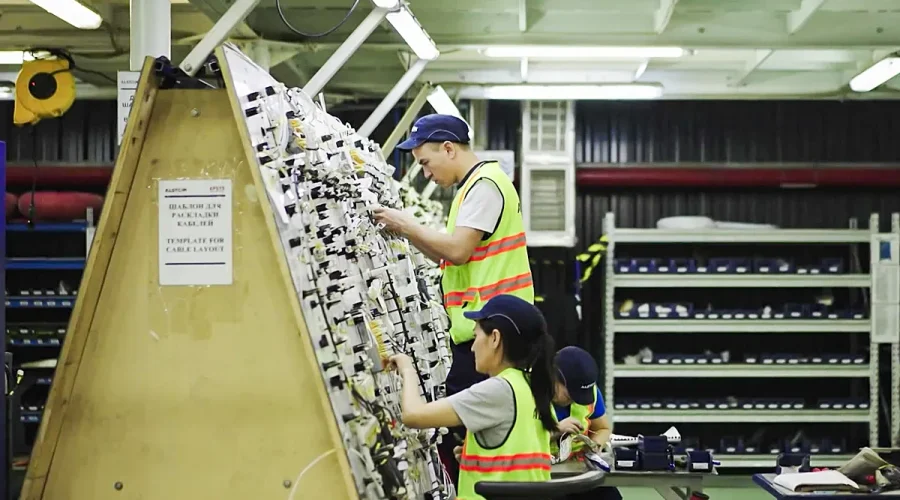
Perhaps most significantly, manufacturing has narrowly surpassed mining as the dominant industrial sector. According to the Ministry of Industry and Construction, manufacturing accounted for 46.5 percent of total industrial output during this period. This milestone represents a structural shift in Kazakhstan’s economic composition, moving away from its historical reliance on extractive industries.
Total industrial output reached €52 billion in the first five months, marking a 2.5 percent increase compared to the same period last year. This growth trajectory reflects both improved efficiency at existing operations and the successful commissioning of new facilities.
Record Oil Production Accompanies Industrial Expansion
It is important to note that this manufacturing surge has not occurred at the expense of Kazakhstan’s oil sector. On the contrary, the country achieved record oil production of 99.5 million tonnes last year, setting an all-time high. This dual achievement demonstrates that Kazakhstan can simultaneously expand its traditional energy sector while building new industrial capabilities.
Azamat Panbayev, Chairman of the Industry committee at the Ministry of Industry and Construction, emphasized that manufacturing growth stems from multiple factors. He attributed the expansion to stronger performance at established enterprises alongside the launch of new production facilities distributed across the country.
A Robust Project Pipeline Drives Future Growth
Kazakhstan’s industrial ambitions are backed by an extensive project pipeline. This year alone, the government plans to implement more than 200 industrial projects with a combined value exceeding €2.5 billion. These initiatives span metallurgy, machinery manufacturing, construction materials, chemical production, and the food industry.
Progress is already visible. Seventy-seven investment projects worth approximately €526 million have been commissioned in the first half of the year. Looking beyond immediate plans, three major projects with a combined investment value of more than €11 billion represent significant long-term commitments.
Two of these flagship projects were completed last year: automotive manufacturing plants in Almaty and Kostanay. Together, these facilities possess an annual production capacity of 190,000 vehicles. This year, construction continues on expanding the country’s largest steelmaker located in the Karaganda region. Additionally, new production facilities for gold, copper, potash, and mineral fertilizers are scheduled for launch in western Kazakhstan.
Legal Framework and Financial Incentives Attract Capital
Kazakhstan’s investment appeal extends beyond physical infrastructure. The Astana International Financial Centre operates under English common law, providing international investors with familiar legal protections and dispute resolution mechanisms. Companies benefit from corporate income tax incentives and a comprehensive range of additional tax preferences.
The state supports investment through long-term, affordable financing and financial guarantees administered by the national investment holding Baiterek. This institution helps promote Kazakh products both within the domestic market and in international trade networks.
Special Economic Zones: A Hub for Manufacturing
Special Economic Zones have emerged as critical instruments for attracting higher-value manufacturing. More than 43 percent of industrial land within Kazakhstan’s SEZs is currently occupied by investment projects, with the total number of SEZ projects reaching 1,159. The government anticipates continued investment in infrastructure to increase occupancy rates across these zones.
Panbayev revealed that Kazakhstan is currently raising over €1.1 billion from the Islamic Development Bank specifically to provide the infrastructure necessary for these zones to operate effectively. This funding will enable investors to implement projects without encountering unnecessary obstacles.
Projects within these zones benefit from a comprehensive package of infrastructure support, tax incentives, and customs advantages. The country operates 18 Special Economic Zones and 67 industrial sites. Adilet Bektembayev, Deputy Chairman of QazIndustry, the organization responsible for developing Kazakhstan’s manufacturing sector, noted that the government has already invested approximately €1.1 billion into infrastructure on these sites, attracting over €14 billion worth of projects.
Streamlined Processes for International Investors
New legislation is expected to further enhance Kazakhstan’s attractiveness to manufacturers. One of the principal changes introduces a one-stop-shop system for site applications. Investors will be able to submit applications and supporting documents electronically, with the system automatically distributing them to the relevant government authorities through a centralized platform.
Officials emphasize that stable legislation and continued investment incentives will form the foundation for future growth. Panbayev stated that manufacturing remains a strategic priority for the government, which will continue to promote manufacturing and other non-resource sectors of the economy.
As global supply chains undergo restructuring, Kazakhstan’s combination of strategic location, legal familiarity, financial incentives, and expanding infrastructure positions it to capture a growing share of international manufacturing investment. The country’s ability to balance traditional energy production with industrial diversification may serve as a model for other resource-rich nations seeking economic transformation.
Related Reading
Frequently Asked Questions
What is How is this country attracting manufacturing?
How is this country attracting manufacturing is the main topic of this guide. The article explains the context, practical details, and next steps readers should understand.
Why does How is this country attracting manufacturing matter?
How is this country attracting manufacturing matters because readers are looking for a useful answer, not just a short summary. Good content should match search intent and help them decide what to do next.