Italy Reinstates Border Controls Following Ceuta Migration Surge
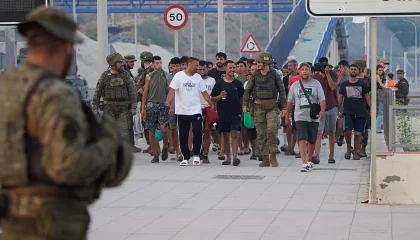
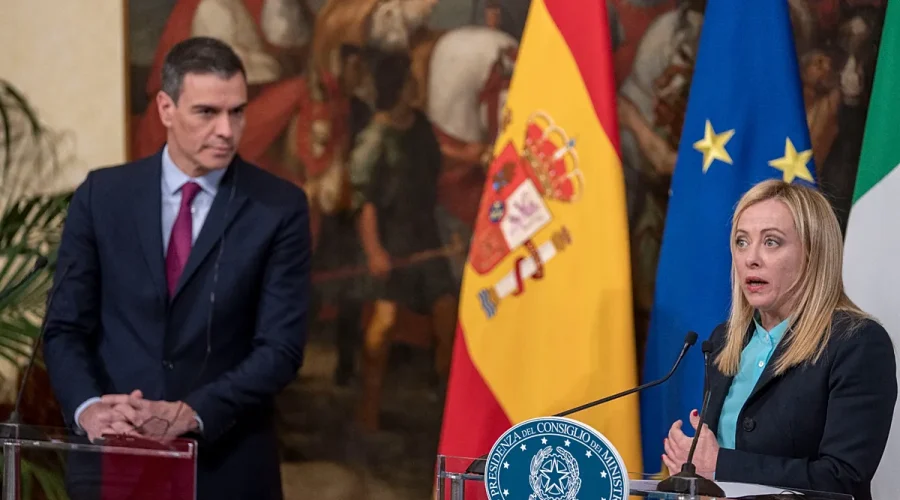
Usagevpn.com – A significant diplomatic disagreement has emerged between Italy and Spain after the migration situation in the Spanish enclave of Ceuta intensified. The Italian government, led by Prime Minister Giorgia Meloni, has decided to implement stricter border screening procedures for travelers arriving from Spain through both maritime and air routes. This development comes shortly after reports indicated that thousands of migrants had successfully reached the Spanish territory.
Clarifying the Schengen Situation
Initial media coverage on Friday suggested that Rome had completely suspended the Schengen agreement concerning Spain. This interpretation stemmed from a statement posted by Prime Minister Meloni on the social media platform X, where she declared that “the government has decided to temporarily suspend the free movement regime provided for by Schengen on maritime and air links with Spain, reintroducing border checks”.
However, legal experts and officials have clarified that this characterization was not entirely accurate. The Schengen framework already contains provisions allowing member states to reintroduce border controls “in the event of a serious threat to public order or internal security”. Italy has previously utilized this mechanism for over twelve months at its border with Slovenia, specifically targeting citizens arriving from third countries. Interior Minister Matteo Piantedosi characterized the current measure as “important but precautionary”, emphasizing that Italy is not unilaterally suspending Spain from the free-movement zone, but rather exercising an existing right under Schengen regulations.
Implementation and Duration
According to Minister Piantedosi, the border controls at sea and air frontiers with Spain will remain in effect for one month. He explained that the primary objective is “aimed in particular at monitoring the regularity of movement of non-EU citizens within the Schengen area”. Starting from Saturday morning, airport police began conducting random inspections at three major Italian airports: Rome Fiumicino, Milan Malpensa, and Milan Linate.
The screening requirements differ depending on travelers’ status. EU citizens need only present proof of identity, while non-EU nationals must additionally show valid residence permits or visas alongside their identity documents. Importantly, Italian citizens traveling to Spain face no changes and can continue entering the country without restriction.
Spanish and European Responses
Rome’s decision has triggered considerable criticism from Spanish authorities. Prime Minister Pedro Sánchez has written directly to European Council President Antonio Costa and European Commission President Ursula von der Leyen, urging Brussels to intervene and support Spain while encouraging other EU nations to align their migration strategies.
Meanwhile, Prime Minister Meloni and Danish Prime Minister Mette Frederiksen have jointly addressed European authorities. Their letter, co-signed by twenty-two member state leaders, requests an emergency meeting to discuss urgent actions against irregular migration. In their correspondence, they called for joint action “to strengthen external borders, tackle irregular migration, combat human traffickers, make returns more effective and remove any factor that could encourage new illegal entries”.
On Saturday afternoon, Commission President von der Leyen shared on social media that she had consulted with Commissioners Brunner and Šuica regarding the Ceuta situation. She noted that most migrants who had entered the enclave irregularly had already been repatriated. Additionally, she confirmed that none of the Moroccan migrants had reached mainland Spain or other EU countries. The Commission president reiterated the necessity of strengthening Europe’s resilience and expressed willingness to participate in a videoconference requested by European leaders.
This videoconference will be organized next Tuesday by Micheál Martin, the Taoiseach of Ireland and current president of the Council of the European Union, bringing together key European figures to address the ongoing migration challenges facing the continent.
Related Reading
Frequently Asked Questions
What is Italy brings in border checks for arrivals?
Italy brings in border checks for arrivals is the main topic of this guide. The article explains the context, practical details, and next steps readers should understand.
Why does Italy brings in border checks for arrivals matter?
Italy brings in border checks for arrivals matters because readers are looking for a useful answer, not just a short summary. Good content should match search intent and help them decide what to do next.