Zelenskyy Replaces Oleksandr Syrskyi as Commander-in-Chief
Ukraine’s Military Leadership Transition
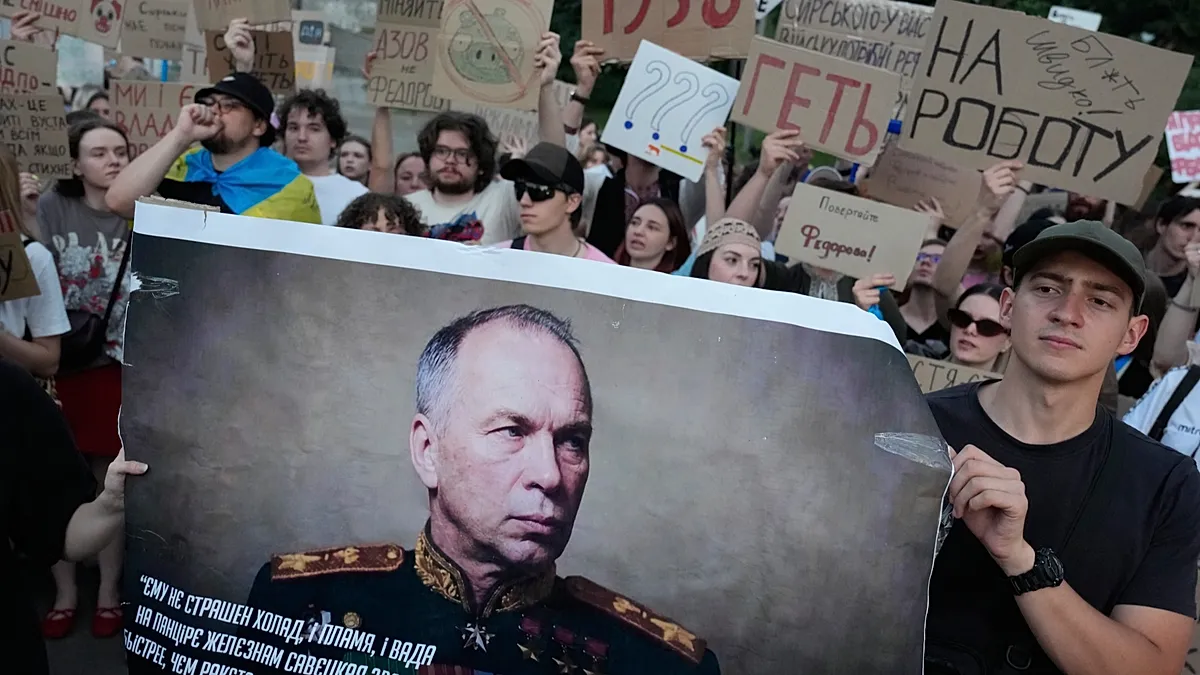
Usagevpn.com – Ukraine’s President Volodymyr Zelenskyy has officially replaced Oleksandr Syrskyi with Major General Mykhailo Drapatyi as the nation’s commander-in-chief. This significant leadership change occurs during the fifth year of Russia’s ongoing military campaign against Ukraine. The announcement follows several days of public demonstrations that began after Zelenskyy dismissed Defence Minister Mykhailo Fedorov. According to the president, Fedorov’s removal was connected to what he characterized as growing tensions with General Syrskyi.
After thorough consultations with military officials, Zelenskyy outlined plans to reorganize the General Staff of the Armed Forces of Ukraine. The president acknowledged Syrskyi’s important role in Ukraine’s defensive achievements. “Oleksandr Syrskyi ensured Ukraine’s success in the defence of Kyiv, in the Kharkiv offensive and in the Kursk operation,” Zelenskyy noted during his statement.
“The defence of Ukraine continues, and every soldier deserves to be treated with respect,” he added, addressing concerns about Syrskyi’s management approach and limited backing within the military ranks.
Zelenskyy stressed that all parties involved share the same goal: defeating the enemy and establishing favorable conditions on the front line to pressure Russia into peace negotiations. This clarification came amid mounting questions about Syrskyi’s leadership style and his connections with different military groups.
New Commander’s Background and Vision
Following the announcement, Syrskyi posted on Facebook expressing appreciation for those who served under his command. He promised to continue supporting Ukraine in some capacity. “I am handing over to my successor an army that is not only holding its ground but is also on the offensive — with the initiative, the structure and the people who know how to defeat the enemy,” he wrote.
Mykhailo Drapatyi has emerged as a vocal advocate for military reform. He previously praised Fedorov’s six-month period at the defence ministry, highlighting genuine efforts to update longstanding regulations and tackle overlooked issues. Similar to Fedorov, Drapatyi has pushed for a thorough restructuring of the army’s organizational framework.
“The military needs change, but without justice, no change will make sense to the people who carry this war on their shoulders every day,” the general stated in a Facebook post last Thursday, supporting Fedorov shortly after his dismissal.
Drapatyi also highlighted the need for timely problem-solving. “A commander has no right to remain silent about problems, especially when their cost is measured in lost opportunities, time and human lives,” he explained. “Silence does not protect the army, it only allows mistakes to accumulate until they become much more difficult to correct.”
Operational Success and Political Impact
Major General Mykhailo Drapatyi has gained substantial respect among civil society activists and military personnel alike. He currently leads the Joint Forces, a recently created body overseeing operations along the front line in and around the northeastern Kharkiv region. Since taking command of this area in autumn of last year, Ukrainian units, including the Khartiia Brigade, have successfully reclaimed significant territory around Kupiansk, which had been threatened by Russian forces.
Before his present role, Drapatyi commanded the Dnipro operational-strategic group (OSUV), a larger eastern command that Syrskyi dissolved in October 2025. His military career traces back to Russia’s initial invasion of eastern Ukraine in 2014. During that conflict, Drapatyi served as a major and battalion commander in the 72nd Mechanised Brigade and participated in the battle for Mariupol, which was briefly occupied by Moscow’s army. An armoured vehicle from his unit later gained recognition after breaking through a barricade erected by Russian forces on one of Mariupol’s main streets.
The dismissal of Defence Minister Fedorov has elevated Zelenskyy’s recent personnel changes into a broader political development. The removal of the reform-oriented, technology-focused minister — who enjoyed considerable public support — has intensified scrutiny of the president’s wartime decision-making and the direction of Ukraine’s military future.