Ukrainian Drone Campaign Targets Kazakhstan’s Oil Exports in Black Sea
Usagevpn.com – A series of coordinated aerial assaults has disrupted Kazakhstan’s vital oil export operations along the Black Sea coast. Over a span of just four days, four separate tankers bound for international markets were struck by drones while docked at the Caspian Pipeline Consortium’s marine terminal. These vessels, all civilian ships engaged in legitimate commercial activities, were either loading or preparing to load crude oil extracted from Kazakhstan’s vast petroleum reserves.
Escalating Incidents at the Terminal
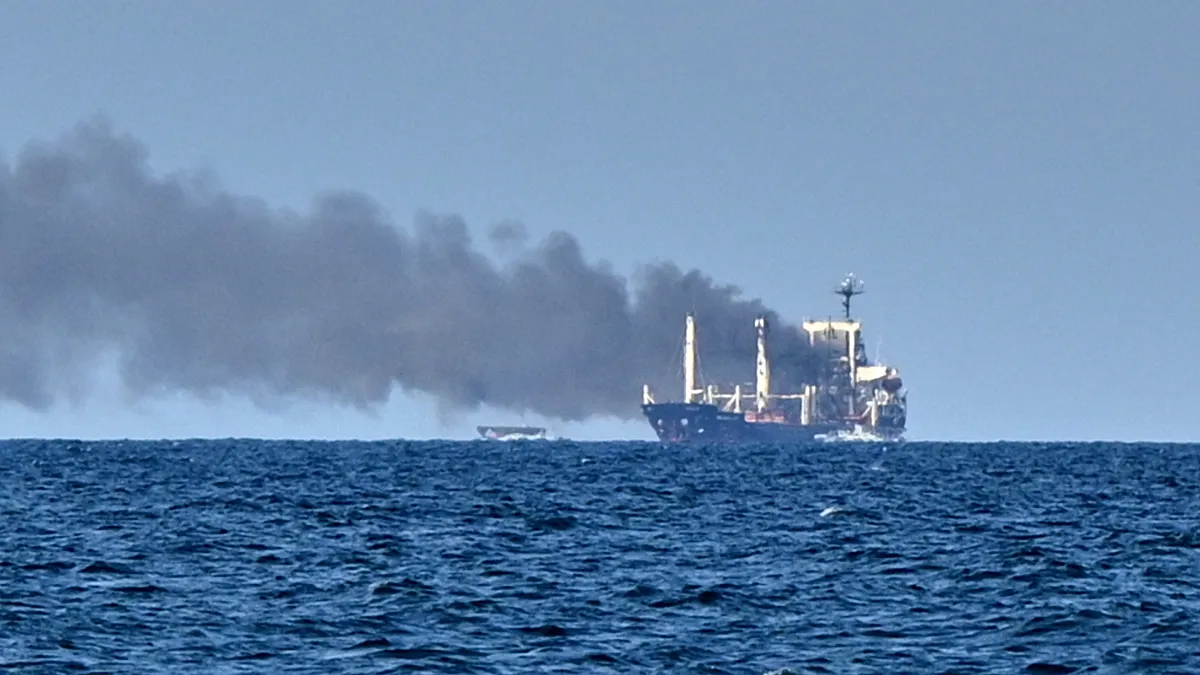
The first incident occurred on Friday when the Nordic Zenith, an empty vessel traveling toward the terminal, came under attack. The drone strike ignited a fire aboard the ship, though the crew successfully brought the flames under control. Fortunately, no injuries were reported in this initial assault.
Two days later, on Sunday, the situation intensified as two additional tankers faced simultaneous drone attacks. The ASIA, flying the Liberian flag, and the NISSOS IOS, registered under Marshall Islands credentials, were both engaged in loading operations at the terminal when struck. Both vessels experienced fires that their crews managed to extinguish. According to Kazakhstan’s energy ministry, the Single Point Mooring facilities remained intact, and crucially, no oil was released into the sea during these incidents.
The third day brought another blow on Monday when the NELSA, a Cameroon-flagged tanker loading at SPM-1, was hit by a drone. This attack resulted in a fire and necessitated the evacuation of 22 crew members. Authorities confirmed that the vessel remained buoyant and successfully prevented any oil spillage.
Official Responses and Diplomatic Fallout
Kazakhstan’s government has issued strong condemnations regarding these coordinated attacks. The foreign affairs ministry characterized the incidents as deliberate attempts to destabilize international trade and undermine global energy markets.
We regard such attacks as an unacceptable infringement upon the economic interests of the Republic of Kazakhstan, as well as deliberate acts aimed at destabilising lawful international trade and global energy markets and undermining the security of global transport and logistics supply chains.
The Kazakh foreign ministry further emphasized that the attacked vessels were civilian ships conducting legitimate commercial transportation of oil. Astana has formally requested that all hostilities cease and has urged partner nations to publicly condemn these actions.
Additionally, the Kazakh foreign ministry noted that the attacks represented a deliberate violation of previously established procedures for exchanging information about civilian vessels navigating the Black Sea. The ministries announced that Kazakhstan reserves the right to pursue compensation through international legal channels.
Strategic Importance and Economic Implications
The Caspian Pipeline Consortium represents Kazakhstan’s primary conduit for exporting petroleum to global markets. The 1,510-kilometer pipeline system transports crude oil from the nation’s three largest fields—Tengiz, Kashagan, and Karachaganak—to the Russian Black Sea port of Novorossiysk, where it is subsequently shipped worldwide.
This critical infrastructure handles more than one percent of the world’s total oil supply and accounts for approximately eighty percent of Kazakhstan’s petroleum exports. Prolonged disruptions to this route could significantly impact export revenues, reduce tax collections, and create additional financial pressure on the country’s budget and currency.
During 2025, the consortium transported roughly 70.5 million tonnes of crude oil, with over three-quarters belonging to foreign shareholders. Major international energy companies utilizing the pipeline include Chevron, ExxonMobil, KazMunayGas, Eni, and Shell.
The CPC press service confirmed that the oil destined for the attacked vessels originated from the Tengiz and Kashagan fields. The consortium described these incidents as the fifth instance of direct aggression against a purely civilian facility protected under international law. CPC also highlighted that the organization operates without sanctions and maintains a crucial role in ensuring global energy security.
While Ukraine has not officially claimed responsibility for these strikes, the attacks are widely believed to be part of Kyiv’s ongoing campaign against Russian oil infrastructure. This strategy aims to diminish one of Moscow’s primary revenue streams that funds its military operations. The CPC has not yet formally attributed responsibility for any of the recent incidents.
In response to the escalating situation, the Kazakh energy ministry announced that crude oil loading operations at the terminal have been temporarily suspended while authorities conduct a comprehensive assessment of the incidents’ consequences.