Iceland Has Nothing to Lose in EU Membership Talks, French Minister Declares
Usagevpn.com – Iceland has nothing to lose in EU membership negotiations, according to French Foreign Minister Jean-Noel Barrot, who made the statement during his official visit to Reykjavik on Monday. The French diplomat emphasized that the upcoming referendum on August 29 will not prejudge the outcome of future discussions between the Nordic island nation and the European Union. “Iceland has absolutely nothing to lose by negotiating with the European Union,” Barrot stated confidently, highlighting the favorable position Iceland now occupies in these renewed talks.
Referendum Sets Stage for Renewed EU Engagement
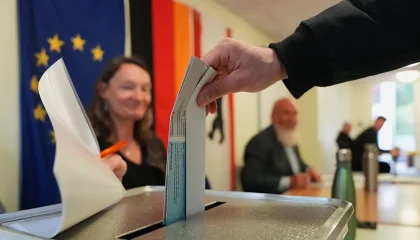
The Icelandic people are set to vote on whether to restart membership negotiations with the European Union, marking a significant moment more than a decade after talks were initially suspended. This referendum represents a crucial juncture for the island nation, which has been evaluating its relationship with European institutions since first applying for membership in 2009. The timing of the vote comes at an opportune moment, as Iceland seeks to strengthen its international position through closer ties with European partners. The outcome will determine whether Iceland returns to the negotiating table after a lengthy period of diplomatic pause.
The timing of this referendum is particularly significant given recent geopolitical developments that have reshaped Iceland’s strategic calculations. Icelandic Foreign Minister Thorgerdur Katrin Gunnarsdottir has been vocal about the benefits of EU membership, pointing to recent events as evidence of the bloc’s value. She noted that the EU’s steadfast support for Greenland during a critical period demonstrated the practical advantages of being part of the European Union. This support came at a time when external pressures were mounting on Nordic territories.
One of the most compelling factors driving Iceland toward renewed EU engagement is the situation surrounding Greenland and the United States. US President Donald Trump has repeatedly expressed interest in acquiring control of the vast Arctic territory from Denmark, creating uncertainty in the region. According to Gunnarsdottir, watching the European Union stand firmly with Denmark and Greenland during this period convinced many Icelanders of the bloc’s reliability. “For us it was important to see how steadfast the European Union stepped in and used its power, standing with Denmark and Greenland in that issue,” the foreign minister explained to reporters in Reykjavik.
Beyond the Greenland situation, Iceland sees EU membership as a pathway to enhanced security. As a NATO member without a standing army, the island nation faces unique security challenges in the Arctic region. Potential threats from Russia have prompted Icelandic leaders to consider additional mechanisms for protection. Joining the European Union would provide Iceland with another layer of security through its collective defense arrangements and diplomatic weight. The combination of NATO membership and potential EU membership would position Iceland as a well-protected Nordic nation with strong international partnerships.
The economic dimension of Iceland’s EU aspirations cannot be overlooked. The country submitted its membership application in 2009, directly following the international financial crisis that devastated the island’s economy. The crisis exposed vulnerabilities in Iceland’s financial system and prompted a reevaluation of its economic future. EU membership was seen as a way to stabilize the economy and integrate more deeply with European markets. Although negotiations were suspended in 2015, the economic rationale for membership remains strong, particularly as global economic conditions continue to evolve.
French Foreign Minister Barrot’s recent comments reinforce the message that Iceland faces minimal risk in pursuing EU membership. The French perspective adds weight to Iceland’s position, suggesting that major European powers view the island’s potential membership favorably. With the referendum approaching, Icelandic citizens will weigh these various factors—security, economics, and geopolitical positioning—against the costs of remaining outside the EU. The outcome will shape Iceland’s relationship with Europe for decades to come, and as Barrot noted, Iceland truly has nothing to lose in the process.