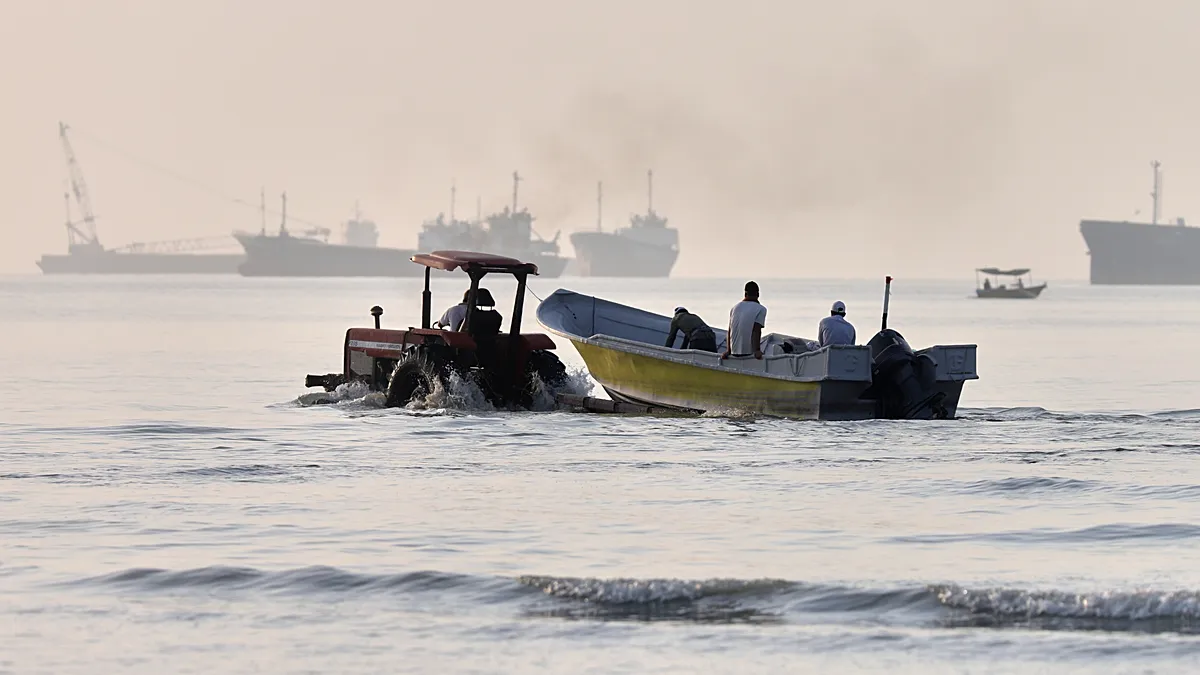
US Downs Two Iranian Drones Threatening Strait of Hormuz Traffic
US downs two Iranian drones threatening – On Saturday, the United States military intercepted two Iranian attack drones that posed a threat to international maritime traffic in the strategic Strait of Hormuz, as confirmed by US Central Command (CENTCOM). The incident marks another chapter in the ongoing tensions between the US and Iran, with both nations engaging in a cycle of strikes and counterstrikes. CENTCOM’s statement, posted on X, emphasized that the drones were “one-way attack” vehicles, underscoring their role in targeting critical shipping routes. The action comes amid heightened regional instability, as the Gulf continues to witness a series of military confrontations.
Escalation in the Gulf
Just a day prior, US forces had already neutralized four Iranian drones launched toward the same region, according to military sources. These attacks were part of a broader pattern of Iranian aggression aimed at disrupting global energy supplies. The Strait of Hormuz, a vital chokepoint for oil exports, has become a focal point of conflict, with both sides using it as a stage for strategic maneuvering. Bahrain’s government, which is a key ally of the US, reported that ballistic missiles and drones targeted the kingdom as well as Kuwait, highlighting the regional reach of Iranian operations.
The latest developments follow a recent surge in hostilities. Iranian officials claimed that the US strikes on surveillance facilities in Qeshm Island and near Sirik were unjustified, as these sites were described as essential for monitoring borders and securing international navigation. “These facilities are critical to our national defense and the safety of global shipping,” Iran’s military spokesperson stated in a separate declaration. The attacks, which Iran deemed a violation of the ceasefire agreement, have intensified the dispute over control of the region’s waters and airspace.
US Response and Strategic Intent
As part of its efforts to safeguard maritime routes, the US has been conducting targeted strikes against Iranian assets in the Gulf. The latest interception of two drones, along with the earlier downing of four, demonstrates a proactive approach to countering potential threats. CENTCOM reiterated its commitment to “defending against Iranian aggression,” emphasizing that the military remains vigilant in protecting the flow of commerce through the strait. This statement aligns with the broader US strategy of deterring Iran from escalating its operations further.
The US military’s actions have drawn mixed reactions. While some analysts view the strikes as necessary to maintain stability, others argue that they risk provoking a larger conflict. The drones intercepted on Saturday were reportedly launched from Iranian territory, with their exact coordinates and flight paths still under investigation. The incident also raises questions about the effectiveness of Iran’s drone fleet in targeting strategic objectives, despite their relative affordability and mobility.
Iranian Perspective and Regional Tensions
Iran has consistently framed its military actions as defensive, aiming to protect its interests in the Gulf. The country’s leadership has accused the US of violating the ceasefire agreement by attacking its surveillance infrastructure, which Iran asserts is vital for monitoring the Strait of Hormuz. “The US strikes undermine our ability to secure the waterway and threaten the security of all nations relying on it,” a senior Iranian official remarked in a press briefing. This rhetoric reflects the deepening divide between the two nations, with each side citing the other’s actions as justification for continued hostilities.
The Gulf’s strategic importance cannot be overstated. As a major artery for global oil transportation, the Strait of Hormuz is critical to maintaining energy markets and economic stability. Any disruption to this flow has significant implications for international trade and geopolitics. Iran’s attacks on drones and missiles have been designed to create uncertainty, while the US aims to assert dominance in the region. The latest skirmish adds to the narrative of a volatile standoff, with both sides preparing for further escalations.
Trump Administration’s Role in the Conflict
As the Trump administration continues to push for a resolution to the conflict, the recent drone interceptions highlight the challenges in achieving a lasting peace. The administration has prioritized diplomatic efforts to broker a deal that balances Iranian influence with US interests in the Gulf. However, the persistent attacks suggest that Iran remains unwilling to ease its military posture, even as negotiations unfold. “We are committed to securing the Strait of Hormuz and ensuring the free movement of vessels,” a State Department official stated in a recent address.
The conflict’s roots trace back to the US’s withdrawal from the 2015 Iran nuclear deal, which Iran accused of weakening its strategic position. The current tensions also reflect broader geopolitical rivalries, with Iran seeking to project power and challenge Western dominance. The Trump administration’s emphasis on a hardline approach has kept the situation on edge, with both sides using the Strait of Hormuz as a symbol of their competing visions for the region’s future.
In addition to the drone attacks, the US and Iran have been engaged in a series of covert operations and intelligence exchanges. These efforts have aimed to gather information on each other’s military capabilities and intentions. The recent intercepts provide valuable data on Iranian drone technology, which experts believe is rapidly evolving. Analysts note that the US’s ability to neutralize these drones has been a key factor in maintaining its strategic advantage, despite the escalating threat.
The Strait of Hormuz remains a hotspot for military activity, with both the US and Iran demonstrating their readiness to act. The US’s recent operations have not only disrupted Iranian plans but also reinforced its commitment to protecting the region. Meanwhile, Iran’s leaders continue to stress the importance of the ceasefire, calling for a pause in hostilities to allow for meaningful negotiations. “We are prepared to negotiate, but only if the US respects our sovereignty and stops its attacks,” a senior Iranian diplomat said during a recent visit to Tehran.
Global Implications and Future Outlook
As the conflict persists, the international community watches closely for any signs of de-escalation. The US and Iran’s actions have the potential to affect global oil prices and trade routes, with experts warning of the risk of a full-scale war. The latest drone interceptions serve as a reminder of the delicate balance between deterrence and provocation, with both sides carefully calculating their moves. “The Strait of Hormuz is a lifeline for the world economy, and any disruption could have far-reaching consequences,” a European diplomat noted during a recent conference in Brussels.
With the Trump administration’s diplomatic push, there is a renewed hope for a negotiated settlement. However, the recent escalation suggests that the path to peace remains fraught with challenges. The US’s determination to defend its interests, coupled with Iran’s resolve to assert its influence, ensures that the conflict will continue to unfold in the Gulf. As the region remains a flashpoint for global tensions, the fate of the Strait of Hormuz and the balance of power in the Middle East hang in the balance.
Overall, the US’s downing of two Iranian drones in the Strait of Hormuz underscores the ongoing rivalry between the two nations. The incidents reflect a broader pattern of military activity, with both sides leveraging the region’s strategic significance to advance their goals. As the situation evolves, the international community will need to remain attentive to the potential for further conflict and the impact it may have on global trade and security.