Italian Armed Forces and Police Stage Major Rome Demonstration for Better Compensation
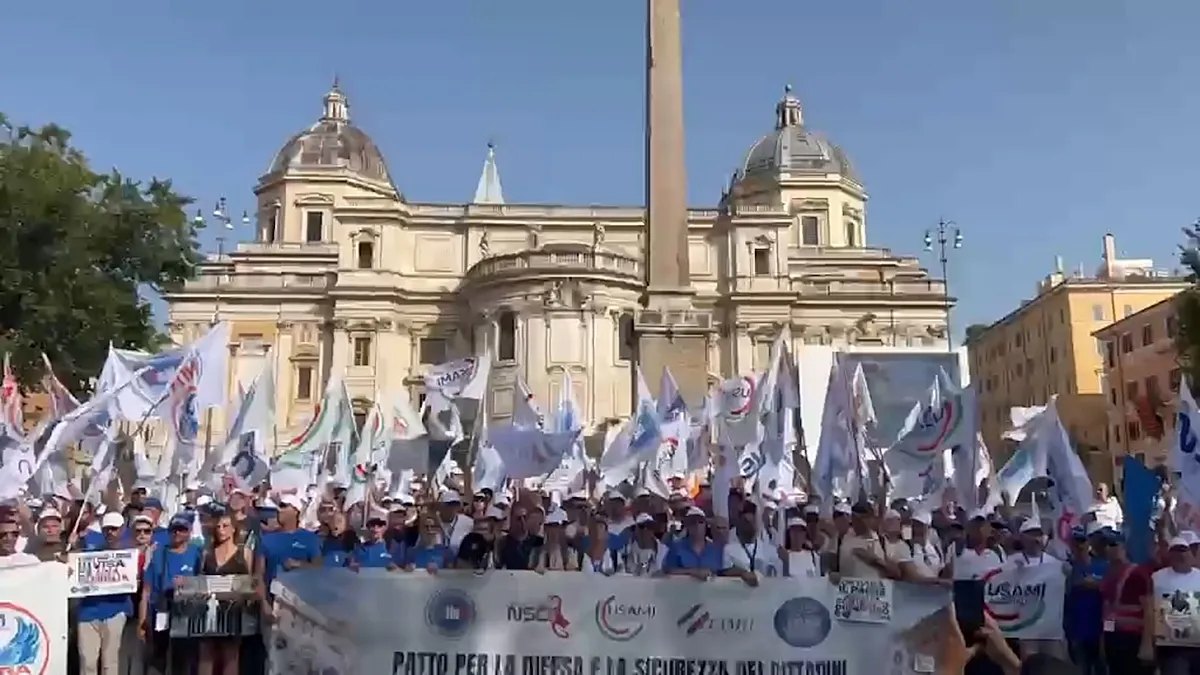
usagevpn.com – Thousands of uniformed personnel from Italy’s military and security branches converged on the capital city on Saturday for a coordinated demonstration focused on financial and professional concerns. Approximately 6,000 individuals participated in the march, representing the Army, Navy, Air Force, Carabinieri, and Guardia di Finanza. This marked the inaugural unified action organized by the nation’s primary defense and security labor organizations.
The timing of the rally proved significant, occurring merely days following the government’s renewal of a collective bargaining agreement. This renewed contract encompasses roughly 430,000 military and security workers across the country. Under the terms of this agreement, participants receive a gross monthly salary increase of €188 alongside a single lump-sum back payment totaling €2,448. Additionally, the deal establishes a framework for future discussions regarding pension system modifications.
Unions Reject Agreement, Push for More
Despite the government’s efforts, several prominent labor organizations declined to endorse the renewed contract. These include Sinafi, the New Carabinieri Union (NSC), Usami Aeronautica, Itamil, and Silmm. The dissenting unions contended that the proposed measures fail to adequately resolve ongoing concerns regarding compensation levels and retirement benefits. Consequently, they mobilized Saturday’s demonstration to urge the government toward additional concessions.
Participants marched beneath the banner slogan: “Every day we serve Italy. Today we demand respect.” Carrying placards through Rome’s historic streets, the demonstrators articulated their position clearly. Prior to the march, the unions published a formal statement outlining four central objectives. These priorities encompass comprehensive reform of the supplementary pension framework and opposition to proposals elevating the retirement threshold to age 65. Further demands included enhanced legal safeguards for security workers, wage adjustments aligned with inflation rates, and increased financial commitment toward recruitment, professional development, and equipment modernization.
Conference Concludes the Day’s Events
The demonstration culminated in a symposium addressing the trajectory of Italy’s security, defense, and emergency response sectors. Representatives from multiple unions attended, including the NSC, which had previously declined to ratify the compensation agreement. Massimiliano Zetti, secretary-general of the NSC, provided clarity on the organization’s position. He explained that the decision to reject the agreement stemmed from straightforward economic considerations.
“The reasons why we did not sign this agreement and rejected it are simple: what we were supposed to receive from an economic point of view has not been delivered,” Zetti stated.
He emphasized that individuals wearing state uniforms represent real families and working citizens rather than abstract figures. According to Zetti, fair compensation reflects the reality that security operations carry substantial costs. “Because inside those uniforms working for the state, under the state’s emblem, there are not silhouettes, there are families, there are people, women and men who work. It is only right that they should be paid fairly. Security has a cost.”
European Context for Uniformed Worker Protests
While demonstrations by military and law enforcement personnel remain relatively uncommon, such actions have emerged across multiple European nations in recent years. Italy witnessed police union demonstrations in 2023, where workers sought increased funding for salary adjustments, inflation-linked wage growth, and additional recruitment to address staffing deficits.
French police unions engaged in strikes and picket lines during early 2024. Their demands centered on bonus payments and guaranteed conditions regarding work shifts and vacation time, preparations necessitated by the extensive security requirements of the Paris Olympic Games. Spanish workers, represented by the Jusapol union, conducted repeated protests throughout 2024. Their primary objective involved achieving pay equality between National Police and Guardia Civil officers alongside regional counterparts like Catalonia’s Mossos d’Esquadra.
Spanish police organizations also voiced opposition to the government’s Catalan amnesty legislation in late 2023. Meanwhile, Belgian police unions orchestrated demonstrations during 2022 and 2023. These actions featured “white strikes,” roadblock implementations, and selective refusal to issue citations for minor infractions. Some Belgian protests notably interfered with passenger access to Brussels Airport, demonstrating the potential impact of uniformed worker actions on public services.