Dismissed Defence Minister Fedorov Accuses Army Chief of Divisions
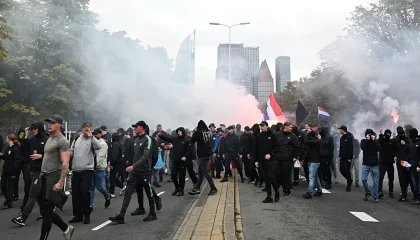
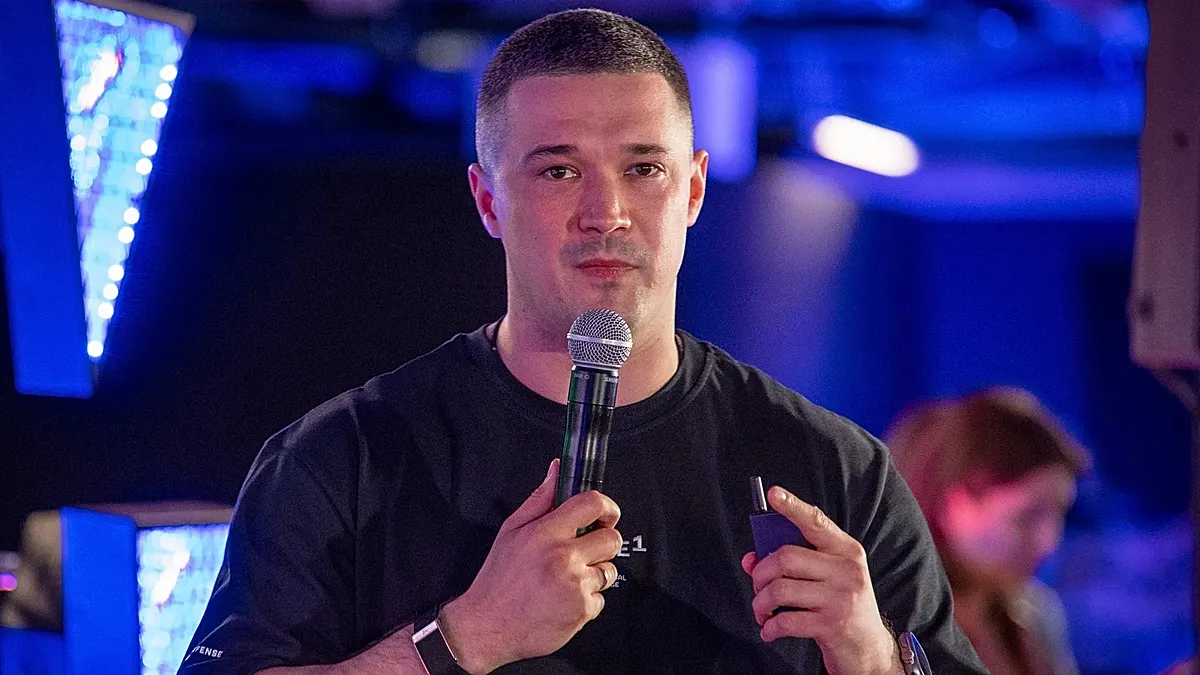
Dismissed defence minister Fedorov accuses Ukraine’s military leadership of creating unnecessary divisions within the country. Thousands of citizens gathered in Kyiv and other Ukrainian cities on Thursday to voice their opposition to President Volodymyr Zelenskyy’s decision to remove Defence Minister Mykhailo Fedorov from his position. During a highly charged press conference, the former minister openly admitted that his ongoing disagreements with Commander-in-Chief Oleksandr Syrskyi played a significant role in his removal from office.
Fedorov explained that the president faced a difficult choice between the two top officials. Despite this pressure, he maintained that he never forced Zelenskyy into a binary decision. “I said then we will win with this commander-in-chief,” Fedorov stated, emphasizing his confidence in Syrskyi’s capabilities despite their differences.
The former defence minister revealed that he willingly accepted the outcome once Zelenskyy confirmed his intention to retain Syrskyi. “When the president said he did not plan to dismiss Syrskyi, I said that I agreed. It is his decision as supreme commander-in-chief and I would learn to work with him, because ultimately our client is the Ukrainian people, not anyone else,” he explained.
Reform Efforts Meet Military Resistance
According to Fedorov, his ambitious reform program encountered immediate and substantial obstacles from the military hierarchy. “We ran into a complete blocking of all our initiatives,” he reported, suggesting that Syrskyi was unwilling to engage directly with emerging challenges. “Syrskyi is not ready to speak openly, face to face, about the problems.”
The former minister characterized Syrskyi’s approach as more focused on political maneuvering than substantive problem-solving. “He is ready to go to meetings, weave intrigues, think that someone is organising media campaigns against him. And he issued an ultimatum,” Fedorov observed.
In what represented some of his most pointed public criticism of the commander-in-chief, Fedorov suggested that Syrskyi’s priorities had shifted away from military effectiveness. “Instead of thinking about how to defeat Russia asymmetrically, he figured out how to split the country,” he declared.
Recognition of Syrskyi’s Past Contributions
Despite his sharp criticisms, Fedorov acknowledged the commander-in-chief’s crucial role during Ukraine’s darkest hours. “In reality, Syrskyi saved our country in 2022, carried out several successful operations and we cannot underestimate him. But the war has changed,” he noted, framing his calls for leadership changes as a response to evolving strategic conditions rather than personal animosity.
Zelenskyy, who characterized the personnel changes as an effort to modernize Ukraine’s wartime governance, extended an advisory position to Fedorov following his dismissal. The former minister declined this offer, attributing his departure to deep-seated institutional opposition to his vision of military modernization through technological advancement and decentralization.
A Reformer’s Track Record
The controversy between the defence minister and the commander-in-chief had been widely recognized as a generational divide between a young, technology-oriented reformer with entrepreneurial experience and a traditional military leader. The 35-year-old Fedorov stood as the final minister to serve across all of Zelenskyy’s administrations, having been among the president’s most trusted allies since his 2019 electoral victory.
From 2019 until his recent appointment as defence minister, Fedorov held the positions of deputy prime minister and minister of digital transformation. He received extensive acclaim for championing Ukraine’s concept of a “state in a smartphone,” which sought to reduce bureaucratic inefficiencies and bring public services into the digital age.
The Diia application, introduced in 2020, enabled Ukrainian citizens to access an expanding array of governmental functions through their mobile devices. After Russia’s comprehensive invasion began in 2022, Fedorov’s ministry assumed a prominent position in developing Ukraine’s drone capabilities, advancing defence technology, and promoting digital education programs.
During his six-month tenure as defence minister, Fedorov received considerable credit for accelerating military innovation and contributing to a favorable shift in battlefield dynamics. In February, he collaborated with Starlink to restrict Russia’s unauthorized utilization of the satellite internet platform, leveraging a personal connection with SpaceX founder Elon Musk that had emerged throughout the conflict.
Fedorov also facilitated enhanced collaboration between the Ministry of Digital Transformation and the Ministry of Defence to expedite the creation and implementation of cutting-edge military technologies.