Uproar as Paris attacks coordinator Mohamed Bakkali granted prison leave
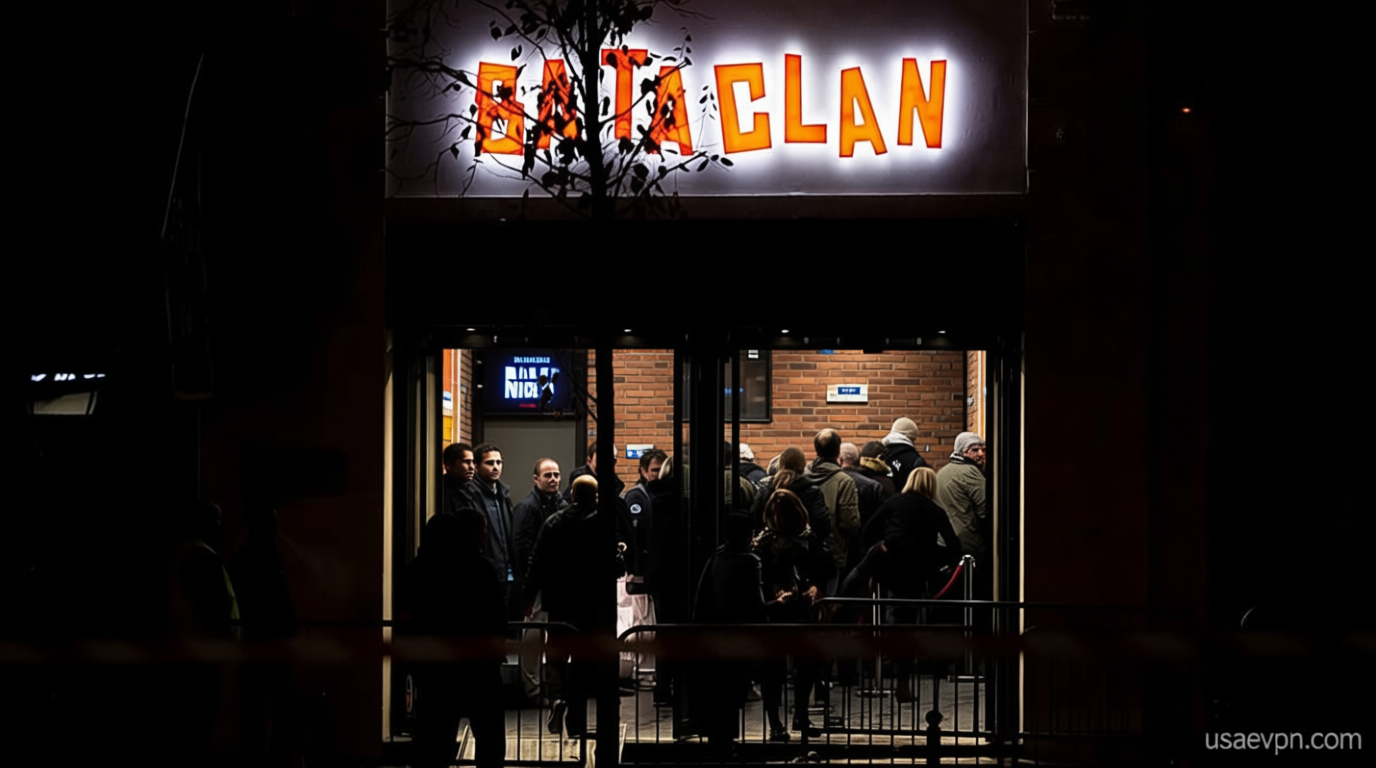
Uproar as Paris attacks coordinator Mohamed – Following a controversial decision by a Brussels court, Mohamed Bakkali, a central figure in the terrorist group responsible for the November 2015 Paris attacks, has been permitted temporary prison leaves. This move has raised concerns among critics who argue it undermines justice for the victims of the deadly assault that claimed 130 lives and left hundreds injured. Bakkali, who orchestrated the attacks through coordination with other militants, was initially sentenced to 30 years in French prison in 2022. The ruling was later compounded by a separate 25-year sentence in Belgium for his involvement in planning a subsequent Thalys train attack from Amsterdam to Paris.
Bakkali was transferred to Belgium in 2018, where he faced charges related to the planning of the second incident. Belgian prosecutors revealed that the court in Brussels has now authorized him to exit Ittre, a high-security detention center established in 2002, multiple times for short durations. The release is described as a temporary measure, with each leave lasting 36 hours. While the prosecution opposed the decision, the court asserted that its ruling is final, leaving no room for further appeals. The execution of the order rests with the prison director, according to the Belgian judicial office.
Le Monde reported that these temporary absences are part of a broader process leading to potential parole under electronic monitoring. This step, critics claim, signals a shift toward granting Bakkali greater freedom despite his role in orchestrating large-scale violence. The decision has ignited widespread backlash, with public figures in both Belgium and France denouncing it as a betrayal of justice.
Reactions from French and Belgian Advocates
French lawyer Thibault de Montbrial, president of the Center for Reflection on Internal Security, expressed strong disapproval of the ruling. In a statement on X, he argued that allowing Bakkali to leave prison repeatedly is a “slap in the face” to the victims, investigators, and the integrity of democratic justice. His comments highlight the emotional weight of the decision, which many believe diminishes the gravity of the attacks that left a lasting scar on French society.
“His prison releases and his possible upcoming release after serving one-third of his sentence are a slap in the face to the victims, to the investigators, and to the justice of democracies,” wrote de Montbrial.
Matthieu Valet, a member of the European Parliament representing France’s far-right National Rally party, echoed similar sentiments, calling the move a “huge middle finger to French justice and the victims.” He emphasized that individuals involved in terrorist networks should not receive special treatment, stating, “Those who take part in these networks must serve their full sentences, without privileges.” Valet’s criticism reflects broader concerns about the fairness of the prison system and its ability to rehabilitate dangerous criminals.
In Belgium, Denis Ducarme, a Member of Parliament from the Reformist Movement, condemned the decision as a “turning of one’s back on the memory of the victims and the pain of the families.” He called the ruling “what a country. What a disgrace,” underscoring the emotional impact on the families of those affected by the Thalys attack. Meanwhile, Vlaams Belang MP Alexander van Hoecke announced plans to introduce a legislative proposal that would prevent convicted terrorists from being eligible for exit permits or penitentiary leave in the future.
Justice Minister Defends Decision
Belgium’s Justice Minister Annelies Verlinden defended the ruling, stating that the court’s decision was based on a “thorough review of the case” and “very strict conditions.” She noted that Bakkali had previously been granted shorter periods of release, suggesting that the current arrangement is a continuation of established protocols. Verlinden’s comments aim to reassure the public that the legal process remains rigorous, even as the timing of the releases sparks debate.
The Thalys train attack, which occurred in 2015, was a coordinated effort involving Bakkali and other militants. The incident, which killed four people and injured dozens, underscored the threat posed by terrorist networks operating across Europe. Despite his role in both attacks, Bakkali’s recent prison leave has been framed as a recognition of his behavior during incarceration, with some arguing that his conduct has demonstrated good discipline.
French officials, however, remain divided. While the French justice system typically requires a minimum of 10 years before considering parole, Bakkali’s case appears to be an exception. His temporary freedom has been seen by some as a sign of progress in rehabilitating dangerous individuals, while others view it as a concession to political considerations. The decision has also reignited discussions about the criteria used to assess eligibility for early release, particularly for those linked to high-profile terrorist acts.
As the debate continues, the question of whether Bakkali’s release represents a fair application of the law or a softening of its standards remains central. His case serves as a focal point for broader conversations about the balance between punishment and rehabilitation, the role of international cooperation in combating terrorism, and the expectations placed on those who commit violent crimes. With the potential for further releases, the public is left to ponder the implications of such a decision for both national and European justice systems.
Bakkali’s temporary prison leave has also sparked questions about the adequacy of surveillance measures during his absence. Critics argue that without stricter oversight, his movements could pose a renewed threat to public safety. Meanwhile, supporters of the ruling maintain that allowing him limited freedom is necessary to assess his behavior and prepare him for eventual parole. The legal battle over his release highlights the complexity of justice in the modern era, where political pressures and legal principles often intersect.
As the political landscape in Belgium and France continues to evolve, the case of Mohamed Bakkali will likely serve as a symbol of the challenges faced in addressing terrorism. The backlash against the decision underscores the deep emotional connection many citizens have to the victims of these attacks, as well as their desire for a system that reflects their values of accountability and fairness. Whether this move signals a trend or an exception, it remains a pivotal moment in the ongoing discourse about how justice is administered in the face of extremism.