Szijjártó Steps Down from Parliament for BYD Executive Role
A New Chapter for Hungary’s Long-Serving Diplomat
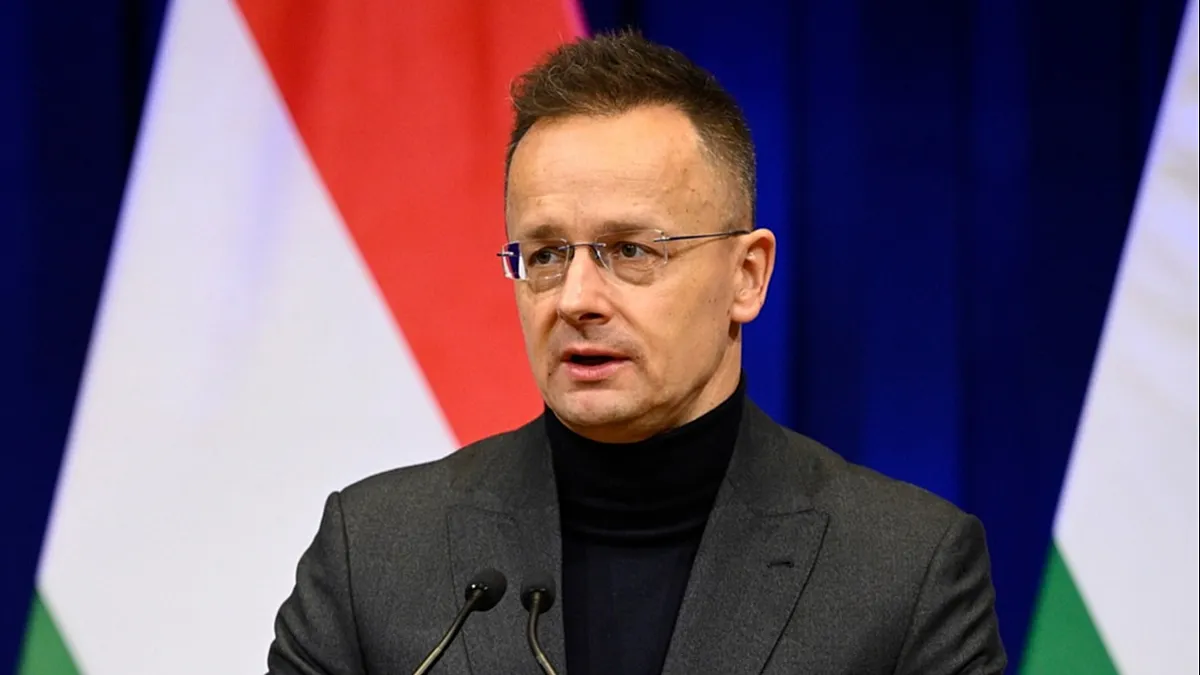
Former Hungarian foreign minister Szijjártó resigns – Péter Szijjártó, who represented Hungary on the international stage for nearly twelve years, has officially left his parliamentary seat to accept an executive position at BYD, the Chinese electric vehicle manufacturer. The former foreign minister shared the news through a Facebook post, describing the opportunity as “a highly prestigious offer” that would allow him “to fill an international position” within the global automotive leader.
Reflecting on the company’s trajectory, Szijjártó noted that “BYD is one of the greatest success stories in the automotive industry over the past 20 years.” He confirmed that his new responsibilities would encompass overseeing the organization’s external relations while simultaneously driving the expansion of emerging business segments. According to his statement, “Starting today, I will continue to work as the executive responsible for the group’s external relations and the development of new business lines.”
Political Shifts and Parliamentary Absence
The timing of Szijjártó’s departure coincides with a significant political transformation in Hungary. Following the April elections, where opposition leader Péter Magyar secured a decisive victory over Viktor Orbán’s Fidesz party, Szijjártó lost his ministerial position. Since that electoral outcome, the former diplomat has maintained a notably low profile, missing the majority of parliamentary sessions and making only occasional public appearances or social media contributions.
Szijjártó’s parliamentary career spans over two decades, with his first term beginning in 2002. His departure marks the end of an era for one of Hungary’s most recognizable political figures, who had been closely associated with Orbán’s administration throughout his tenure as the country’s chief diplomat.
Building the BYD-Hungary Connection
The relationship between Szijjártó and BYD extends well beyond his new executive appointment. In 2023, while serving as Hungary’s foreign affairs and trade minister, he announced that BYD would establish its inaugural European manufacturing facility on Hungarian soil. This strategic move enabled the Chinese conglomerate to navigate European Union import tariffs designed to shield the continent’s domestic automotive industry from Chinese electric vehicle competition.
Szijjártó emphasized the extensive diplomatic effort behind this achievement, revealing that the factory agreement resulted from 224 rounds of negotiations between BYD and the Hungarian government. He characterized the project as “one of the largest investments in Hungarian economic history,” noting that the government committed to providing financial incentives to support the plant’s construction.
During his time in office, Szijjártó and Orbán consistently resisted EU tariffs targeting Chinese products while actively courting substantial investment from Beijing. This policy approach facilitated the establishment of multiple Chinese electric vehicle battery manufacturing facilities throughout Hungary. Additionally, the Orbán administration and Chinese leadership collaborated on developing a rail corridor connecting Hungary and Serbia, which forms part of China’s expansive Belt and Road global trade initiative.
EU-China Trade Dynamics
Szijjártó’s career move arrives at a moment of heightened trade friction between Brussels and Beijing. China has repeatedly warned of potential retaliatory measures against European Union initiatives aimed at addressing market protection concerns related to Chinese overcapacity. The European Union currently confronts an expanding trade deficit with China, which has climbed to a record €1 billion daily across the entire bloc.
Given these economic pressures, engagement with Beijing has emerged as a critical priority for European policymakers. EU Trade Commissioner Maroš Šefčovič indicated at the end of June that Brussels intended to pursue “tangible” outcomes through diplomatic dialogue with China by October. However, the feasibility of this timeline has drawn skepticism from some quarters.
German MEP Bernd Lange, representing the Socialists and Democrats group and serving as chair of the European Parliament’s trade committee, expressed doubt about the October target. Lange stated that the deadline established by the European Commission for trade discussions with China was “not realistic at all” if the EU hopes to secure a binding agreement with Beijing.