Washington Launches Investigation Into Alleged Iranian Drone Presence in Cuba
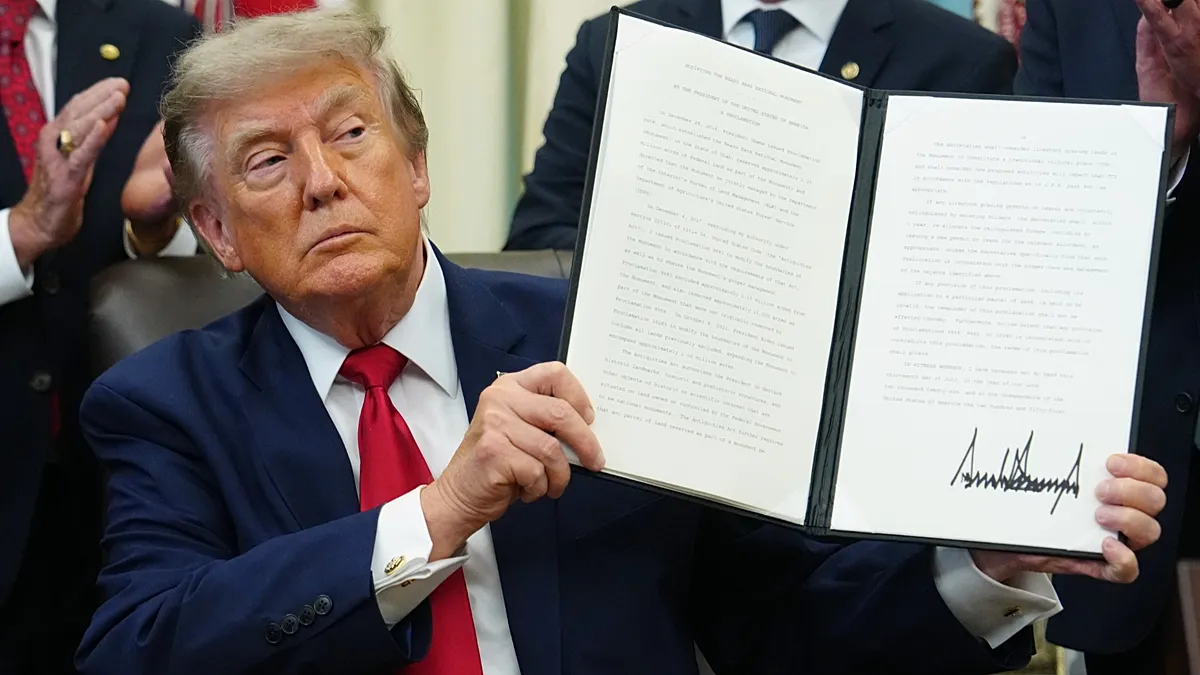
We will deal with it Trump – President Donald Trump confirmed on Monday that the United States is actively examining whether Iran has positioned drones within Cuban territory. Speaking from the Oval Office when questioned by reporters regarding a purported intelligence assessment, the president offered a straightforward response to the emerging reports. He stated that should Iranian aircraft indeed be located on the island, the American government would address the situation accordingly.
“If they have them, and it’s very possible that they do, we’ll take care of it.”
Expanding upon his initial remarks, Trump indicated that Cuban facilities might additionally harbor Iranian missiles. According to the president, his administration is currently conducting an examination of this possibility as well. Despite making these assertions, Trump did not present any visual evidence, intelligence documentation, or specific information regarding the quantity, type, or precise location of the supposedly stored equipment.
The inquiry that prompted the president’s statements originated from a reporter representing a conservative-leaning news organization. This journalist referenced a report that had remained undisclosed until this recent revelation. Trump further noted that Secretary of State Marco Rubio was present in an adjacent room during his response, signaling that the matter had already been incorporated into the State Department’s priorities.
Historical Parallels and Current Tensions
At this moment, the sole confirmed development is that Washington has initiated a comprehensive review of the situation. It remains unverified whether the weaponry actually exists or whether it constitutes an immediate danger. Cuban officials have yet to issue any official response to the president’s allegations.
The current situation echoes events from over six decades past. In February 1962, the United States implemented a financial and commercial embargo against Cuba, a measure that continues to this day. This action followed the Soviet Union’s efforts to establish closer relations with Fidel Castro’s government. Subsequently, in October of that same year, American authorities discovered Soviet nuclear missile installations on Cuban soil. For fourteen days, global anxiety mounted as fears of nuclear conflict between the two superpowers intensified, until diplomatic negotiations successfully resolved the Cuban Missile Crisis.
Escalating Pressure on Havana
Trump’s comments arrive amid mounting pressure directed at the Cuban government. The State Department recently announced the designation of ten organizations connected to Cuba’s leadership as part of a broader campaign aimed at limiting what officials characterized as “the malign activities of the Cuban regime.” Among the designated entities are Enetec S.A. and Coreydan S.A., both involved in fuel commerce, alongside the business conglomerates Gecomex and Gemar.
Earlier in June, sanctions had already been extended to Cuban President Miguel Díaz-Canel, multiple members of his family, and Colonel Alejandro Castro Espín. The latter, son of former president Raúl Castro, simultaneously confronts a Justice Department indictment stemming from the 1996 incident in which two aircraft operated by Cuban exiles were shot down, resulting in four fatalities.
Beyond the more than sixty-year embargo, the current administration has introduced an energy blockade since the beginning of this year. Cuban authorities have connected this measure to the widespread power outages experienced throughout the nation this year, with the most recent disruption occurring last Friday.
Drone Capabilities and Strategic Implications
An Axios analysis, referenced by multiple news organizations, suggests that the Cuban government has acquired more than three hundred military drones of Russian and Iranian origin since 2023. According to this assessment, the Revolutionary Armed Forces are evaluating potential deployment of these systems against American targets, including the Guantánamo naval base and facilities located in Key West.
The report itself cautions that characterizing these armed drones as purely defensive instruments represents more of a linguistic manipulation than adherence to established military doctrine. Furthermore, the analysis emphasizes that the deployment of these systems emerged from several years of deliberate planning rather than constituting a hasty reaction to recent tensions with Washington.