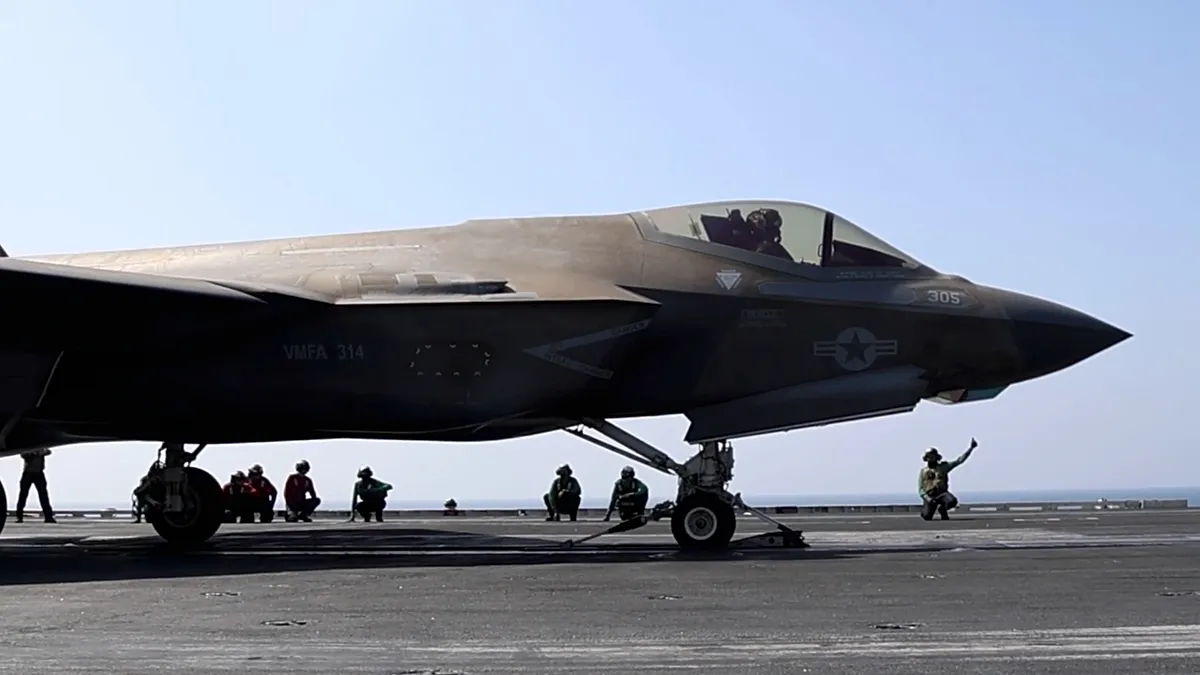
F-35 Jets Arrive in Poland to Bolster NATO’s Eastern Flank
F 35 jets arrive in Poland – This week marks a significant milestone for Poland’s military modernization efforts as its first batch of F-35 fighter jets arrived from the United States. The three aircraft, part of a larger procurement deal, landed at Łask Air Base on Friday, signaling a major step in enhancing NATO’s defensive posture along its eastern border. The event underscores Poland’s commitment to strengthening its air capabilities in response to growing security concerns in the region.
A Strategic Move for NATO’s Eastern Border
The arrival of the F-35s comes amid heightened tensions between NATO and Russia, with the alliance seeking to solidify its presence in Eastern Europe. Poland, situated at the heart of the continent, has long been a focal point for military reinforcement due to its proximity to Ukraine and Belarus. The deployment of these advanced jets is seen as a critical measure to deter potential aggression and ensure rapid response capabilities in case of conflict.
Polish Defence Minister Władysław Kosiniak-Kamysz greeted the jets at the air base, describing them as a transformative asset for the country’s air defense. “These are the first 5th-generation fighters on NATO’s eastern flank capable of detecting threats before they themselves are spotted,” he wrote on X. “For Poland, this is not just new equipment, but a step into the elite global league of modern air forces.” The minister’s remarks highlight the symbolic and practical importance of the jets, which represent a shift in Poland’s military readiness and international standing.
“These are the first 5th-generation fighters on NATO’s eastern flank capable of detecting threats before they themselves are spotted,” said Polish Defence Minister Władysław Kosiniak-Kamysz on X. “For Poland, this is not just new equipment, but a step into the elite global league of modern air forces.”
The F-35s, manufactured by Lockheed Martin, are renowned for their cutting-edge technology, including stealth features, advanced radar systems, and network-centric warfare capabilities. These attributes make them highly effective in both air-to-air combat and ground attack missions, providing a versatile platform for NATO operations. Their introduction to Poland is expected to elevate the country’s aerial defense to a level comparable with major European powers.
A Long-Term Commitment to Military Modernization
Poland’s decision to acquire 32 F-35 jets was finalized in 2020, reflecting a strategic long-term vision to upgrade its air force. The procurement process, which includes training for pilots and maintenance infrastructure, has been a priority for the Polish government. The first delivery of three jets is just the beginning of a phased integration that will see all 32 aircraft operational by 2030.
The significance of this acquisition extends beyond Poland’s borders. As one of the key NATO members in Eastern Europe, the country plays a pivotal role in the alliance’s collective defense strategy. The F-35s are intended to complement existing NATO forces, including those from the UK, Germany, Norway, the Netherlands, Belgium, Italy, and Denmark, which have already incorporated the aircraft into their fleets. This shared investment in advanced technology demonstrates NATO’s unified approach to addressing security challenges in the region.
Analysts suggest that the F-35s will serve as a deterrent against Russian military activity, particularly in the wake of the 2022 invasion of Ukraine. The jets’ ability to operate in contested airspace and their long-range strike capabilities make them a valuable addition to Poland’s defense infrastructure. Additionally, their presence reinforces NATO’s commitment to maintaining a strong and visible military presence along the eastern flank, a strategy that has been emphasized since the 2014 annexation of Crimea.
While the immediate focus is on bolstering Poland’s defenses, the broader implications of this move are expected to ripple across the European theater. The F-35s’ advanced sensors and data-link systems allow for real-time coordination with allied forces, enhancing situational awareness and response times. This interoperability is crucial in a region where rapid decision-making and joint operations can be decisive in conflict scenarios.
Technological Superiority and Regional Security
The F-35’s role as a 5th-generation fighter jet cannot be overstated. Equipped with stealth technology, these aircraft are designed to evade enemy radar and strike with precision, offering a tactical advantage in both conventional and hybrid warfare scenarios. Their integration into Poland’s air force is also expected to modernize the country’s command and control systems, enabling more efficient coordination with NATO allies during crises.
Poland’s acquisition of the F-35s aligns with its broader goal of becoming a regional security leader. The country has been actively investing in military infrastructure, including the expansion of its air bases and the development of specialized training programs. The arrival of the jets in Łask is a tangible outcome of these efforts, symbolizing a transition from a traditional military power to a technologically advanced force capable of projecting power across Europe.
As the final deliveries are scheduled for 2030, the full impact of the F-35s on Poland’s defense capabilities will become evident. This timeline allows for a gradual buildup of the fleet, ensuring that pilots and support personnel are adequately trained to handle the complex systems aboard the jets. The phased approach also enables Poland to integrate the aircraft into its existing military framework without overwhelming resources.
Experts note that the F-35s will not only enhance Poland’s ability to defend its territory but also contribute to NATO’s overall readiness. The aircraft’s advanced avionics and sensor suites provide critical data for early threat detection, a capability that is particularly vital in the current geopolitical climate. This ability to monitor and respond to threats swiftly is expected to bolster confidence among NATO members and reassure neighboring countries of a robust defense network.
In conclusion, the arrival of the F-35 jets in Poland represents a strategic investment in both national security and the broader NATO alliance. As the first wave of deliveries marks the beginning of this transformation, the future deployment of the remaining aircraft will further solidify Poland’s position as a key player in Eastern European defense. The continued presence of these jets in the region is likely to shape the balance of power and influence the dynamics of military cooperation within NATO for years to come.