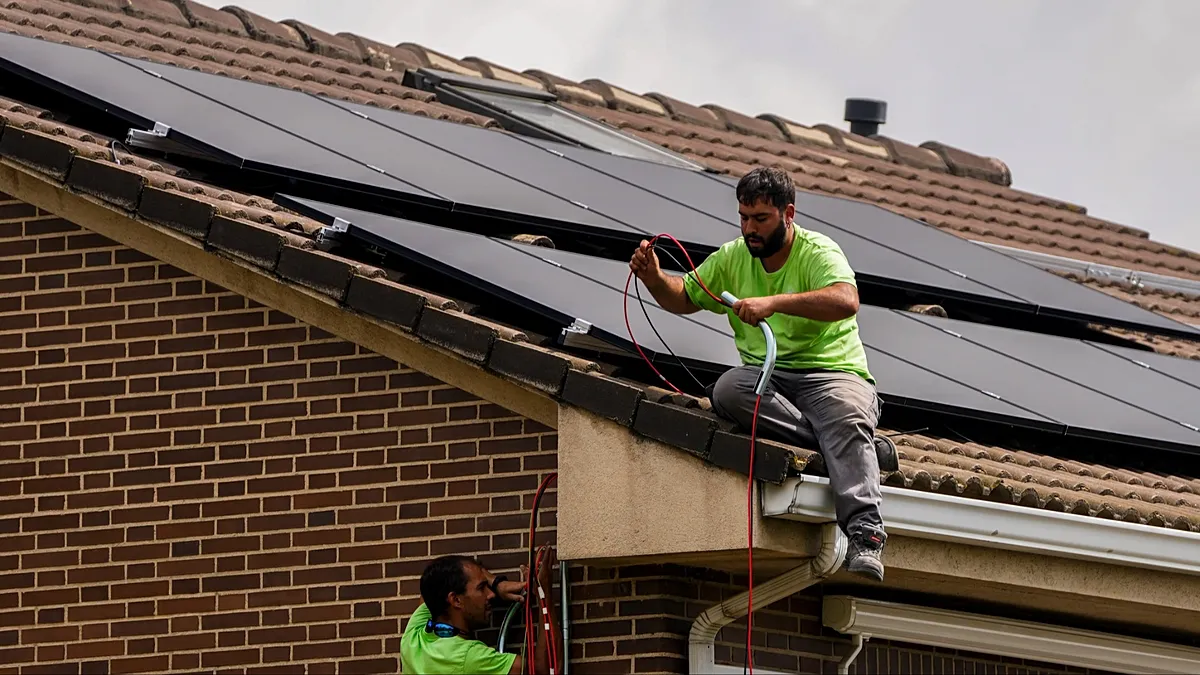
Spain Solar: Worried Investors and Negative Electricity Prices?
Worried investors and negative electricity prices are reshaping Spain’s renewable energy landscape. The nation’s rapid solar expansion has sparked debate about whether the boom is truly turning into a bust. After more than €70 billion invested in clean energy over fifteen years, recent headlines question if oversupply is driving investors away. Reports suggest that cheap solar power is creating market uncertainty, with phrases like “Spain’s solar boom turned to bust” dominating financial coverage.
However, these concerns may be overstated. Understanding the full picture requires examining both the data and the mechanisms behind Spain’s energy transition.
A Clean Energy Achievement
Spain’s energy transformation has delivered impressive results. Clean sources produced 75 percent of the country’s electricity last year, with wind and solar contributing 42 percent of the total mix. According to Ember, fossil fuels accounted for just 25 percent of Spain’s electricity in 2025. The nation’s per capita emissions reached 0.9 tonnes of CO2 equivalent, well under the EU average of 1.3 tonnes.
“Thanks to the rise of renewable energy, Spanish households and businesses have access to some of the cheapest electricity in Europe,” Roselow tells Euronews Earth.
The merit order principle explains much of this success. This system sets prices based on the most expensive plants needed to meet demand. When renewables cannot cover all consumption, costlier sources like coal or natural gas step in, keeping European prices elevated despite renewable growth.
Market Forces at Play
Ember’s latest analysis shows that Spain’s wind and solar expansion has “significantly weakened the link between gas and electricity prices” since the 2021-2024 gas crisis. Spanish consumers now save roughly €10 monthly on their bills thanks to this price protection.
Yet low consumer prices tell only part of the story. Bloomberg reported that at least four Spanish projects or companies have been placed on the market, with claims that a massive “glut of electricity” is pushing solar valuations downward. Industry sources noted that one solar producer received “lowball offers” and has temporarily halted asset sales.
“At present, there is no unusual level of this type of activity,” adds José Donoso, director general of UNEF, the main association of the solar photovoltaic sector in Spain. “On the one hand, some companies have decided to sell, while on the other, there are companies that believe current market valuations are too low and are therefore choosing not to sell.”
Navigating Negative Prices
Despite market adjustments, Spain’s renewable expansion continues. Between May 2025 and April 2026, following nationwide blackouts, the country added an average of 1.2 GW of combined wind and solar capacity monthly—slightly above the pre-outage average.
The solar glut does create real challenges. From January through March this year, Spain recorded 397 hours of negative electricity prices, up dramatically from 48 hours during the same period last year. When supply outpaces demand, prices can fall below zero. Generators then bid increasingly low or even negative prices to remain connected to the grid, since shutting down can prove more costly and may result in lost subsidies or revenue.
Unlike Germany or the UK, Spanish law does not require grid operators to compensate generators when they must reduce output to prevent overload. This means investors will see diminished returns on solar investments. Solar energy shows limited flexibility, generating power during daylight hours when consumption is typically lower, then stopping production in the evening when households return from work and school and need more energy.
Donoso argues that the electricity market currently operates under rules that need adaptation to better accommodate Spain’s renewable reality, ensuring that