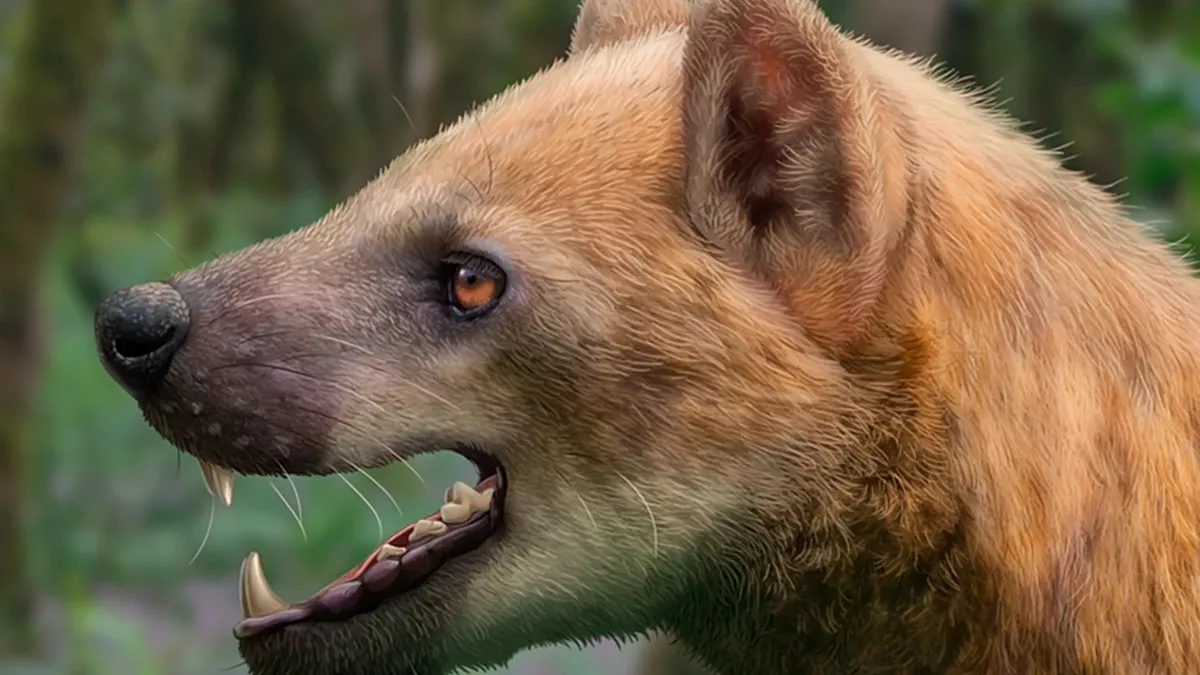
Spanish Scientists Discover New ‘Bear-Dog’ Species in Catalonia from 15.9 Million Years Ago
Spanish scientists discover new bear dog species – In a groundbreaking development, researchers from Spain have identified a previously unknown species of bear-dog, dating back 15.9 million years, in the fossil-rich region of Catalonia. This discovery, made at the Els Casots site in Subirats, Alt Penedès, adds a new chapter to the study of Miocene-era mammals and highlights the evolving nature of paleontological research. The fossil, a skull, was initially cataloged in the 1990s but lay dormant in storage for nearly two decades before its significance was re-evaluated.
Re-examining a Forgotten Fossil
It wasn’t until 2014, during the preparation of a doctoral thesis, that the skull sparked renewed interest. At first glance, it seemed familiar—similar to specimens of the genus Paludocyon that had been documented in the area and elsewhere. However, as the team from the Institut Català de Paleontologia Miquel Crusafont scrutinized the fossil, they noticed discrepancies. The skull appeared smaller and less robust than its presumed relatives, which were typically the size of lions or tigers and weighed around 200 kilos.
This realization prompted a two-year investigation to confirm the hypothesis. The team’s findings revealed that the fossil belonged to a distinct species, one that had not been previously described. To honor the contributions of paleontologist Salvador Moyà-Solà, the new species was named Paludocyon moyasolai. This discovery has positioned Els Casots as a global reference point for understanding this particular group of ancient carnivores.
Collaborative Efforts in Paleontological Research
The research was a multidisciplinary effort involving several institutions. In addition to the Institut Català de Paleontologia Miquel Crusafont, the study included the National Museum of Natural Sciences of the CSIC, the University of Valencia, the Autonomous University of Barcelona, the Complutense University of Madrid, Ecuador’s National Biodiversity Institute, and the South African museum Iziko. These partnerships underscore the importance of cross-border collaboration in uncovering evolutionary history.
The new species, Paludocyon moyasolai, belongs to the amphicyonid family—carnivores that exhibited traits of both dogs and bears but did not fully align with either. Its size, estimated at that of a large dog, and weight between 50 and 70 kilos, suggest it was a mid-sized predator. The fossil remains include the skull, most of the teeth, and a single lower molar, which provided critical clues for the team’s analysis.
Unusual Dental Characteristics and Dietary Insights
One of the most intriguing aspects of the discovery is the unique development of the posterior molars. The second upper molar is unusually broad, while the third is larger than typical for the genus. These features indicate a diet that was more versatile than previously assumed. The team inferred that the animal likely hunted small and medium-sized prey, such as primitive deer, bovids, and early pigs, rather than relying solely on large, powerful kills.
This dietary pattern contrasts with that of its larger relatives, which may have been apex predators in their ecosystems. The presence of multiple species at Els Casots, including other amphicyonids, also suggests a complex food web. A second, significantly larger amphicyonid species has been found at the same site, though it remains unnamed and is still under study. Such diversity among ancient carnivores offers valuable insights into the ecological dynamics of the Miocene period.
The Miocene Habitat of Els Casots
The environment in which Paludocyon moyasolai lived was vastly different from today’s landscape. Around 15.9 million years ago, the area was a shallow lagoon encircled by dense tropical forests. This setting hosted a wide array of wildlife, including crocodiles, snakes, fish, and a rich diversity of mammals. The unique conditions of this habitat likely contributed to the exceptional preservation of the fossils, as bodies became embedded in mud upon death, shielding them from decay.
“The aquatic environment was key to the fossils’ survival,” explained one of the excavation leaders. “Once trapped in the sediment, the remains were protected from environmental factors that typically degrade organic material.”
Such preservation allowed scientists to study the animal’s anatomy in remarkable detail, revealing traits that set it apart from other amphicyonids. The discovery also provides a window into the ancient ecosystems of the Iberian Peninsula, which were undergoing significant changes during the Miocene.
Broader Implications for Miocene Carnivore Communities
This find aligns with broader research exploring how carnivore communities were structured during the Miocene. A prior study, conducted by the Complutense University of Madrid, examined sites like Los Valles de Fuentidueña in Segovia and Cerro de los Batallones in Madrid. These locations were notable for their high concentration of carnivore species, including bear-dogs, felids, hyaenas, and bears. The analysis of tooth enamel samples from over 200 fossils, using stable isotope techniques, revealed intense competition among these predators.
However, some species, like the amphicyonid and a primitive hyaena, may have mitigated this competition by occupying different ecological niches. For instance, the amphicyonid likely hunted in open habitats, while others remained in forested areas. This dietary specialization allowed coexistence despite overlapping territories. The isotope method, which involves removing a few milligrams of enamel with a dentist’s drill and analyzing it via mass spectrometry, is a non-invasive technique that provides precise data on ancient diets.
Building a Picture of Miocene Fauna
By applying this approach to various sites and time periods, scientists are gradually assembling a comprehensive understanding of how Miocene fauna adapted to environmental shifts. The transition from dense forests to more open, arid landscapes was a major driver of ecological change, influencing the evolution and survival of carnivores. Paludocyon moyasolai fits into this narrative as a slightly earlier example of the amphicyonid family, which dominated Eurasia and North America during the Cenozoic era.
While the amphicyonid family declined over time, the discovery at Els Casots reinforces its ecological prominence in the Iberian Peninsula. The presence of multiple amphicyonid species in the same region suggests a thriving, competitive environment. Future research may further clarify the role of Paludocyon moyasolai in this ecosystem, shedding light on the evolutionary strategies of ancient mammals.
This latest breakthrough not only expands the fossil record but also highlights the importance of revisiting older specimens with modern techniques. The combination of traditional paleontological methods and cutting-edge analytical tools is transforming our understanding of prehistoric life. As more discoveries emerge from the Miocene, the story of these ancient carnivores continues to unfold, offering a glimpse into a world teeming with biodiversity and ecological complexity.