How This Country Is Integrating Artificial Intelligence into Education
How this country is adopting AI – Kazakhstan has taken a significant step toward modernizing its education system by implementing a national initiative to incorporate artificial intelligence (AI) into classrooms. President Kassym-Jomart Tokayev has directed the government to finalize an AI-driven education strategy by July 1, 2026, with a focus on addressing disparities in educational resources between urban and rural areas. The plan aims to gradually extend this technological integration across the entire country, starting with a pilot project that will begin this September in 500 rural schools currently facing staffing shortages. The initiative is projected to run until May 2027, offering a structured approach to the widespread adoption of AI in teaching.
Bridge the Urban-Rural Divide with Technology
The pilot project will prioritize rural schools, providing them with high-speed internet and updated digital infrastructure to ensure equitable access to modern learning tools. This effort seeks to mitigate the challenges that remote institutions often encounter, such as limited access to experienced educators. Through the initiative, seasoned teachers from urban centers will deliver both live and recorded lessons to smaller rural schools, effectively expanding their reach. “Our goal is to ensure that every child, no matter where they live, can benefit from the expertise of the country’s top educators,” stated Sergei Companiec, the nation’s Vice-Minister of Enlightenment.
“Our primary mission is to make the country’s best educators available to all children, regardless of whether they live in a major city or a small rural community,” said Sergei Companiec, Kazakhstan’s Vice-Minister of Enlightenment.
Companiec emphasized that the technology will not replace teachers but will act as a support system. By enabling remote instruction, AI tools will allow educators to focus more on personalized teaching and direct student interaction. For instance, students struggling with specific topics can receive additional explanations and exercises tailored to their needs, while those advancing faster may be assigned more challenging tasks. This approach aims to create a more flexible and responsive learning environment.
AI as a Learning Assistant
Alongside remote teaching, a national AI platform will play a key role in analyzing student performance and identifying areas where learners may need extra assistance. The system will generate real-time feedback for teachers, helping them adjust their methods to better meet individual needs. “In any classroom, students are very different. To make learning truly effective with AI, we can approach each student individually—giving some more advanced tasks and others more structured assignments depending on their needs,” explained Saltanat Zhumabayeva, Director of the Ybyrai Altynsarin National Academy of Education.
“With AI, we can address each student’s unique learning journey, offering customized support without compromising the quality of education,” said Saltanat Zhumabayeva, Director of the Ybyrai Altynsarin National Academy of Education.
The government has also outlined plans to develop a framework of ethical principles and guidelines to govern AI’s use in schools. This will help prevent overreliance on technology and ensure that AI complements, rather than supplants, traditional teaching methods. Educators highlight that students will still be required to think critically, analyze information, and form their own conclusions. “When a teacher provides information, the student’s main task is to form their own viewpoint, compare and analyze,” Zhumabayeva added.
Training and Infrastructure Development
A crucial component of the initiative is comprehensive teacher training. Over 350,000 educators have already completed AI-focused training programs, while more than 100,000 have gained access to OpenAI’s GPT-edu platform for classroom applications. “We have developed a dedicated training program for teachers participating in the pilot project in small rural schools. They will be trained to use the tools and technologies introduced as part of the initiative,” Companiec noted.
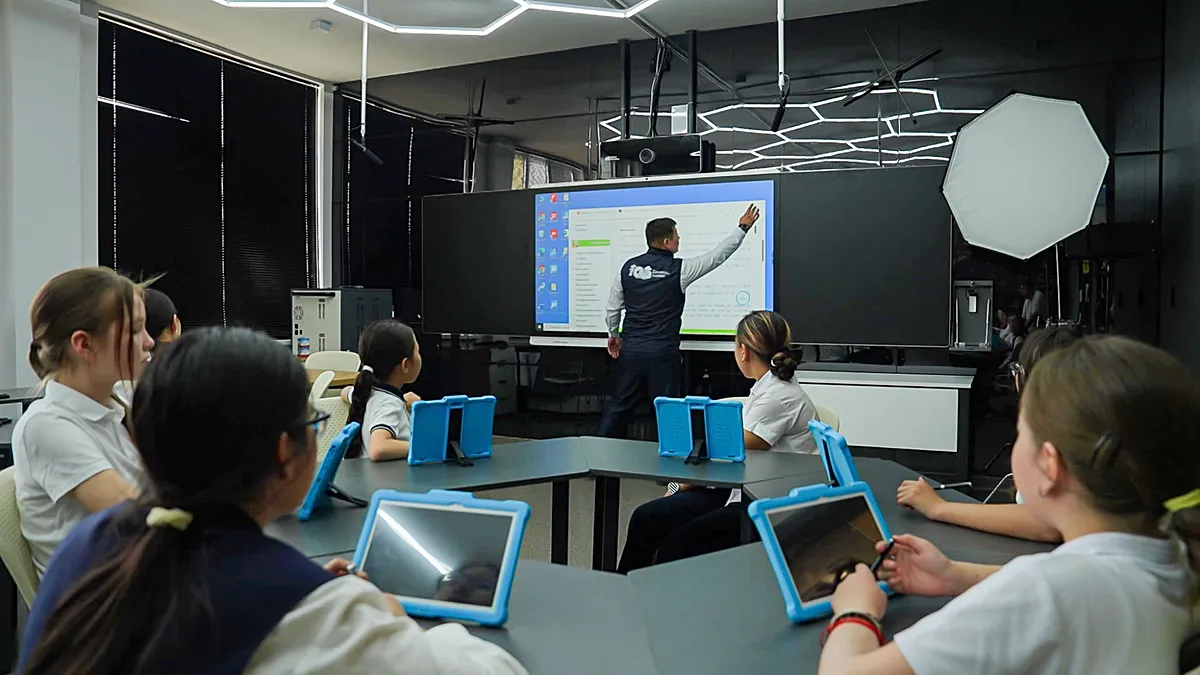
The project also includes the installation of advanced digital infrastructure in participating schools. This includes high-performance computers, 3D printers, 3D pens, and drones, which are designed to foster practical digital skills among students. At public school No. 101 in Astana, one of the first institutions to test AI integration, students use classroom cameras, audio systems, and tablet-based assignments to track progress in real time. “The goal is for pupils to use AI and the available equipment to create innovative projects,” said Aitzhan Abilmazhinov, the school’s deputy head for digitalisation.
By 2029, the government anticipates that AI will significantly reduce the administrative workload of teachers, potentially cutting it by 30%. This shift is expected to free up educators’ time, allowing them to focus on mentorship and individualized instruction. Officials believe this will lead to a more personalized education system, where each student’s learning path is tailored to their abilities and needs. “AI tools will help schools move away from a one-size-fits-all model and toward a system that adapts to the diverse requirements of learners,” Companiec explained.
Monitoring Student Wellbeing
Beyond academic support, AI is being used to enhance student wellbeing. At Astana’s public school No. 101, a video analytics platform has been tested to detect and flag behaviors linked to bullying or social isolation. This technology monitors student interactions during class, providing insights that can help teachers address emotional and psychological challenges more proactively. “AI can act as a silent observer, identifying patterns in student behavior that might otherwise go unnoticed,” Abilmazhinov remarked.
The integration of AI into schools is part of a broader effort to prepare the next generation for a rapidly evolving digital world. By combining technological innovation with human expertise, Kazakhstan aims to create a balanced educational approach that leverages the strengths of both. “We are not just teaching students to use AI—we are teaching them to think critically, solve problems, and collaborate with technology,” said Zhumabayeva, underscoring the initiative’s long-term vision.
Officials have also stressed the importance of maintaining a strong connection between AI and classroom activities. While the technology will handle data analysis and remote teaching, in-person educators will remain central to the learning process. They will guide students through material, provide emotional support, and ensure that the AI-driven tools are used effectively. “Teachers are the backbone of this system, and AI serves as an extension of their capabilities,” Companiec said.
Future Goals and Challenges
The government expects the AI initiative to reduce the number of underperforming students and improve overall academic outcomes. However, challenges such as ensuring consistent internet access and training all educators to use the new tools will require sustained effort. Companiec acknowledged that the success of the program depends on the seamless collaboration between technology and teaching professionals. “We are confident that with the right training and infrastructure, AI will become an invaluable resource for both students and teachers,” he said.
As the pilot project expands, it will serve as a model for other regions. The program’s success could influence future education policies in Kazakhstan and beyond, demonstrating how AI can bridge educational gaps and enhance learning experiences. With its focus on equity, innovation, and ethical use, the country is setting a precedent for how technology can be harnessed to transform traditional classrooms into dynamic, personalized learning environments.