Man Charged with Sabotage of Nord Stream Gas Pipeline in German Court
Man charged with sabotage of Nord – In a recent development, German authorities have formally charged a man in connection with the 2022 sabotage of the Nord Stream gas pipeline, a critical infrastructure linking Russia to Europe. Federal prosecutors informed the AFP news agency that Serhii K., a Ukrainian national, is now facing legal action for the explosions that damaged the pipeline. This marks the first public announcement of his indictment, with German media suggesting he was the leader of the team responsible for the operation. The suspect, who was arrested in Italy during the summer of 2025, was extradited to Germany in November of that year, where he is currently held in custody. His trial is set to proceed in Hamburg, the city where the case will be heard.
According to reports, Serhii K. is accused of “attacks on civilian energy infrastructure, causing an explosives detonation, and demolition of built structures.” The evidence against him is described as “overwhelming,” with investigators noting that he allegedly incriminated himself during phone calls made to relatives and acquaintances while in custody. These conversations, which have been cited in media accounts, are believed to have provided crucial details about the sabotage operation. The German prosecutors have not yet released specific details about the charges, but the case has been linked to the destruction of the Nord Stream pipelines, which are central to Russia’s energy exports to Europe.
The sabotage of the Nord Stream gas pipeline was carried out by a small Ukrainian crew operating under the guise of a pleasure boat. This detail was revealed by the Wall Street Journal (WSJ) in 2024, which reported that the operation was planned during a drunken celebration in May 2022. At the time, Ukrainian military officers were commemorating the halt of Russia’s full-scale invasion, and they sought to strike another blow against Moscow. The WSJ cited four anonymous sources from the Ukrainian defense and security sectors, all of whom had direct knowledge of the plot. These individuals argued that the pipelines were a legitimate target as Ukraine defended itself against Russian aggression.
“The operation was concocted during a drunken night in May 2022, as Ukrainian military officers celebrated halting Russia’s full-scale invasion of the country and were looking to deal another blow to Moscow,” reported the WSJ.
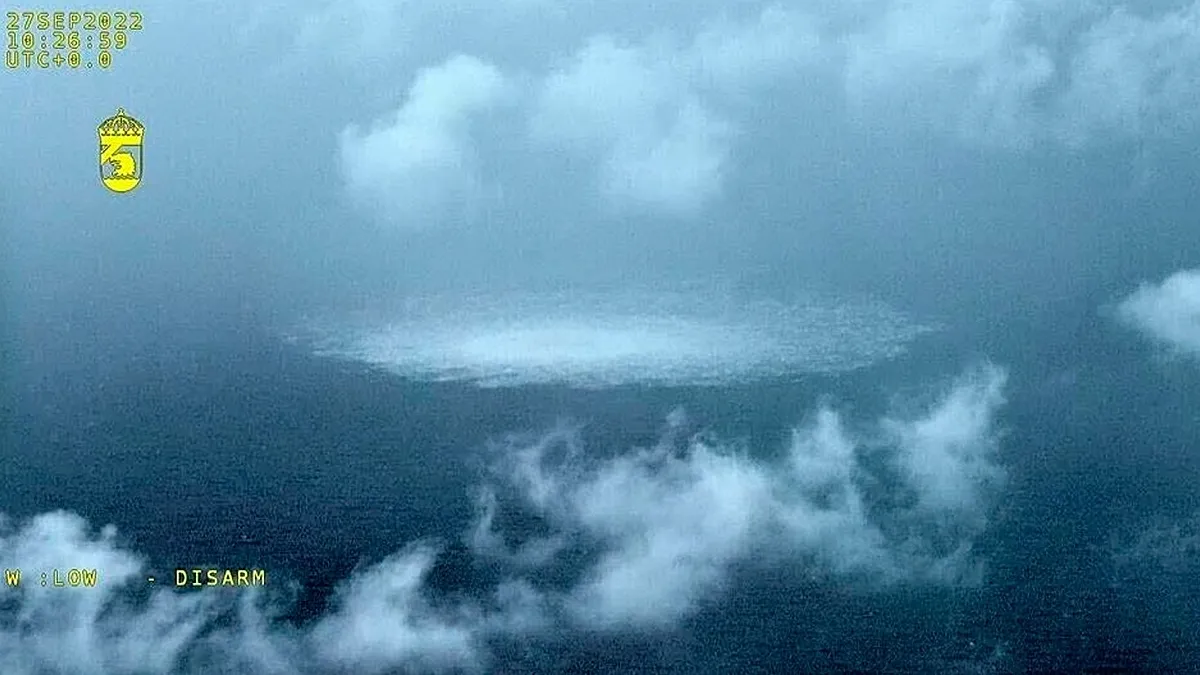
The Nord Stream pipeline system, which spans the Baltic Sea from Russia to Germany, plays a vital role in supplying natural gas to Western Europe. Before the sabotage, it was a major conduit for Russian energy, generating billions in revenue for the Kremlin. The attack, however, disrupted this flow, particularly targeting Nord Stream 1, which was Russia’s primary supply route to Germany. The destruction of this pipeline came shortly after Moscow cut off gas exports in August 2022, a move that significantly impacted European energy markets. Nord Stream 2, the second line of the pipeline, had not yet been operational and was halted by Germany before Russia’s invasion of Ukraine in February 2022.
Despite Ukrainian President Volodymyr Zelenskyy’s initial approval of the sabotage plan, the U.S. intelligence agency CIA became aware of the scheme and urged him to abandon it. Zelenskyy reportedly ordered a pause, but his chief of staff, Valeriy Zaluzhniy, proceeded with the operation. This decision, according to the WSJ, was made in the context of escalating tensions with Russia and the desire to weaken its energy leverage. The cost of the operation is estimated at around $300,000 (€273,000), a relatively modest sum compared to the strategic value of the pipelines.
“All of them considered the pipelines as a legitimate target as it defended itself against Russia,” said the WSJ, citing senior Ukrainian defense and security officials involved in or aware of the plot.
The sabotage of Nord Stream has intensified geopolitical tensions, particularly in the context of the ongoing war in Ukraine. European countries, already seeking to reduce dependence on Russian energy, have used the incident to justify further measures to cut ties with Moscow. The explosions not only damaged Nord Stream 1 but also inflicted significant harm on Nord Stream 2, which was never activated due to Germany’s decision to suspend its certification process before the invasion. This development has raised questions about the role of Ukrainian forces in the conflict and their coordination with external actors.
Following the sabotage, Russia accused the United States of orchestrating the explosions, a claim that Washington has consistently denied. The U.S. government has pointed to the involvement of Ukrainian personnel as evidence of a broader strategy to undermine Russian energy infrastructure. Meanwhile, the German court’s handling of Serhii K.’s case has become a focal point for discussions about accountability and the geopolitical implications of the attack. The suspect’s alleged command of the operation from a yacht has drawn attention to the logistics and coordination required to execute such a complex sabotage.
As the trial in Hamburg progresses, Serhii K. will be scrutinized for his role in the destruction of the pipeline. His case underscores the growing tensions between Ukraine and Russia, as well as the involvement of external forces in the conflict. The incident has also highlighted the strategic importance of energy infrastructure in shaping international relations. Analysts suggest that the sabotage may have been a calculated move to weaken Russia’s economic position and bolster Ukraine’s position in the global energy market.
The German prosecutors’ announcement comes amid ongoing investigations into the sabotage, which have involved multiple sources of evidence. The suspect’s cooperation during his time in Italian custody, as well as the testimonies from Ukrainian officials, has been pivotal in building the case. The operation’s execution, involving a rented yacht and a team of six individuals, demonstrates the level of planning and execution required for such a mission. The attack’s timing—during a period of military victory for Ukraine—has further fueled debates about its political motivations and the broader implications for the war in Europe.
With the case moving forward, the German court will play a key role in determining the fate of Serhii K. and the potential consequences for Ukraine’s international standing. The incident has not only disrupted energy supplies but also become a symbol of the complex interplay between energy, security, and geopolitics in the region. As the trial unfolds, the world watches closely to see how the legal proceedings reflect the broader narrative of the conflict and its far-reaching impact on global energy markets.