
Is Britain ungovernable?
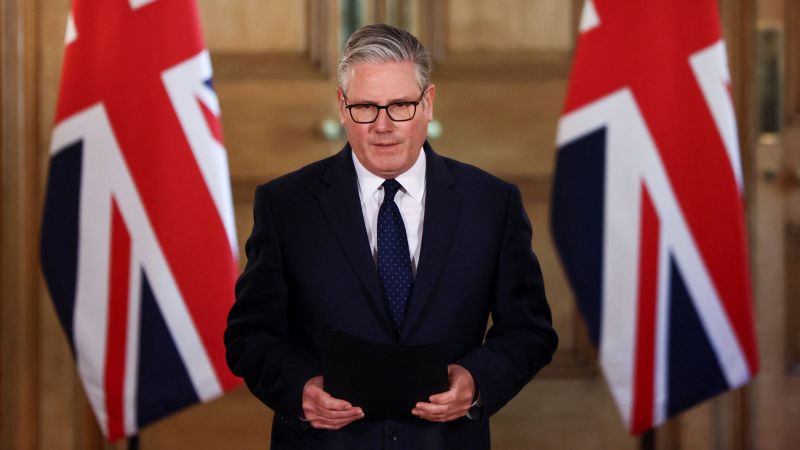
Is Britain ungovernable?
Is Britain ungovernable – Anthony Seldon, a historian renowned for chronicling the lives of Britain’s recent prime ministers, has observed a significant shift in the political landscape since the 1990s. Once a manageable task, his work on eight consecutive leaders has now become a race against time. The political instability of recent years, marked by frequent leadership changes and a fragmented electorate, has challenged even the most seasoned analysts. Seldon, now 72, fears that the pace of change may outstrip his ability to document it, raising questions about the very nature of governance in the UK.
The Erosion of Political Stability
The Conservative Party’s leadership has seen a series of rapid changes in recent years. Within a single year, the party replaced three prime ministers, each facing mounting pressure from internal dissent and public frustration. This trend has left Seldon contemplating whether the nation’s political structure is evolving into something unmanageable. His optimism for a return to stability, once sparked by Keir Starmer’s 2024 Labour victory, now appears to be waning. Starmer’s landslide win in parliament promised a decade of national rejuvenation, but just under two years into his tenure, signs of instability are already emerging.
Recent local elections have served as a barometer for public sentiment, with voters decisively rejecting Labour candidates in England, Scotland, and Wales. This rejection has emboldened Starmer’s allies to consider his removal, suggesting a potential unraveling of the Labour Party’s leadership. Seldon, who is set to publish his biography of Rishi Sunak in August, notes that the UK may be on the brink of a new prime minister—its sixth in seven years—before the year’s end.
A Nation in Flux
Britain’s challenges extend beyond its leadership changes. The lingering effects of the 2008 financial crisis have left the economy in a precarious state, with real wages stagnating for over a decade. Recent inflationary pressures from the pandemic and Russia’s invasion of Ukraine have only marginally improved living standards. Meanwhile, Brexit has been estimated to reduce GDP per person by up to 8%, compounding the nation’s economic woes. These factors, combined with a sluggish productivity growth rate, have created a perfect storm of instability.
Britain’s debt levels are also a cause for concern, with government bonds yielding the highest among G7 nations. Industrial electricity costs, too, remain a burden, being the most expensive in the group. These economic strains are mirrored in the political arena, where the traditional two-party system has given way to a more chaotic five-way competition in England and a six-way contest in Scotland and Wales. The Liberal Democrats, Greens, Reform UK, and nationalist parties now vie for influence, threatening to fragment the UK’s political unity further.
Seldon’s analysis suggests that the UK’s current turmoil is not solely the result of recent leadership transitions but also a reflection of deeper structural issues. The first-past-the-post electoral system, which once ensured stability by favoring two dominant parties, now struggles to accommodate a diverse array of voices. This has led to a situation where no single party can command a clear majority, making governance increasingly complex.
Comparing Leaders to American Icons
Seldon often draws parallels between British and American leaders, a habit that has become both insightful and controversial. His assessment of Boris Johnson positions him as a “Rooseveltian” figure—possessing grand ambitions but falling short in execution. Johnson’s tenure was marked by a blend of bold policymaking and political recklessness, exemplified by his frequent use of emergency powers and his rhetoric about revitalizing “left-behind” regions.
“Boris Johnson’s style of leadership reminded me of FDR, but only in ambition, not in delivery,”
Seldon remarked in a CNN interview, underscoring the gap between vision and results. Similarly, Liz Truss, whose libertarian economic policies were described as “Reaganite,” introduced an unfunded tax-cut plan in 2022 that nearly triggered a financial crisis. Her brief 49-day stint as prime minister highlighted the fragility of the Conservative Party’s leadership, with the Bank of England failing to bail her out of the chaos she created.
Rishi Sunak, Seldon notes, embodies a “Hooverite” approach to governance—prioritizing fiscal conservatism and a smaller state. However, by the time Sunak took office in 2022, the nation was already weary of the Conservatives, with the damage caused by Truss’s policies casting a long shadow. Sunak’s election as the first British Asian prime minister was seen as a potential turning point, but Seldon argues it was more of an inevitability than a breakthrough.
Starmer’s Leadership and the Road Ahead
Unlike his predecessors, Keir Starmer’s leadership style appears more personality-driven than ideologically rooted. Seldon describes Starmer as echoing elements of Jimmy Carter, a leader known for his steady, pragmatic approach. This characterization has sparked debate, with some suggesting Starmer’s focus on incremental reforms contrasts sharply with the more radical agendas of his rivals.
Despite the challenges, Seldon remains confident that Britain is not inherently ungovernable. “The revolving door of 10 Downing Street has made it harder to sustain long-term policies, but the country has always adapted,”
he told CNN. “Britain is categorically not ungovernable, although some recent prime ministers have tried darn hard to make it so.”
Starmer’s ascent to power, however, has introduced new complexities. While his leadership is perceived as more stable than his predecessors, the risk of being ousted remains high. Seldon acknowledges that the current political climate is fraught, but he believes it is a product of temporary missteps rather than an existential crisis. The question now is whether Starmer can navigate these challenges without succumbing to the same fate as his predecessors.
As the UK prepares for another potential leadership change, Seldon’s work serves as a reminder of the nation’s historical pattern of political turnover. Yet, he also sees hope in Starmer’s ability to consolidate power and steer the country toward a more coherent future. The real test, he suggests, will be whether the current generation of leaders can transcend the chaos of recent years and restore a sense of direction to British politics.
In the end, the answer to whether Britain is ungovernable may hinge on the resilience of its institutions and the adaptability of its leaders. While the political landscape has grown more unpredictable, Seldon’s reflections highlight the importance of leadership in shaping the nation’s trajectory. The UK’s journey through this turbulent period will determine whether it emerges as a unified entity or a fractured collection of competing interests.