Hungary: Tamás Sulyok Will Not Resign as President
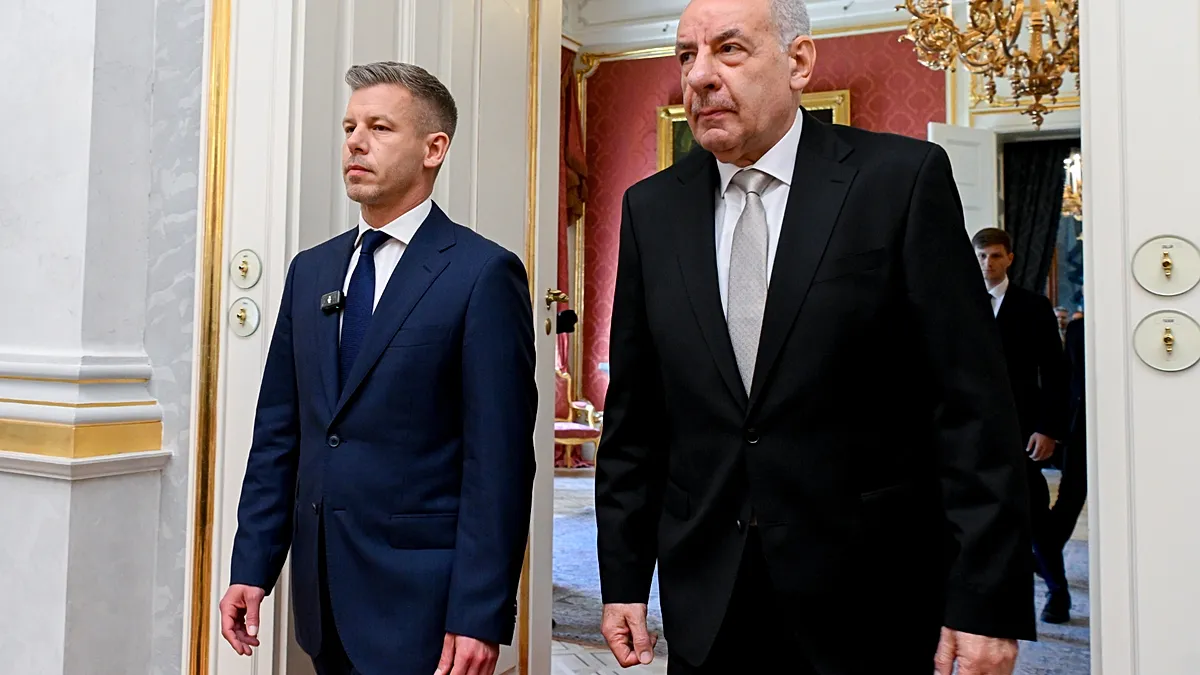
Hungary – As the political landscape in Hungary intensifies, President Tamás Sulyok has reaffirmed his commitment to remaining in office. In a recent Facebook video, he emphasized that his decision to continue serving as the head of state is grounded in his belief in the necessity of his role. Sulyok highlighted his intention to support the legislative measures required to facilitate access to European Union funds, a critical issue for the nation’s economic stability. His stance comes amid growing pressure from Prime Minister Péter Magyar, who has publicly challenged Sulyok’s leadership and called for his resignation.
The pressure on Sulyok escalated with the announcement of a May 31 deadline set by Magyar for the resignation of the president and other prominent officials. This deadline was framed as a pivotal moment in the nation’s political evolution, aiming to address concerns about the influence of Viktor Orbán’s ruling party, Fidesz, on the country’s governance. Magyar’s Facebook post underscored his argument that Sulyok has consistently prioritized the interests of Fidesz over those of the broader Hungarian public. The prime minister criticized Sulyok’s actions, particularly his defense of a monthly salary of 6.3 million forints, which Magyar claimed was a distraction from more pressing national issues.
“Tamás Sulyok has never stood up for the downtrodden, for those under attack, or in defence of the rule of law. Even on Children’s Day he is only defending his monthly salary of 6.3 million forints, instead of apologising.”
Magyar’s critique extended beyond Sulyok, targeting the constitutional system that allows Fidesz to maintain a dominant role in selecting the president. The prime minister’s criticism was not new; he had previously referred to Sulyok as Viktor Orbán’s “puppet president,” arguing that the current administration sought a head of state whose primary loyalty lay with the ruling party. This perspective suggests that the president’s role is more symbolic than substantive, serving as a figurehead while the real political decisions are driven by Fidesz’s agenda.
The upcoming meeting between Magyar and the justice minister with Sulyok further illustrates the intensity of the political standoff. Scheduled for Monday morning, this visit is seen as a crucial step in the prime minister’s efforts to push Sulyok toward resignation. Magyar has been vocal about his demands, using social media to remind followers of the approaching deadline and to stress the importance of the moment. His message is clear: the president must demonstrate a willingness to align with the government’s priorities, particularly in securing EU financial support.
Sulyok’s response to the pressure has been resolute. In his recent statement, he reiterated that he would not resign, asserting that his case must be evaluated according to the constitution. He mentioned his engagement with the Venice Commission, an international body that provides advisory opinions on constitutional matters. This move signals Sulyok’s intent to leverage constitutional mechanisms to defend his position, arguing that his tenure is justified by the legal framework in place.
The Hungarian constitutional system, which grants the president ceremonial powers, has been a point of contention for critics. While the president is elected by parliament, the process often reflects the will of the ruling party. Sulyok, like his predecessors Pál Schmitt, János Áder, and Katalin Novák, has been viewed as a loyal supporter of Orbán’s policies. Schmitt resigned after a plagiarism scandal, Áder’s term was marked by his alignment with Fidesz, and Novák stepped down following a controversial pardon case. These examples underscore the pattern of presidential leadership that has characterized Hungary’s recent political history.
Magyar’s demand for Sulyok’s resignation is part of a broader strategy to consolidate power within his party. The prime minister has framed the issue as a test of loyalty to the government’s goals, particularly in maintaining national unity and upholding constitutional principles. However, Sulyok’s continued presence in office challenges this narrative, highlighting the ongoing debate over the balance between executive authority and parliamentary control.
As the deadline approaches, the situation remains fluid. The Venice Commission’s involvement adds an international dimension to the dispute, potentially influencing the outcome. Analysts suggest that Sulyok’s refusal to resign may lead to further political maneuvering, with the possibility of legal challenges or increased public scrutiny. The role of the president, though largely symbolic, carries significant weight in the eyes of both supporters and detractors, making this moment a critical juncture in Hungary’s political trajectory.
In the coming days, the focus will shift to the actions taken by the government and the response from the president. The visit planned for Monday is expected to be a key event, with Magyar and his minister aiming to assert their position and encourage Sulyok to reconsider. Meanwhile, Sulyok’s continued defense of his role reinforces his commitment to the constitutional process, even as it faces criticism from those who view it as a tool for Fidesz’s political dominance.
The broader implications of this standoff extend beyond the immediate political figures involved. It reflects the tension between the president’s ceremonial duties and the growing influence of the ruling party in shaping the nation’s governance. As the deadline nears, the outcome will not only determine the fate of Sulyok but also set a precedent for future interactions between the presidency and the parliamentary majority.