NATO Chief Rutte Defends Allies Amid Trump’s Iran War Criticism
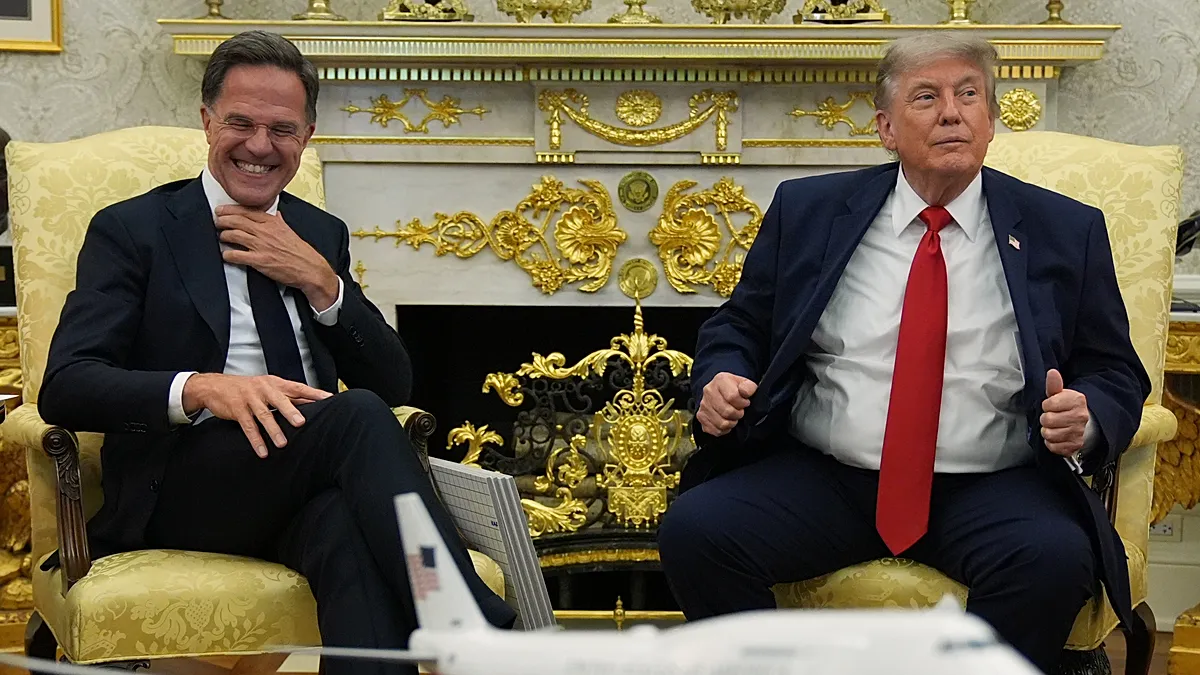
NATO chief Rutte defends allies as Trump – In a tense exchange during his visit to Washington, NATO Secretary General Mark Rutte engaged with U.S. President Donald Trump, balancing diplomatic reassurance with subtle counterpoints to the president’s latest accusations against the alliance. The meeting, held on Wednesday, underscored the ongoing rift between Trump and his European counterparts, as the American leader expressed frustration over perceived NATO inaction during the recent conflict with Iran.
Trump’s Allegations Against NATO
Trump reiterated his grievances with the alliance, accusing it of failing to fully support the U.S.-Israeli campaign against Iran. The attack on Iran, launched on February 28, had been a pivotal moment in the geopolitical standoff, and Trump argued that NATO members had not adequately backed the operation. “I’ve been let down,” he stated, emphasizing his belief that European allies had not demonstrated the necessary solidarity. The U.S. and Israel had coordinated the strikes, marking a significant escalation in the conflict, and Trump claimed that NATO’s hesitation had undermined the joint effort.
“We don’t need their money — we don’t need anything. We have the most powerful military in the world by far. But I just want loyalty.”
This remark highlighted Trump’s frustration with the alliance’s reliance on European financial contributions and his demand for unwavering political support. He also criticized NATO’s bureaucratic approach, suggesting that its members should align more closely with U.S. strategic priorities. The president’s stance was reinforced by his assertion that the U.S. could act independently, without needing to consult NATO’s leadership beforehand.
Rutte’s Reassurance on Alliance Solidarity
Rutte, however, sought to temper Trump’s criticism, acknowledging that while there had been moments of disappointment, the alliance as a whole had remained committed to the mission. “There have been isolated cases where you felt let down, but generally speaking, your European allies have stood by you,” he said, aiming to reassure the president of NATO’s overall reliability. The Dutch leader pointed to the deployment of 4,000 to 5,000 U.S. aircraft from European bases prior to the ceasefire agreement as evidence of shared military effort.
This military collaboration, Rutte noted, demonstrated the alliance’s ability to act in unison when required. The operation, referred to as “Epic Fury” by the U.S., had seen planes from Italy and other European countries take part in the strikes. Rutte’s comments, however, were met with swift backlash from Iran, which accused NATO of complicity in the conflict. The Iranian foreign ministry’s spokesperson, Esmaeil Baqaei, condemned the alliance’s involvement as a “flagrant violation of peremptory norms of international law and the core principles of the UN Charter.”
Iran’s Condemnation of NATO’s Role
Tehran framed Rutte’s remarks as a direct endorsement of the U.S.-led aggression against its country, accusing the alliance of endorsing the attack as a legitimate military action. “This is a clear and damning admission of NATO’s active complicity in an unlawful war of aggression against a sovereign UN member state,” Baqaei wrote on X. The criticism highlighted the deepening mistrust between Iran and its NATO allies, with the former arguing that the alliance had failed to uphold its principles in the face of U.S. military dominance.
Rutte’s defense of NATO’s collective stance was further complicated by Italy’s rapid response to the accusations. The Italian defense ministry clarified that it had only permitted “technical and logistical” flights during the operation, stressing that the country’s involvement had been limited to supporting infrastructure rather than engaging in combat missions. This distinction aimed to alleviate concerns that Italy had been complicit in the war, but it also underscored the differing interpretations of NATO’s role in the conflict.
Broader Implications for NATO and U.S. Strategy
The dispute over Iran’s attack reflects a broader pattern of tension between Trump and his European allies, particularly as the U.S. leader has pushed for a more assertive approach in global affairs. His second term has been marked by repeated efforts to shift NATO’s focus toward strategic interests in the Asia-Pacific region, especially as China’s growing influence in global trade and security becomes a central concern. This realignment has led to fears that Europe may be left to manage its own defense while the U.S. prioritizes other regions.
Trump’s rhetoric has also intensified the pressure on NATO members to commit more resources to the alliance. The Pentagon has already signaled that it is reducing its military assets available for NATO operations worldwide, raising alarms about the continent’s vulnerability in the event of a larger conflict. This shift has placed the burden of conventional defense more squarely on European nations, a move that has sparked debate about the balance of power within the alliance.
With the NATO summit approaching in Ankara from July 7 to 8, the fallout from this disagreement could have significant implications for the organization’s cohesion. The meeting will provide a critical opportunity for allies to reaffirm their commitment to collective defense and address Trump’s growing skepticism. Rutte’s visit to Washington was intended to strengthen ties, but it also revealed the challenges of maintaining unity in the face of diverging national interests.
Historical Context and Future Concerns
Trump’s criticism of NATO is not new, but it has grown more pointed in recent months. His administration has consistently questioned the alliance’s commitment, particularly after the U.S. threatened to annex Greenland, a move he later abandoned in January. This incident exemplified the president’s tendency to assert American dominance over its allies, even when diplomatic resolutions were possible.
The current climate of discord has also been influenced by the U.S.’s strategic pivot toward Asia. As Washington reallocates resources to counter China’s influence, European members have been left to manage their own defense obligations, often with less support from the United States. This dynamic has fueled concerns that NATO’s role is being diminished, with some members fearing that the alliance may become a secondary player in global security.
Rutte’s remarks during the meeting in Washington were seen as an attempt to bridge the gap between Trump and his allies, but the controversy over Iran’s attack has tested the alliance’s resilience. The episode has also reignited discussions about the importance of maintaining a unified front in international conflicts, especially as Russia’s military posture continues to cast a shadow over Europe’s security landscape. The upcoming summit in Ankara will be a key moment to evaluate the alliance’s ability to navigate these challenges and reaffirm its purpose in an evolving global order.