
Israel backs US-Iran ceasefire but Netanyahu’s war goals remain unfulfilled
Israel Backs US-Iran Ceasefire but Netanyahu’s War Goals Remain Unfulfilled
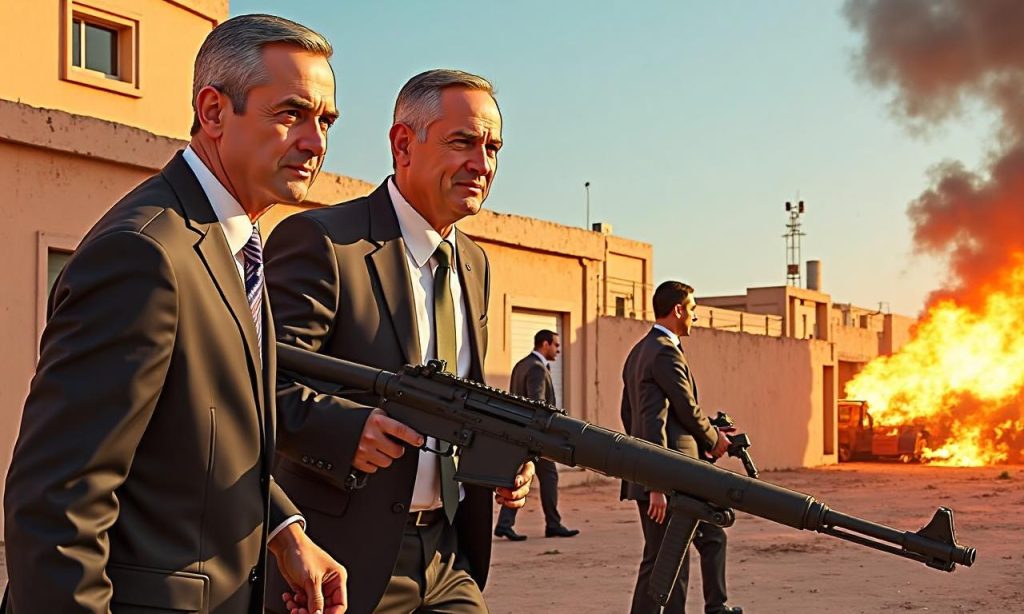
Israeli Prime Minister Benjamin Netanyahu’s office acknowledged the ceasefire announced overnight, but the tone of the statement reflected a more subdued acknowledgment compared to his earlier confidence when launching the US-Israeli military campaign against Iran in late February. The decision was attributed to President Donald Trump, creating a notable shift from Netanyahu’s initial assertiveness. This contrast became evident as both the United States and Iran issued triumphant declarations following five weeks of hostilities.
Netanyahu’s remarks on Wednesday night indicated that the ceasefire was not the conclusion of the conflict, but rather a temporary pause. He emphasized that Israel still had objectives to pursue, either through ongoing negotiations or renewed military action. The war’s outcome leaves Netanyahu with unmet aspirations, as Iran’s armed forces continue operations and its clerical leadership remains intact despite the loss of key figures like Supreme Leader Ali Khamenei in US-Israeli strikes.
The nuclear program and enriched uranium stockpile in Iran remain unresolved, while the country’s ballistic missile capabilities, though weakened, have persisted. Throughout the conflict, Iran has launched missile barrages toward Israel, including overnight alerts and explosions in Jerusalem, with the Israel Defense Forces confirming multiple missile attacks. These developments have raised questions about the effectiveness of the operation in achieving Netanyahu’s declared aims.
Netanyahu’s Overestimation of Outcomes
“Netanyahu had only referred to a ‘suspension’ of hostilities, ahead of talks between the US and Iran, but he had not publicly accepted the war was over,” said Anshel Pfeffer, a veteran Israeli journalist and biographer of Netanyahu. He noted that the prime minister’s failure to achieve his stated objectives was “not good” for his political standing and hinted at potential tensions with the Americans if Israel’s influence in the ceasefire was minimal.
Election Year Pressures
With an Israeli election approaching, Netanyahu faces the risk of losing power within months. Shira Efron, director of US-based RAND corporation’s Israel policy, critiqued the campaign’s messaging, stating that Netanyahu “promised Israelis this operation would end the Islamic regime, by cutting the head of the snake.” However, she argued that the snake has transformed into a hydra, with no definitive progress on Iran’s nuclear or missile threats.
“The missile programme still exists, and for Israelis, whether 70 or 80 per cent of capabilities have been degraded, there hasn’t been a discernible difference for those sheltering over the last five weeks,” Efron added. She highlighted the difficulty of selling the war to the public, given the lack of regime change and unresolved nuclear concerns.
Distinction Between Realities
Yossi Kuperwasser, former Israeli military intelligence officer and director of the Jerusalem Institute for Strategy and Security, offered a different perspective. He argued that practical goals, such as targeting Iran’s nuclear and missile production facilities, had been fully realized. However, “wishful goals,” like sparking a popular uprising to topple the regime, had not materialized, leaving Netanyahu’s strategic vision incomplete.