A Living Archive of Uzbek Heritage
Flea markets and antique spaces keep – Across Uzbekistan, flea markets and antique spaces have become unexpected hubs for preserving the country’s rich cultural tapestry. What may initially seem like a chaotic mix of objects—ranging from dusty books to weathered fabrics—reveals a deeper narrative. Each item carries a story, a memory, and often decades of history. These spaces, driven by personal collections, family legacies, and items that have endured through generations, offer a unique lens into Uzbekistan’s past. From the bustling streets of Tashkent to the quieter corners of regional bazaars, they embody a blend of tradition and modernity, where the old and new coexist.
The Evolution of Antiques in Tashkent
Tashkent, the capital city, has seen a notable shift in its cultural landscape as interest in antiques and vintage treasures grows. What began as a modest family venture has now evolved into a thriving business dedicated to historical preservation. One prominent example is an antique salon that has been operating for over three decades. Inside, the collection includes vintage furniture, crystalware, rare photographs, and decorative objects—many of which are not typically displayed in traditional museums. This curated space reflects a more nuanced approach to history, emphasizing the significance of each artifact’s context.
“I did not come into the antiques business as a profession, I am continuing my parents’ work,” explains Lyubov Shapulina, the salon’s owner. Her journey into the field began with a passion for contemporary art, which later transitioned into a focus on antiques as demand for older items increased. “If earlier this work was about intuition and simply good taste, today I approach it primarily as professional work,” she adds. The process now involves meticulous research, restoration, and historical evaluation, transforming antiques from mere commodities into cultural artifacts.
Shapulina’s efforts highlight how these spaces have moved beyond commercial interests. “When you have been in this field for more than 25 years, you begin to treat antiques as part of the historical and cultural heritage of our region,” she says. This sentiment is echoed by younger audiences and local businesses, which are increasingly integrating vintage elements into their designs. From antique cabinets to suzani textiles and handwoven carpets, these items are now a staple in hotels, guesthouses, and even modern interiors. “I can see real changes and a strong interest in the history of Uzbekistan,” Shapulina notes, emphasizing the cultural resonance of these objects.
Preserving the Past in Open-Air Markets
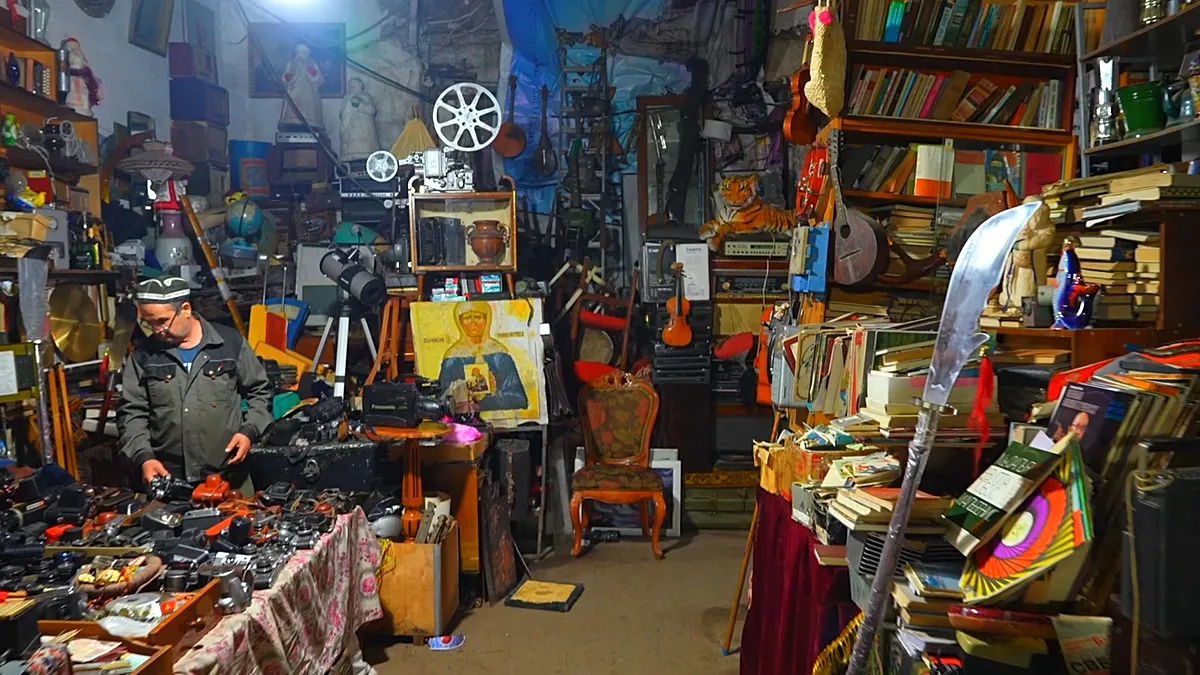
While curated salons offer a refined experience, open-air flea markets remain a vital part of Uzbekistan’s heritage preservation. These markets, often teeming with activity, attract a diverse crowd—from seasoned collectors to curious tourists. Yangiabad Bazaar in Tashkent stands out as one of the most renowned, where antiques are sold alongside everyday items like electronics and household goods. This eclectic mix underscores the market’s role as a bridge between the past and present.
At Yangiabad Bazaar, Abdurashid Matboboyev has built a reputation over nearly two decades. His specialization in vintage photographic and film equipment reflects a niche but growing market. “My main field is photographic equipment—photo and cinema gear,” he says. The passion for this craft began in his youth, and it has since become a defining part of his identity. His clientele now includes international visitors, particularly photographers, who seek out rare lenses and accessories. “You can recognise them from afar, they usually have cameras around their necks,” Matboboyev remarks, highlighting the global appeal of Uzbek antiques.
“Working with international visitors has also helped me pick up several languages over the years,” he adds. Matboboyev speaks English, Japanese, Chinese, and a bit of Italian and French, a testament to the cultural exchange fostered by these markets. His work has not only preserved older technology but also sparked a renewed interest among younger locals. “Young people today are becoming interested in old items,” he says. “They say they want that old quality.” This trend suggests a broader cultural shift, where vintage aesthetics are finding their way into cafés, restaurants, and public spaces, redefining urban spaces with historical charm.
The Role of Personal Collections in Heritage
Outside of commercial settings, personal collections play a critical role in Uzbekistan’s historical preservation. In the Bagdad district of the Fergana region, Mirzaolim Tursunov has turned his home into a private museum housing over 3,000 objects. What began as a coin collection in the 1990s has grown into a vast archive spanning books, medals, copper artifacts, and handcrafted items. “The very first item I acquired was a coin from the Kushan period,” Tursunov recalls. This humble start has evolved into a dedicated effort to safeguard Uzbekistan’s material culture.
Tursunov’s museum is a testament to the power of individual curation. His fascination with history deepened through years of exploration, and now his collection serves as both a personal passion and a public resource. “I have always been drawn to the stories behind these objects,” he says, illustrating how history is not just stored in museums but also lived through personal endeavors. The presence of such spaces challenges the notion that heritage is solely the domain of institutions, showcasing how everyday people contribute to preserving the past.
Connecting History to the Present
These markets and salons act as living archives, where the past is not locked away but actively shared. In Tashkent, the blend of antique furniture and contemporary art reflects a dynamic interplay between tradition and innovation. “We restore carved elements, repair losses, and revive colour,” Shapulina explains. “Sometimes we buy furniture in poor condition and fully restore it.” This process ensures that historical objects remain relevant and functional, rather than static displays.
Matboboyev’s experience further demonstrates the interconnectedness of these spaces. His focus on vintage photography equipment has not only preserved an older technology but also inspired a new generation of enthusiasts. The growing demand from younger buyers indicates a shift in values, where authenticity and craftsmanship are prized. “Old quality” has become a buzzword, signaling a renaissance in appreciation for Uzbek craftsmanship and history.
As these markets continue to evolve, they face the challenge of balancing preservation with accessibility. While traditional museums play a vital role, the informal nature of flea markets and salons allows for a more intimate connection with history. They provide a platform for stories to be told, memories to be relived, and artifacts to be reimagined. In Uzbekistan, history is not just a subject—it is a shared experience, one that thrives in the hands of collectors, restorers, and curious visitors alike.
Lyubov Shapulina’s vision for the future is one of continuity and expansion. “We go into hotels or guesthouses and already see elements of antiques in the interior,” she says. This integration of historical items into modern spaces underscores the enduring relevance of Uzbek heritage. Whether through the meticulous work of a salon owner or the vibrant energy of a flea market, the history of Uzbekistan is kept alive, circulating through generations and transcending time.