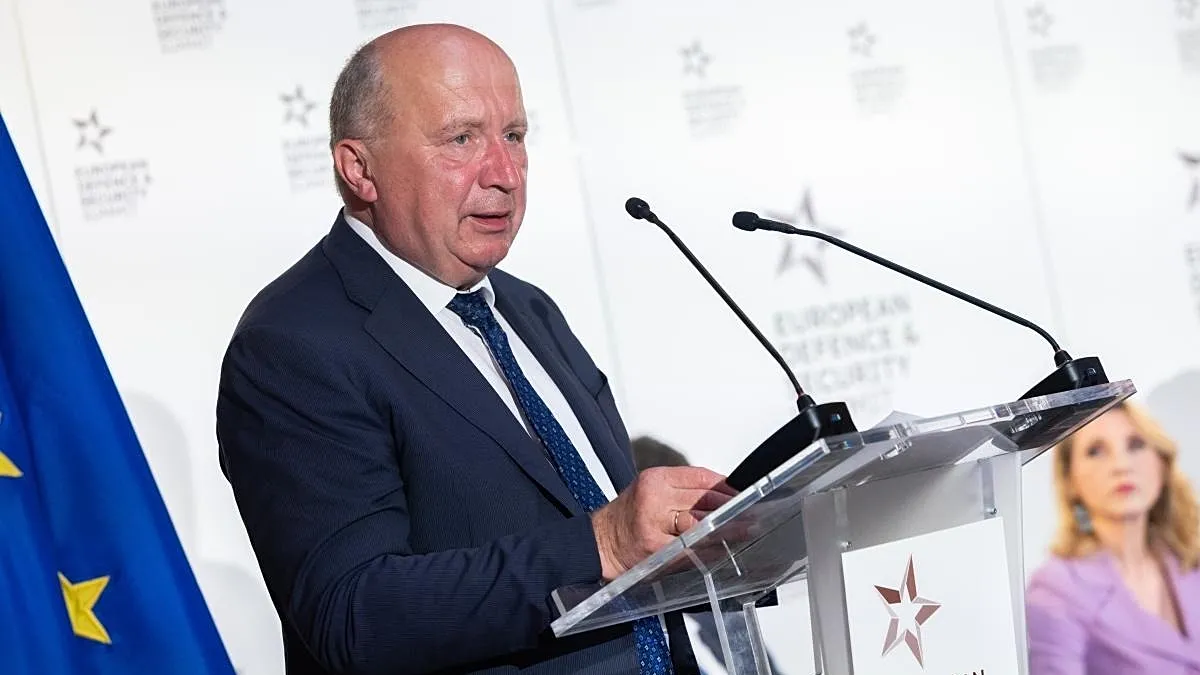
Kubilius: Europe Must Brace for Increased Threats After Polish Killing
Kubilius – At the European Defence and Security Summit in Brussels, Andrius Kubilius, the EU’s Defense Commissioner, issued a stark warning about escalating risks to European security. He highlighted the growing sense of urgency among Russian leaders, suggesting that Vladimir Putin is adopting more aggressive tactics. “Putin is becoming more desperate,” Kubilius stated, urging member states to heighten their vigilance. The commissioner emphasized that the attacks could extend beyond Ukraine’s borders, targeting Europe directly.
The Targeted Killing in Eastern Poland
The incident that sparked Kubilius’s remarks occurred on 8 June in a small town near the Belarusian border. Russian dissident Semyon Skrepetsky, a 44-year-old artist known for his controversial works, was killed in what Polish authorities believe was a targeted operation. Skrepetsky, whose legal name was Robert Kuzovkov, was residing in Poland at the time of the attack. His death has been attributed to a series of provocations against the Baltic states and the eastern periphery of Europe.
“Unfortunately, there may be more such attacks—and even worse ones. Not only in Ukraine, but also in Europe,” Kubilius said.
Skrepetsky’s art often blended political satire with sharp critiques of Russia’s leadership. One of his most iconic pieces depicted Vladimir Putin being held by Joseph Stalin, symbolizing the enduring influence of Soviet-era ideology on contemporary Russian politics. The killing, which involved multiple gunshots before the suspect escaped, has raised concerns about the potential for state-backed violence to spread across the continent.
Investigating the Suspect and Possible Motives
Polish prosecutors have linked the attack to a suspect carrying a Georgian passport, a citizen of a former Soviet republic. While the identity of the perpetrator remains under investigation, local officials suspect Moscow may be orchestrating a broader sabotage campaign. This operation, they argue, aims to instill fear among European nations that are critical of Russia’s actions, particularly those closely allied with Ukraine.
Polish Prime Minister Donald Tusk echoed these concerns during a press conference in Brussels last Thursday, describing the incident as the first confirmed case of “state-sponsored terrorism” within Europe. Tusk’s remarks underscore the gravity of the situation, suggesting that Moscow’s strategy could involve indirect methods to destabilize its adversaries.
“This could represent the first known case of state-sponsored terrorism being carried out in Europe,” Tusk said.
Despite these warnings, Russian Foreign Minister Sergei Lavrov dismissed the idea that Moscow is the primary threat. He accused Europe of posing a greater danger to global peace, stating that the continent’s growing assertiveness is the real concern. “Europe is becoming a major threat to international peace and security,” Lavrov claimed, a stance that contrasts sharply with the warnings from EU officials.
Reinforcing European Defense Capabilities
Kubilius used Skrepetsky’s death as a catalyst for his call to action. He argued that if Europe does not take Russian threats seriously and fails to bolster its defense infrastructure, more such incidents will follow. “Russia is still outproducing us and is capable of deploying millions of drones,” he noted, emphasizing the need for improved readiness.
The commissioner also highlighted the importance of Article 5 of the NATO treaty, which outlines collective defense obligations. “Putin is still willing and able to test Article 5. The question is: are we prepared to defend ourselves and deter aggression?” Kubilius asked, stressing that the current state of European preparedness is a critical vulnerability.
Addressing the Funding and Production Gap
Europe’s ability to respond effectively hinges on its capacity to produce military equipment. Kubilius pointed out that the continent’s output remains low, with only 250 cruise missiles manufactured in the past year and no ballistic missiles produced. In contrast, Ukraine has significantly outpaced Europe in arms production, a fact the commissioner cited as a clear indication of the need for action.
While the EU has allocated €150 billion through the SAFE (Security Action for Europe) loans to support defense initiatives, Kubilius stressed that financial commitment alone is insufficient. “Now we must create a market for our defense,” he urged, adding that the process must be expedited. He proposed streamlining bureaucratic processes, enhancing military logistics, and launching joint defense projects to foster collaboration among member states.
The European Commission is set to unveil a new communication next week, outlining steps to integrate the continent’s fragmented defense markets. This initiative aims to address the inefficiencies that have slowed the transformation of European military strategies. A properly unified defense market, Kubilius argued, is essential to meet future security challenges.
Implications of US Withdrawal
The timing of these warnings coincides with a significant shift in US military support for Europe. Analysts predict that the United States will soon reduce its strategic enablers, withdrawing €500 billion in funding over the next decade. This reduction, coupled with a six-month review of the US force posture, could exacerbate Europe’s security challenges.
Kubilius emphasized that the withdrawal of US support necessitates a more self-reliant European defense framework. “The established status quo in fragmented markets is holding back progress,” he said. He called for a transformation of both demand and defense doctrines to accelerate the development of a cohesive, continent-wide approach to security.
With the potential for further attacks looming, the urgency to act has never been greater. Kubilius’s vision of a unified defense market underscores the need for Europe to not only fund its security but also to streamline production and foster collaboration. As the EU prepares to announce its proposals, the challenge remains to translate these plans into tangible improvements in military capability and readiness.