Epidaurus: 10,000-strong ovation for National Opera’s ‘Medea’
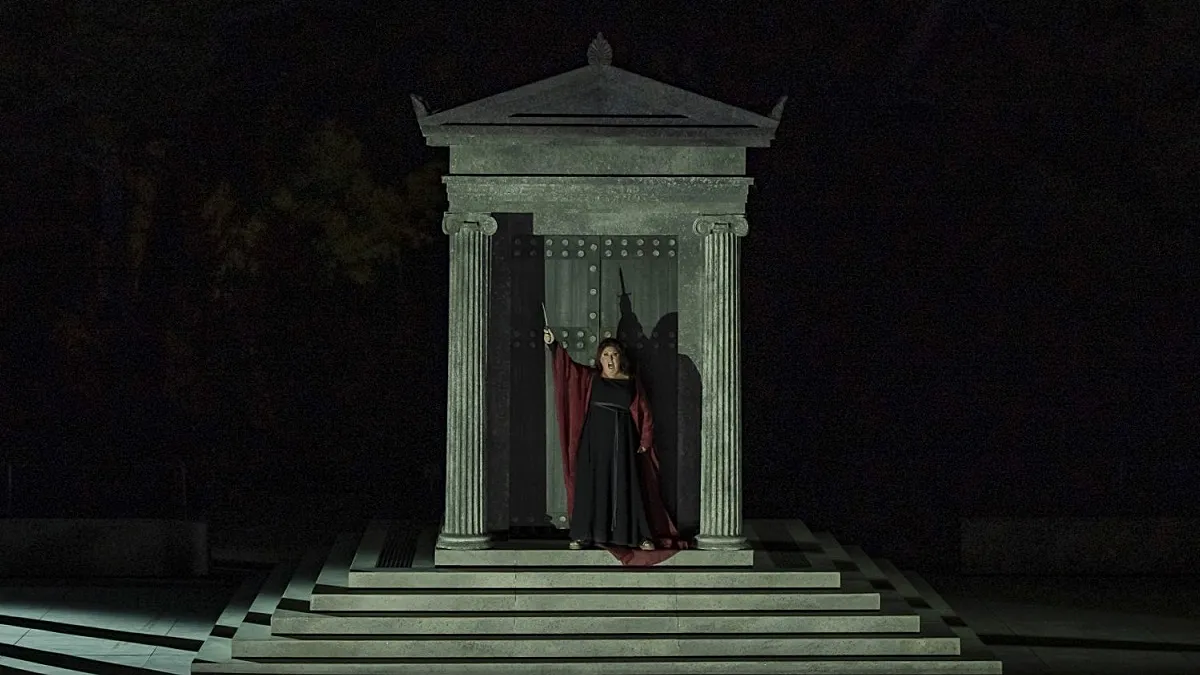
Epidaurus – The Ancient Theatre of Epidaurus, a timeless venue steeped in classical tradition, once again became the epicenter of operatic brilliance on Saturday, 20 June, as the Greek National Opera staged a revival of Luigi Cherubini’s “Medea.” The performance, which drew an audience of over 10,000, was met with thunderous applause and a sense of collective reverence. This production, a meticulous recreation of the historic 1961 performance starring the legendary Maria Callas, has sparked a renewed conversation about the enduring power of opera’s past. The grand revival’s success was not unexpected, as tickets had sold out months in advance, a testament to the anticipation surrounding the event.
Anna Pirozzi, the Italian soprano who assumed the iconic title role, was lauded for her multifaceted portrayal of Medea. Her performance, which blended vocal mastery with dramatic intensity, resonated deeply with the audience. “This role demands more than just singing,” Pirozzi remarked during an interview. “You must embody the character, to step into her shoes and feel the weight of her choices. Medea is not merely a sorceress; she is a woman consumed by passion, betrayal, and vengeance. To bring her to life, you have to inhabit her entirely, to let her emotions guide every note and movement.” Her words reflected the complexity of the opera, which continues to captivate and challenge performers and audiences alike.
“We only have photographs from that production, and they’re in black and white,” explained Giorgos Koumendakis, the Greek National Opera’s artistic director. “Those images helped us recreate the set. It was different with the costumes, because we had around 150 of Yannis Tsarouchis’ original designs from that period. If you look at the result today, you can’t tell the difference between the original and what we have created now.”
The challenge of reconstructing the 1961 production without video recordings added a layer of historical mystery to the effort. Koumendakis and his team embarked on years of research, combing through archival materials at the Historical Archive of the Greek National Opera, the Cultural Foundation of the National Bank of Greece, and private collections. This painstaking process allowed them to preserve the essence of the original staging while adapting it to modern sensibilities. The result was a production that felt both authentic and fresh, a bridge between eras that honored the past while embracing the present.
The 1961 version of “Medea,” directed by Alexis Minotis, was a milestone in the opera’s history. It featured sets and costumes by the renowned Yannis Tsarouchis, whose designs were celebrated for their vivid storytelling and artistic innovation. The production’s journey began in 1958 at the Dallas Opera, where it first introduced audiences to Cherubini’s vision. It then moved to London’s Royal Opera House in 1959, followed by its iconic performance at Epidaurus in 1961. The final stop on its tour was La Scala in Milan in 1962, where it left an indelible mark on the opera world. Now, nearly six decades later, the National Opera has brought this storied production back to its birthplace, reigniting its legacy.
At the heart of the revival’s success was the collaboration between the creative team and the archive. While the stage design and costumes were resurrected from historical documents, the interpretive choices reflected contemporary sensibilities. “The challenge was to capture the spirit of the original while making it relevant to today’s audience,” Koumendakis noted. This balance was evident in the way the production maintained its dramatic intensity, even as it incorporated modern staging techniques. The audience’s reaction, however, spoke volumes about the timeless nature of the story. Applause echoed through the ancient amphitheater, a reminder that Medea’s tale of vengeance and love continues to stir emotions across generations.
For the performers, the revival was an opportunity to engage with a role that has been central to the operatic canon since its debut in 1797. Pirozzi’s interpretation, in particular, highlighted the dual nature of Medea as both a tragic figure and a powerful force of destruction. Her portrayal of the sorceress’s emotional arc—marked by moments of vulnerability and fierce determination—drew parallels to Callas’s legendary performance, which is often regarded as the definitive version of the opera. “There is a certain intensity in this theatre that makes the role feel even more urgent,” Pirozzi added. “It’s like the ancient stones themselves are waiting to witness the same kind of passion that Maria Callas once brought to this stage.”
The revival also served as a celebration of the Greek National Opera’s commitment to preserving and reimagining its heritage. The production was part of this season’s thematic strand, “The opera of the future through the matrix of the past,” which sought to explore how historical works could inspire modern artistic expression. By bringing back the 1961 staging, the National Opera not only honored its roots but also demonstrated its ability to evolve. The success of the performance underscored the enduring relevance of Cherubini’s work and the importance of maintaining a connection to opera’s rich history.
As the curtain fell on the night of 20 June, the audience’s ovation was a powerful affirmation of the production’s achievements. The revival of “Medea” at Epidaurus has not only paid tribute to the past but has also secured its place in the future of opera. With its blend of historical fidelity and contemporary artistry, the performance is a reminder that the power of opera lies in its ability to transcend time, offering audiences a window into the human experience through the lens of the past.