China Announces Sanctions on 10 US Companies Amid Rising Trade Tensions
Trade Tensions Escalate with New Sanctions
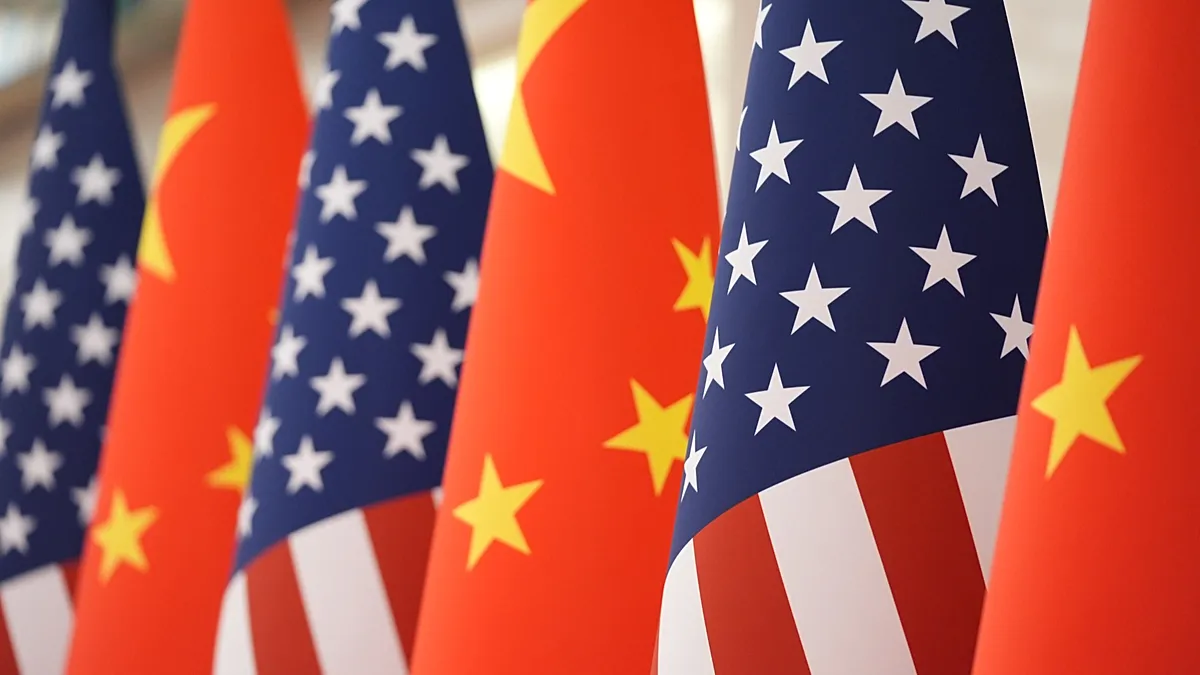
China announces sanctions on 10 US companies – China has launched export restrictions on ten American firms operating in critical sectors such as defense, aerospace, and rare earth mining, marking a significant escalation in the trade conflict with the United States. These measures, revealed by the Chinese Commerce Ministry on Monday, target entities deemed to have close ties to China’s military apparatus. The decision follows the US government’s recent expansion of its “Chinese military enterprise list,” which has been a point of contention between the two nations. By prohibiting Chinese exporters from supplying “dual-use” items to the listed companies, China aims to curb the flow of technology and materials that could bolster American military capabilities.
Dual-use goods, which are products capable of both civilian and military applications, have become a focal point in the trade dispute. The Chinese Commerce Ministry emphasized that its actions are a direct response to the US “egregious act” of broadening the list of Chinese firms accused of supporting the military. This move is also framed as a protective measure to ensure national security. The ministry’s statement underscores the strategic importance of controlling the supply chain for technologies that are vital to defense and industrial growth.
Dual-Use Goods at the Center of Dispute
The term “dual-use” refers to goods that can be employed in both peaceful and military contexts, such as semiconductors, advanced machinery, and certain minerals. These items are essential for industries ranging from consumer electronics to aerospace manufacturing. By restricting their export to specific US companies, China is signaling its intent to limit the technological edge that American firms might gain through access to these materials. The move also highlights the growing reliance of the US on Chinese imports for critical defense technologies, even as tensions rise.
China’s sanctions extend beyond its own exporters. The Commerce Ministry clarified that the restrictions would also apply to “organisations or individuals in any country or region” who facilitate the transfer of dual-use items from China to the targeted entities. This broader approach aims to cut off supply chains globally, ensuring that even if companies outside of China attempt to bypass the restrictions, they would still face consequences for doing so. The implications of this are far-reaching, as it could affect partnerships and trade agreements involving third-party nations.
Financial Measures Target Additional US Firms
Complementing the export controls, the Chinese Finance Ministry has introduced separate sanctions targeting 46 US-based companies. These include major firms such as Lockheed Martin, Raytheon, and General Dynamics, as well as their subsidiaries. The restriction prohibits government agencies from purchasing products from these companies, effectively limiting their access to Chinese markets. This financial move adds another layer of pressure on US firms, which are already facing challenges in maintaining their foothold in China’s economic landscape.
The dual strategy of export controls and financial restrictions reflects China’s comprehensive approach to countering US trade policies. By targeting both the supply of goods and the purchasing power of government agencies, China is aiming to disrupt the economic dynamics that have favored American companies in recent years. The combined effect of these measures could lead to a significant reduction in trade volumes between the two nations, particularly in sectors where China holds a dominant position.
Context of the Recent Developments
The sanctions come just one month after US President Donald Trump’s visit to Beijing, where he engaged in high-level talks with Chinese President Xi Jinping to stabilize their economic relationship. Despite reaching an agreement to reduce tariffs, the underlying tensions over technology and defense have resurfaced. The US Defense Department’s recent decision to add Alibaba, Baidu, and BYD to its list of firms with military ties has intensified these disputes. The designation of these companies as potential threats to national security has been met with skepticism, particularly from Baidu, which described the accusations as “totally baseless.”
“The suggestion that Baidu is a military company is totally baseless,” the firm stated in a press release. “Our operations are focused entirely on civilian technology and innovation.”
This incident illustrates the broader struggle between the two nations over technological dominance. China’s response to the US actions is not only about immediate retaliation but also about asserting its role as a key player in the global tech supply chain. The addition of these companies to the export control list is part of a coordinated effort to limit US influence in critical industries and to protect Chinese strategic interests.
Global Implications and Industry Impact
The ripple effects of China’s sanctions are expected to extend beyond bilateral trade relations. As a major producer of rare earth minerals, China plays a crucial role in the manufacturing of high-tech devices and defense systems. By restricting the export of these materials to US companies, China is not only affecting American firms but also influencing global markets. Suppliers who rely on Chinese rare earths may face higher costs or supply shortages, potentially altering the dynamics of international trade.
Moreover, the restrictions on government procurement from 46 US firms could have a lasting impact on China’s domestic industries. By cutting off access to government contracts, these measures may encourage Chinese buyers to shift their focus to local alternatives, thereby strengthening domestic manufacturers. This could lead to a more self-reliant industrial base in China, reducing its dependence on foreign technology and increasing its strategic autonomy in key sectors.
Summary of Sanctioned Companies
The list of ten US companies subject to China’s new export controls includes firms with significant roles in defense and aerospace. These companies, which have been identified for their potential ties to China’s military, are now under increased scrutiny. While the exact names of the companies are not specified in the initial announcement, the Commerce Ministry has hinted that the measures target a range of entities involved in the production of advanced technologies and materials.
Each of these companies operates in a sector where dual-use goods are critical. For instance, those in the aerospace industry rely on high-precision components that can be repurposed for military applications. Similarly, firms in the defense sector are often at the forefront of technological innovation, making them prime targets for export restrictions. The sanctions are designed to create a barrier that limits the flow of these goods to the US, thereby hampering its military and industrial capabilities.