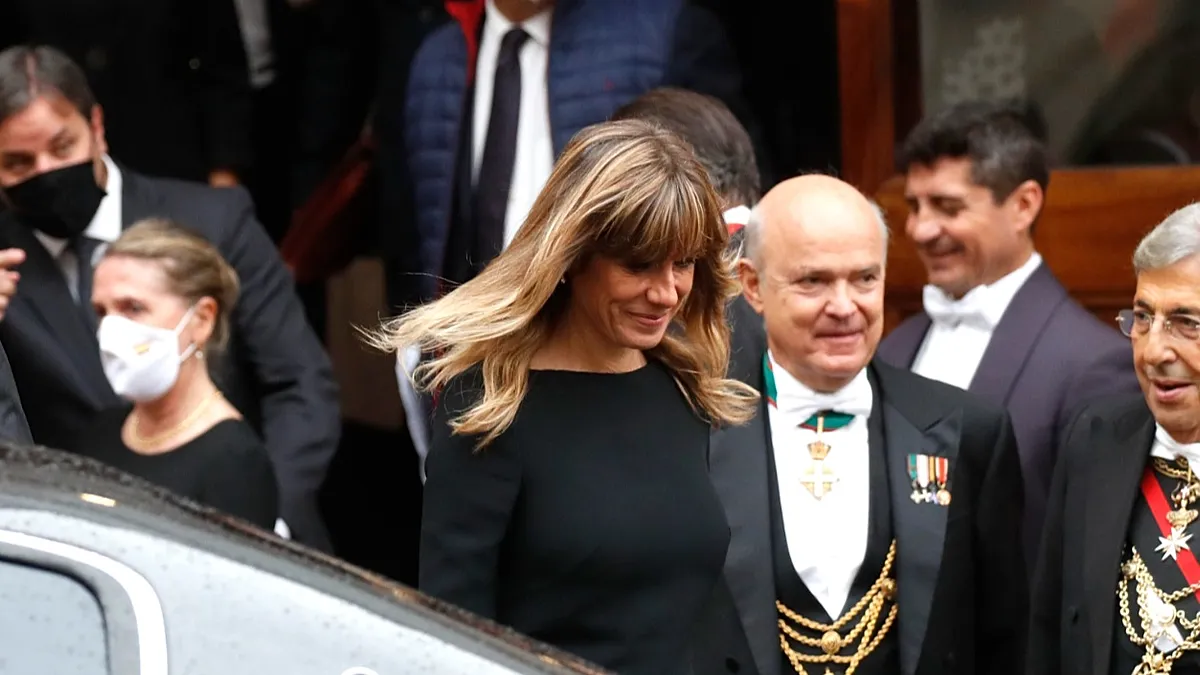
Spanish Prime Minister’s Spouse Subject to Passport Revocation Amid Corruption Trial
Wife of Spanish PM Pedro Pedro – In a recent legal development, the Spanish court has taken decisive action against Begoña Gómez, the wife of Prime Minister Pedro Sánchez, by ordering her to face a jury trial for corruption and restricting her movement. The ruling, disclosed on Saturday, mandates that Gómez surrender her passport and attend court sessions twice monthly until the verdict is finalized. This measure aims to prevent her from fleeing the country during the proceedings, as reported by judicial authorities. The court’s decision follows a preliminary hearing this week, where the prosecution and other accusing parties emphasized the need for a jury trial to address potential flight risks.
Precautionary Measures and Legal Context
Judge Juan Carlos Peinado, who initiated the charges against Gómez in April, has imposed these precautionary measures as part of the ongoing investigation. The court order specifies that instructions must be issued to all border checkpoints and civilian and military airports to ensure compliance with the ban on Gómez leaving Spain. These steps come after formal charges were filed against her for embezzlement, influence peddling, corruption in business dealings, and misappropriation of funds. The same restrictions have also been applied to Cristina Álvarez, an adviser at the Moncloa Palace, though the third defendant in the case, businessman Juan Carlos Barrabés, remains unaffected.
According to sources close to Gómez, she plans to challenge the court’s decision through an appeal. One of her primary concerns is the confiscation of her passport, which she argues is an overreach by the judiciary. The ruling, while targeting her, has sparked debates about the balance between due process and the need to secure evidence in high-profile cases. The prosecution maintains that the measures are necessary to prevent any escape from justice, while the defense team has previously questioned the thoroughness of the investigation.
Allegations and Case Background
The case centers on the establishment and management of a chair at Madrid’s Complutense University, co-directed by Gómez. The allegations suggest that she and others used public resources and personal connections to advance private interests, including the chair’s creation. The proceedings began in April 2024, following a complaint from an anti-corruption group linked to far-right political movements. This group accused Gómez of exploiting her position as the prime minister’s spouse to secure financial benefits for her and her associates.
Key to the case is the assertion that the chair served as a platform for private professional development, as noted in the judge’s statement when charges were formally brought against her. The defense has contested this claim, arguing that the chair was a legitimate academic initiative and that the evidence against Gómez is insufficient. Meanwhile, the Public Prosecutor’s Office has pressed for the trial to proceed, citing the importance of holding public officials accountable for alleged misconduct. The conflict between the prosecution and defense has underscored the intense political and legal controversy surrounding the case.
Political Ramifications and Public Reaction
Prime Minister Pedro Sánchez has faced mounting pressure from opponents who accuse his administration of being entangled in corruption scandals. The current trial of his wife is part of a broader pattern of investigations into the Socialist leader’s family and former allies, which have threatened to destabilize his minority coalition government. Sánchez has dismissed the allegations against his wife as a political maneuver by the right wing to undermine his leadership, calling them an attempt to create a distraction during a critical period for his government.
Despite the accusations, Sánchez has rejected calls for him to resign or call early elections, insisting that the evidence against his wife is not conclusive. The court’s decision to revoke Gómez’s passport has intensified public scrutiny, with critics arguing that it reflects the government’s determination to pursue justice aggressively. Supporters of the prime minister, however, view the measures as necessary to maintain transparency and accountability in high-level governance. The case has become a symbol of the broader fight against corruption, even as it highlights the challenges of navigating political loyalty and legal impartiality.
Legal Proceedings and Public Resources
The legal proceedings against Gómez have been marked by a mix of accusations and counterarguments. The prosecution asserts that the misuse of public funds and resources is a clear indication of corruption, particularly in the context of her role as the spouse of a senior political figure. The defense, by contrast, has questioned the integrity of the investigation, claiming that irregularities in its conduct have compromised the fairness of the trial. This has led to calls for independent oversight, with some legal experts suggesting that the case may set a precedent for how political figures are treated in corruption trials.
One of the central issues in the case is the alleged misappropriation of public resources. The court has scrutinized how funds were allocated for the chair at Complutense University, suggesting that the initiative may have been used as a vehicle for personal gain. The authorities have also examined Gómez’s personal connections, alleging that they played a role in influencing business decisions. While the details of these accusations remain under investigation, the trial has become a focal point for discussions about the role of spouses in political corruption and the extent to which their actions can be linked to their partner’s leadership.
Broader Impact on the Government
The corruption case involving Gómez is not an isolated incident. It is part of a series of legal challenges that have targeted members of Sánchez’s inner circle, including his former allies and family. These cases have raised concerns about the stability of his minority government, which relies on the support of smaller parties to maintain power. If the court finds Gómez guilty, it could further erode confidence in the administration, potentially leading to calls for early elections or a shift in political alliances.
Public opinion has been divided, with some citizens supporting the prosecution’s efforts to hold high-ranking officials accountable, while others believe the case is politically motivated. The revocation of Gómez’s passport, in particular, has drawn attention to the personal costs of being implicated in corruption, as it restricts her freedom of movement and access to international travel. As the trial progresses, the outcome will likely shape the political landscape in Spain, influencing public trust in the government and the broader discourse on accountability in leadership roles.
“The chair served as a means of private professional development for the person under investigation,” the judge wrote when he charged Gómez. This statement has been cited by both supporters and critics of the case, highlighting the central role of the university chair in the legal proceedings.
With the trial underway, the case continues to evolve, testing the boundaries of legal justice and political accountability in Spain. The implications of the ruling extend beyond Gómez’s personal situation, as it reflects the nation’s ongoing efforts to address corruption within its highest echelons of power.