
The B-52: Why the US still uses a plane from the 1960s to bomb its enemies
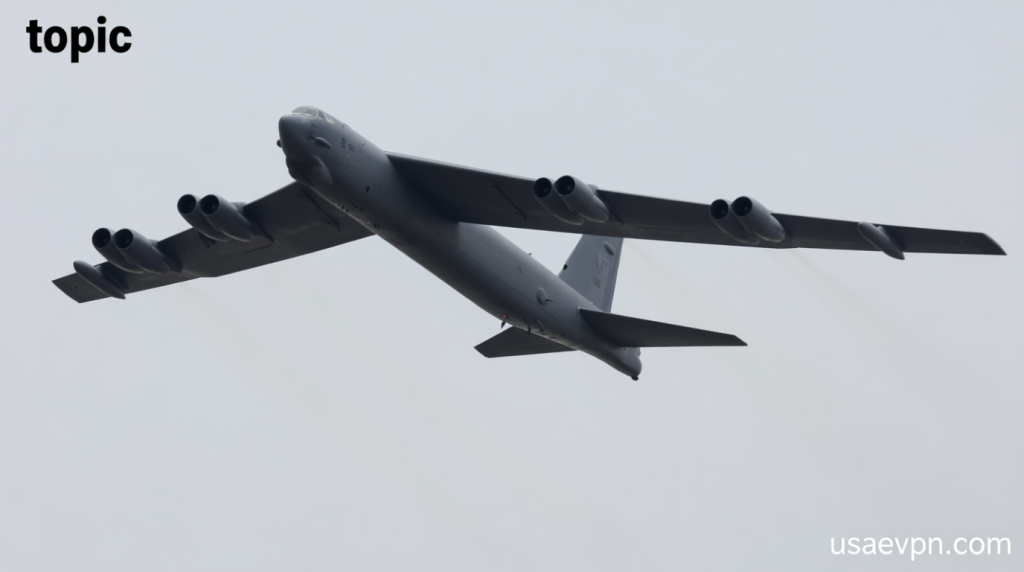
The B-52: A Timeless Weapon in Modern Warfare
When the United States needs to launch military strikes against adversaries, the Boeing B-52 Stratofortress remains a go-to choice for leaders. Despite its age, this aircraft continues to play a vital role in global conflicts, proving its enduring value.
A Legacy of Longevity
The B-52H variant, still active in the 2020s, was first deployed by the USAF in 1961. Over six decades later, 76 of these aircraft remain in service, comprising half of the USAF’s bomber fleet and serving as the core of the nation’s strategic airpower.
Strategic Versatility
Rolls-Royce has recently upgraded Cold War-era B-52s with advanced engines, extending their operational lifespan until at least the mid-21st century. Sky News reports that a contingent of B-52 bombers is currently en route to the UK, a move following Sir Keir Starmer’s approval to allow US military assets to utilize British bases for strikes against Iran.
Operational Cost-Effectiveness
While the bombers can pack a punch, they also boast an impressive range of 8,800 miles, which can be extended through mid-air refuelling, and a speed of 650 mph. They’re also cheaper to operate than some of their newer competitors, making them a cost-effective option for sustained missions.
Diverse Mission Capabilities
The Stratofortress’s massive size allows it to transport approximately 70,000 pounds (31,751 kilograms) of ordnance, including bombs, guided missiles, and nuclear payloads. The H variant is also capable of carrying up to 20 air-launched cruise missiles, enhancing its versatility in combat scenarios.
Pilots and crews often refer to the B-52 with the informal nickname ‘BUFF’—a term that captures its imposing size and rugged design. Originally conceived as a platform for delivering thermonuclear weapons, the B-52 has since evolved into a versatile asset for conventional warfare.
Historical Significance
During the Vietnam conflict, the B-52 was extensively employed in large-scale bombing campaigns, notably during Operation Linebacker II, where over 20,000 tons of explosives were dropped in just 11 days. The bombers played a pivotal role in both the 1991 Gulf War and the 2003 Iraq invasion, underscoring their enduring utility.
In 2014, President Barack Obama deployed the B-52 against ISIS in Syria and Iraq, despite the aircraft’s service dating back before his birth. B-52s flew about 1,800 combat sorties against the terrorist group. Today, the B-52 is again in action, alongside the B-1 bomber, under President Donald Trump’s directive targeting Iran.
Diplomatic Tool
Such is the B-52H’s reputation that even its repositioning can be used as a diplomatic maneuver or a subtle warning to adversaries. Recently, the bombers were deployed to monitor Venezuela’s coast as part of Trump’s intensified pressure on former leader Nicolás Maduro prior to US military operations.
Meanwhile, the UK is developing contingency plans for a large-scale evacuation as Iran targets key Middle Eastern airports. An ex-techno DJ has been sentenced to prison for supplying £7 million in counterfeit aircraft components to major airlines. EasyJet’s £5.99 cabin baggage pricing is deemed misleading by regulatory authorities.