Who is Andy Burnham? The Returning MP Set to Challenge Keir Starmer
By-Election Victory and Political Ambitions
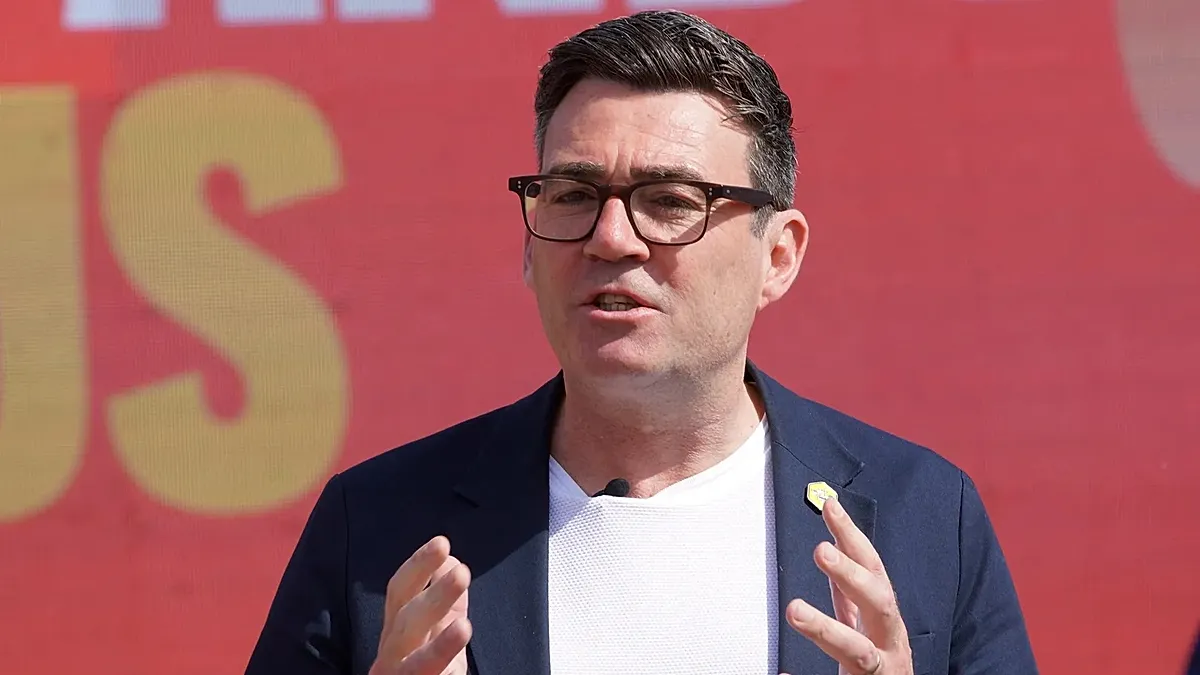
Who is Andy Burnham The returning – Andy Burnham, a seasoned politician, has returned to the heart of British politics after securing a decisive win in the Makerfield by-election. With 55% of the votes cast, he comfortably outperformed competitors from Nigel Farage’s Reform UK and Rupert Lowe’s Restore Britain parties. This victory marks a pivotal moment in his career, as it opens the door for him to mount a bid against Prime Minister Keir Starmer, the current leader of the Labour Party. Burnham’s triumph has sparked speculation about his potential role in the party’s leadership race, with some insiders suggesting he could emerge as a key contender.
Early Life and Political Awakening
Born in the northwest of England, Burnham grew up in the Cheshire village of Culcheth. His political journey began in his youth, shaped by the 1982 television series *Boys From The Blackstuff*, which depicted the struggles of unemployed men in Liverpool during Margaret Thatcher’s era. Burnham has often credited the show with inspiring his desire to engage in public service. In a 2019 interview with GQ magazine, he reflected on the impact of the series, stating,
“I remember watching every episode with my parents. That was when I knew I had to do something.”
This early influence laid the foundation for his future career, guiding him toward a path of advocating for working-class communities.
From Journalism to Parliament
Before entering politics, Burnham honed his skills in journalism, working for trade publications such as *Container Management*, *Passenger Rail Management*, and *Tank World*. His passion for storytelling and public affairs eventually led him to politics, where he began as a researcher for Tessa Jowell, the late MP for Dulwich. By 2001, he had been elected as a member of parliament for the Greater Manchester constituency of Leigh, a role he held until 2017. During his time in Parliament, he occupied several high-profile ministerial posts, including secretary of state for health and chief secretary to the Treasury.
Mayor of Greater Manchester
Burnham’s tenure as mayor of Greater Manchester began in 2017, following his departure from Parliament. His leadership has been instrumental in transforming the region, particularly Manchester, into one of the UK’s most dynamic cities. The city has seen rapid urban development, with new skyscrapers rising and a palpable sense of energy permeating its streets. Burnham described the city as a place that had “given so much to me” and expressed regret over leaving his post, calling it a “wonderful nine years” in a statement shared after the by-election.
Brexit Stance and Leadership Prospects
Burnham’s views on Brexit have been a focal point of recent political discourse. While he acknowledges the economic toll of the decision, he has argued that the current moment is not the right time to reignite the debate. In May, he told reporters,
“My view is that Brexit has been damaging. But I also believe the last thing we should do right now is rerun those arguments.”
This position has drawn mixed reactions, with critics accusing him of being a “classic Westminster insider” who masks his traditionalist leanings as a progressive front. Some point to his remarks during the by-election campaign, where he once called for the UK to rejoin the European Union, as evidence of his potential to shift positions depending on the political climate.
A Campaign of Hope and Resilience
Burnham’s victory in Makerfield has been framed as a testament to his ability to connect with voters. His campaign emphasized unity and optimism, positioning him as a figure who could “turn the tide” for Labour. In a recent speech, he asserted,
“We have an opportunity to make the country feel like it’s working again. To show people that politics can create positive change. To restore hope.”
This vision aligns with his broader goal of becoming a “member of parliament for everybody, however they voted,” a pledge aimed at broadening Labour’s appeal and addressing divisions within the party. His return to the parliamentary fray has reignited discussions about the future direction of Labour, with many MPs viewing him as the most viable option to revitalize the party’s image.
Reactions and the Road Ahead
Keir Starmer and Rupert Lowe, leader of Restore Britain, have both praised Burnham’s win, acknowledging the significance of his campaign. Starmer called the result a reflection of “voters choosing Labour’s campaign of hope and optimism over division and hate,” while Lowe highlighted the “vast effort on the ground” in Makerfield. Burnham’s supporters see his success as a sign of his continued relevance in national politics, despite the challenges of navigating a party split over Brexit. As he prepares to challenge Starmer, the focus will shift to how he balances his pragmatic approach with the need to unify Labour’s base. His ability to maintain this balance could determine his success in the upcoming leadership contest.
Legacy and Future Challenges
Burnham’s career has been marked by a blend of policy expertise and public engagement. His time as mayor saw significant investment in infrastructure, education, and economic growth, which has helped elevate Greater Manchester’s profile. However, his return to Parliament introduces new challenges, including the need to reconcile his past support for EU membership with current advocacy for domestic economic policies. He has pledged to back British industries and combat trickle-down economics, signaling a shift toward protecting local interests. Whether this strategy resonates with voters remains to be seen, but his win in Makerfield suggests a strong mandate for his ideas.
Burnham’s journey from a small Cheshire village to the national political stage is a story of ambition and adaptability. As he prepares to test his leadership credentials against Starmer, his ability to bridge the gap between grassroots activism and Westminster strategy will be crucial. His victory has not only reinvigorated his political career but also positioned him as a central figure in Labour’s internal power struggles. With the party’s future hanging in the balance, Burnham’s return to Parliament is a pivotal chapter in the ongoing narrative of British politics.