US Defence Secretary Launches Comprehensive Review of European Forces Amid Sharp Criticism of NATO Allies
Brussels Meeting Sparks Debate Over US Military Commitment and European Responsibility
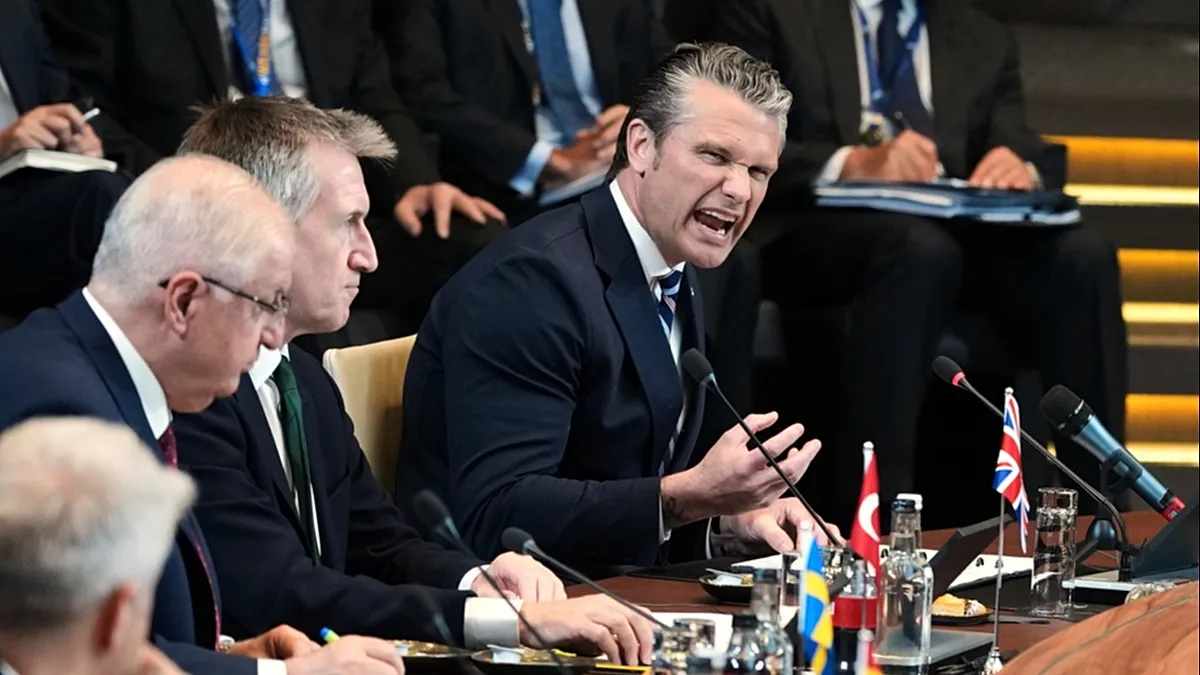
Hegseth announces review of US forces – On June 19, 2026, US Defence Secretary Pete Hegseth made headlines during a NATO summit in Brussels by unveiling a six-month review of the United States’ military presence in Europe. The announcement came as a pointed critique of European allies, who were accused of not meeting their security obligations under the alliance’s framework. Hegseth emphasized that the evaluation would determine whether NATO members are adequately prepared to shoulder the primary responsibility for defending the continent, a stance that has already stirred tensions among the alliance’s members.
“This will be a real review. It will be designed to ensure that NATO is moving fast and irreversibly toward Europe leading, stepping up to take primary responsibility for the defence of Europe,” Hegseth declared during the meeting, signaling a shift in Washington’s approach to collective security.
The review was met with mixed reactions from European counterparts, many of whom described it as an unexpected move. Hegseth’s comments were particularly sharp, suggesting that some allies are lagging in their commitment to the alliance. This sentiment echoes concerns raised in recent months as the Trump administration has alternated between promises of support and threats to reduce US involvement in Europe. The review aims to assess the progress made in this evolving dynamic, which has been shaped by years of political and strategic realignment.
European NATO members, including Germany, Spain, and Italy, have long been at the center of these troop reductions. Washington’s decision to withdraw forces from these key locations began under President Donald Trump, who often criticized his allies for not meeting defense spending targets. The current review, however, introduces a new layer of scrutiny, focusing not only on financial commitments but also on operational capabilities. Hegseth’s visit to Brussels marked his first appearance at a NATO meeting since February, underscoring the importance he places on this issue.
During the meeting, Hegseth highlighted the growing unpredictability of the alliance, a claim that has been echoed by US officials in recent months. His remarks were delivered against a backdrop of conflicting signals from the administration, which has at times hinted at expanding its military footprint while also signaling a potential reduction. For example, the Pentagon has recently threatened to annex Greenland, a territory under Danish sovereignty, as part of its broader strategy to secure strategic advantages in the Arctic.
“These allies, they put America’s sons and daughters, our sons and daughters, at risk by denying them the predictable access, basing and overflight that never should have been in question at all,” Hegseth argued, pointing to the lack of cooperation in allowing US forces to use European bases for operations targeting Iran.
Merz, the German Chancellor, later addressed these concerns, stating that the alliance had always anticipated a gradual withdrawal of US troops. “We know that we must do more and we are doing it,” he said, highlighting Germany’s efforts to bolster its defense capabilities. However, the review has raised questions about the pace and effectiveness of these efforts, with Hegseth implying that some nations may not meet the required standards.
Hegseth’s speech at NATO headquarters was notable for its intensity, drawing comparisons to the rhetoric of Vice President JD Vance from February 2025. His focus on European policies—particularly migration and gender equality—underscored a broader critique of priorities within the alliance. “Europe’s borders flew wide open, welfare states expanded, defence budgets cratered, along with Europe’s belief in itself and its civilisation,” he stated, framing the review as a test of the alliance’s resilience and unity.
The meeting in Brussels also served as a platform for Hegseth to challenge the notion of European autonomy in security matters. He argued that the current lack of coordination has created a situation where the US is forced to act unilaterally, a departure from the collaborative spirit the alliance was founded upon. This sentiment has been reinforced by recent reductions in US military support, with the administration threatening to scale back assistance if any NATO member faces an attack without being able to defend itself.
As the summit progressed, Hegseth’s comments began to ripple through the alliance, creating a sense of urgency among European leaders. The review is expected to evaluate not only the immediate readiness of allies but also their long-term strategic plans. While some nations have already expressed confidence in meeting their targets, Hegseth warned that a few outliers could be highlighted for their shortcomings.
The fallout from Hegseth’s remarks may influence upcoming discussions at the NATO leaders’ summit in Turkey, set to take place shortly after the Brussels meeting. European officials are now under pressure to demonstrate their commitment to the alliance’s goals, particularly as tensions between the US and its NATO partners continue to rise. The review is seen as a critical step in reshaping the military balance across the continent, with implications for both defense strategies and international relations.
Experts have noted that Hegseth’s approach reflects a broader ideological shift within the US Department of Defense. By emphasizing operational flexibility and self-reliance, the review aims to address what Hegseth perceives as a lack of urgency in European defense planning. This has sparked debates about the future of NATO, with some analysts suggesting that the alliance may need to adapt to a more US-centric model of security cooperation.
As the US continues to reevaluate its role in Europe, the review could serve as a catalyst for realignment within the alliance. The outcome may determine whether NATO maintains its current structure or undergoes a transformation that prioritizes American strategic interests. For now, the debate over responsibility and readiness remains a focal point of the alliance’s efforts to navigate the complexities of global security in the 21st century.