
Rollable laptops and AI super-agents: How Lenovo is revolutionising the future of tech
Rollable laptops and AI super-agents: How Lenovo is revolutionising the future of tech
Lenovo’s Vision for Intelligent Devices
In today’s rapidly evolving tech landscape, Lenovo remains at the forefront of innovation, embracing a hybrid approach that envisions seamless AI ecosystems. As the global leader in personal computing, the company has pivoted its focus from traditional device manufacturing to creating versatile systems capable of adapting to user demands. Steve Long, Senior Vice President of Lenovo’s Intelligent Devices Group, highlighted this shift, stating that computing power is now more versatile than ever. “Compute now can go anywhere. It used to be it required this big system that was cool. You still have that, and there are use cases for it, but it can really go anywhere,” he remarked.
Innovative Designs on Display
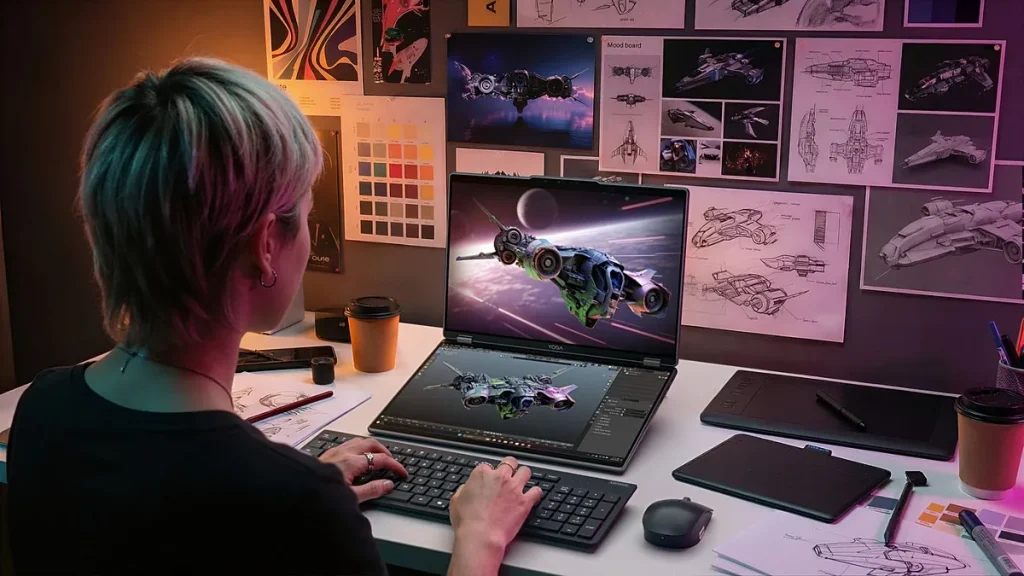
At Mobile World Congress in Barcelona, Lenovo unveiled groundbreaking devices that redefine mobility and functionality. Among these, a rollable laptop captured attention, featuring a 14-inch screen that expands vertically to 16.7 inches. This design addresses the challenge of portability by offering dynamic screen size adjustments. Additionally, the company showcased a conceptual foldable gaming handset and introduced Lenovo Qira, an AI super agent announced earlier this year at CES. Qira is engineered to operate across platforms, learning user behaviors and workflows to act as a predictive digital assistant.
“You may be doing a task on your phone and want Qira to seamlessly transition to your tablet, remembering exactly where you left off and understanding the context—not only of your current activity but also your history, with your permission,” Long explained.
Qira’s capabilities extend beyond basic automation, enabling it to anticipate needs and enhance productivity. Long emphasized that such tools empower users to move from searching to predicting and executing tasks independently. “Qira is allowing someone to advance from search to actually predicting and suggesting and working on your behalf,” he added.
Security and Ethical Considerations
While agentic AI is viewed by many leaders as a transformative force in streamlining workflows, its rapid development has sparked debates about security risks and potential autonomy issues. Some experts argue that AI agents should undergo background checks to prevent unintended actions. Long acknowledged these concerns, stressing the importance of integrating robust security measures with user control. “Consumers should be given the option to opt in and weigh the benefits,” he noted. “The access shows them how Qira can drive better productivity or even improve employee retention through enhanced satisfaction.”
Voice Interaction and Future Possibilities
Lenovo is also exploring voice-driven interactions as a key element of next-generation devices. Long referenced the AI Workmate prototype, which includes a robot head capable of projecting images. “You can create postcards by talking or build a PowerPoint presentation through voice,” he said. This approach aims to make advanced technologies accessible to broader audiences, moving beyond technical specialists to everyday users.
As Lenovo continues to experiment with adaptive systems, the company remains committed to balancing innovation with user trust. Long drew a parallel to self-driving cars, suggesting that acceptance of AI agents will follow a similar trajectory. “People are resistant to change, but as we test these tools, they’ll become more familiar,” he predicted. This mindset underscores Lenovo’s ongoing efforts to shape the future of technology through creativity and foresight.