Political Shifts and Coalition Reorganization in Lithuania
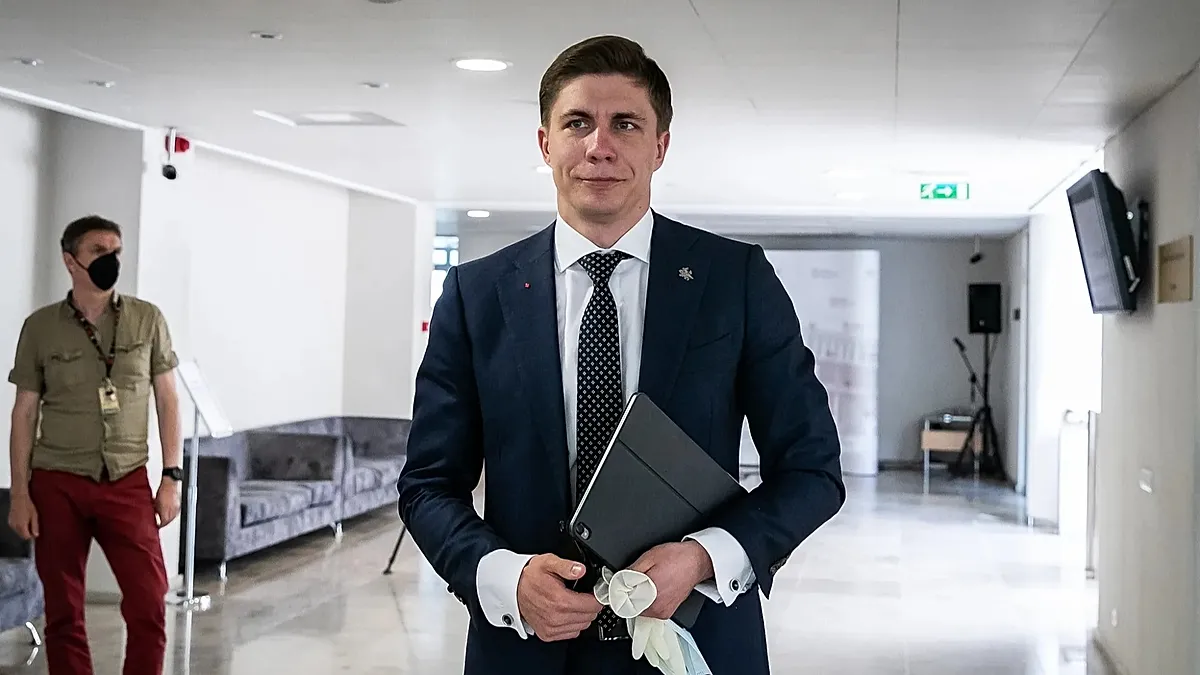
Sinkevičius says he will lead reshuffled – On June 16, 2026, Mindaugas Sinkevičius confirmed his intention to take the helm of Lithuania’s government after a major reshuffle. The change follows the removal of the populist Dawn of Nemunas party from the ruling coalition, which had been a point of contention for months. As a leader of the Social Democrats, Sinkevičius aims to stabilize the administration amid ongoing political turbulence, a task he described as “taking responsibility for forming the new Government and serving as Prime Minister.” His commitment was emphasized in a Facebook post, where he stated he was acting “with full awareness of the expectations of the people.”
Sinkevičius, a seasoned local politician from Jonava, is expected to become the third Social Democrat to hold the position of prime minister since the party secured victory in the 2024 elections. This transition marks the end of Inga Ruginienė’s tenure, which had been marred by controversies. Ruginienė, who led the cabinet since August 2025, faced criticism for bringing her family on official trips to Italy and the Vatican, as well as for mishandling information about leaked data from the Centre of Registers. Her leadership was also challenged by the resignation of Gintautas Paluckas, who had been accused of unethical financial practices involving loans, EU funds, and connections with his relatives.
The coalition reshuffle has been driven by tensions between the Social Democrats and the Dawn of Nemunas party. The latter, under the leadership of Remigijus Žemaitaitis, was expelled from the alliance due to concerns over its radical stance. Žemaitaitis had previously been barred from handling classified information and convicted of making antisemitic statements. Social Democrats argued that the party leader was becoming increasingly unpredictable, stating, “We can see that we are not moving closer to stability in the country, and the party leader [Žemaitaitis] may even be becoming more radical.” They emphasized the need for a clear direction, decision-making, and reduced political noise.
“We believe that what society needs today is stability, a clear direction, decision-making, and not political noise,” Sinkevičius said, outlining the rationale behind the restructuring.
Meanwhile, Žemaitaitis expressed frustration over the sudden removal of his party from the coalition. “We were not given clear reasons for our expulsion,” he remarked, highlighting the lack of transparency in the decision. The Democratic Union “For Lithuania” has agreed to rejoin the alliance, signaling a potential realignment of political priorities. This shift is part of a broader effort to redefine the governing framework, with the Social Democrats now collaborating with the Farmers and Greens Union.
The new coalition structure has been finalized with the agreement to retain nine ministries under the Social Democrats, including environment, finance, defense, culture, social security, transport, education and sport, foreign affairs, and interior. The Democratic Union “For Lithuania” will oversee three key areas: health, agriculture, and energy. Additionally, the Farmers and Greens Union, alongside its allies, will manage the economy and justice sectors. Sinkevičius noted that while some cabinet adjustments are anticipated, the changes will not be “major,” indicating a focus on maintaining core governmental functions.
The coalition agreement is set to be signed on June 18, 2026, a date that coincides with the expected departure of Ruginienė from her role as Prime Minister. Although her exact position in the new setup remains uncertain, Sinkevičius assured that she will continue to be “an important member of the team.” This suggests Ruginienė may transition into a ministerial or advisory role, potentially influencing policy areas such as economic strategy or international relations.
The reshuffle reflects a deeper transformation within Lithuania’s political landscape. The Social Democrats, who hold the majority in the Seimas parliament, have taken decisive steps to distance themselves from the Dawn of Nemunas party, which had been a key ally since 2024. The Democratic Union “For Lithuania”’s return to the coalition underscores its role in balancing the Social Democrats’ influence, particularly in sectors like agriculture and health. This realignment comes after the party withdrew from the alliance in late August 2025, citing disagreements with Dawn of Nemunas over governance and policy direction.
The coalition’s evolution also highlights the internal dynamics of the ruling parties. While the Social Democrats have maintained their dominance in the Seimas, they have opted to partner with the Farmers and Greens Union, a move that may strengthen their legislative base. This decision was made in response to the Democratic Union “For Lithuania”’s departure, which had been a significant blow to the coalition’s stability. The shift has prompted speculation about how the new government will address pressing issues such as economic recovery, energy security, and social welfare, all of which will now be shaped by the updated alliance.
Sinkevičius has positioned himself as a unifying figure, emphasizing the importance of continuity and pragmatic governance. His leadership is expected to focus on consolidating the coalition’s efforts, particularly in areas where the previous administration faced criticism. By excluding the Dawn of Nemunas and integrating the Democratic Union “For Lithuania,” the Social Democrats aim to streamline decision-making and align with partners who share their vision for sustainable development and policy coherence.
Despite the political maneuvering, the core challenges facing Lithuania remain unchanged. The country continues to grapple with economic pressures, regional integration, and domestic reforms. The new government will need to navigate these issues while maintaining public trust. Sinkevičius’ appointment signals a shift toward a more centrist approach, with the Social Democrats seeking to balance their progressive agenda with the stability provided by their new coalition partners.
As the coalition agreement nears finalization, the role of the Seimas Speaker is also under consideration. Social Democrat Juozas Olekas is expected to retain the position, ensuring legislative continuity. This stability in the upper chamber of parliament may help the new government implement its priorities without further disruptions. The political landscape is now in flux, but the groundwork for a new era of governance appears to be set, with Sinkevičius at the helm and a restructured coalition ready to address the nation’s evolving needs.