EU Countries Dilute Solidarity Obligations in Migration Pact
How EU countries watered down solidarity – The European Union’s recently adopted Migration Pact begins its implementation on Friday, establishing a unified framework for managing migration across all member states. While the pact aims to streamline procedures and foster cooperation, its execution has revealed a reluctance among EU nations to fully commit to the principles of solidarity. The agreement, composed of eight legislative acts, outlines mechanisms to coordinate migration management, enforce stricter standards for frontline states, and expedite asylum processes. However, the practical application of these measures has led to a dilution of the original goals, as countries have found ways to minimize their responsibilities.
The Mechanics of the Pact
One of the pact’s key features is the introduction of a border procedure designed to accelerate the evaluation of asylum requests. Under this system, specific categories of applicants face a shortened assessment period of 12 weeks. For those not granted protection, an additional 12 weeks are allocated for return operations. While this process was intended to improve efficiency, critics argue it fails to address systemic issues, such as the overcrowding of asylum systems and the uneven distribution of migration burdens.
The pact also includes a “mandatory solidarity” mechanism, offering countries three avenues to fulfill their obligations: hosting asylum seekers in their territory, contributing financially to frontline states, or supporting operational costs related to border surveillance and infrastructure. This system was meant to ensure a fairer sharing of responsibilities, but its implementation has been anything but strict. Instead, EU member states have effectively weakened the requirement, allowing them to choose the most convenient option for their own interests.
“The predicted contributions for this year are ‘ridiculous,’” said Juan Fernando López Aguilar, a Socialist MEP who negotiated the solidarity mechanism in the previous parliamentary session. “They barely scratch the surface of what is needed to address the crisis.”
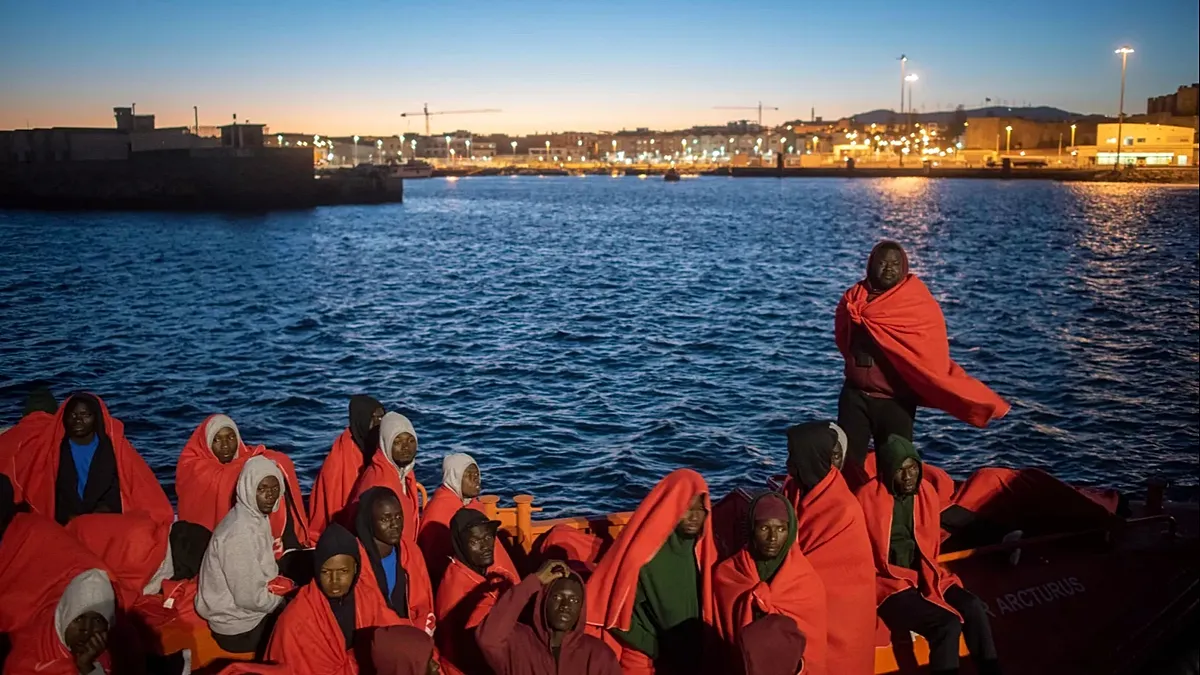
According to the EU’s Asylum and Migration Management Regulation, which forms the core of the pact, the Commission is tasked with proposing an annual “solidarity pool” outlining the support member states must provide. This pool consists of two main components: a quota for relocating asylum seekers from countries under migratory pressure and financial contributions from others. The minimum threshold for relocation commitments is set at 30,000 individuals per year, while the financial target is €600 million. However, the 2026 figures have fallen significantly short of these benchmarks, with fewer than 9,000 asylum seekers relocated despite a record 669,000 people seeking refuge in the EU last year. The total number of individuals in the asylum system has surpassed 800,000, highlighting the scale of the challenge.
Exemptions and Ambiguities
Several countries have been granted exemptions from their relocation quotas, effectively sidestepping the pact’s core principles. Spain, Italy, Greece, and Cyprus were designated as under migratory pressure, placing them in a position to receive support. In contrast, nations like Czechia, Croatia, Austria, and Poland have been classified as “facing a significant migratory situation,” exempting them from all obligations under the solidarity mechanism. These classifications have created a framework where some states bear the brunt of migration while others escape accountability.
Despite the pact’s provisions, national governments have further reduced their commitments. During the process of setting 2026 contributions, member states argued that the first round of solidarity efforts should be prorated. They claimed that since the new rules would only apply from the second half of 2026, the full annual threshold was too ambitious. This argument, though not explicitly stated in the law, was accepted, leading to a significant scaling back of the solidarity pool. The final agreement set relocation targets at 21,000 and financial contributions at €420 million, with each country specifying its expected share.
The flexibility of the “solidarity is mandatory but flexible” mantra, often repeated by EU Internal Affairs and Migration Commissioner Magnus Brunner, has allowed for this adaptability. While the phrase suggests a balance between obligation and choice, it has been interpreted to give countries leeway in meeting their commitments. This interpretation has enabled member states to prioritize domestic concerns over collective action, resulting in a system where solidarity is more of a suggestion than a requirement.
Impact on Asylum Seekers
The reduced commitments have had a direct impact on the number of asylum seekers relocated. With fewer than 9,000 individuals moved, the pace of integration has slowed, leaving many in limbo. Meanwhile, the financial contributions from less affected states have dwindled to €76 million, a fraction of the €600 million target. This disparity underscores the uneven distribution of resources and the growing pressure on frontline states, which continue to shoulder the majority of migration-related tasks.
The new rules also introduce a system of “alternative solidarity measures,” allowing countries to meet their obligations through means other than direct relocation. These measures include funding for border infrastructure, personnel costs, and other operational expenses. While this provides flexibility, it raises concerns about whether these contributions are sufficient to address the needs of those most affected by migration. MEPs who reviewed the initial proposal for the solidarity pool noted that the Commission intentionally set the minimum relocation and financial targets as low as possible to align with the low ambitions of member states.
As the pact unfolds, its effectiveness will depend on how nations interpret and apply the solidarity mechanism. The 2026 figures, though modest, may set a precedent for future years. If the trend continues, the EU’s ability to manage migration collectively could be undermined, leaving asylum seekers in a prolonged state of uncertainty. The pact’s success will require not only legal frameworks but also a willingness to prioritize shared goals over national interests.
The debate over the pact’s implementation has also sparked discussions about its long-term implications. With some countries opting for financial contributions rather than hosting asylum seekers, the distribution of responsibility remains uneven. The original vision of a unified approach to migration management appears to be evolving into a system where solidarity is more of a symbolic gesture than a binding commitment. As the EU moves forward, the challenge will be to ensure that the principles of fairness and cooperation are upheld, even in the face of political and economic pressures.
For now, the 2026 figures serve as a testament to the pact’s limitations. While it marks a step toward organized migration management, the reality on the ground reveals a more fragmented approach. The question remains whether this framework will be strengthened in the years to come or if it will continue to be adapted to suit the preferences of member states, ultimately shaping the future of asylum policies in Europe.