US Withdraws Long-Range Military Capabilities from NATO
Strategic Shift in NATO’s Military Commitments
US withdraws long range military capabilities – The United States has outlined plans to reduce its deep strike capabilities for NATO allies, marking a pivotal change in its approach to European security. This decision, part of a broader effort to realign military resources, was communicated to NATO partners last year, signaling a potential reduction in the availability of key assets during conflicts or invasions. Until now, the specifics of how the Pentagon would implement this cut had remained vague. However, recent reports from Euronews clarify that the withdrawal will target all components of deep strike operations, including advanced long-range bombers such as the B-2 and B-52. These aircraft, which have historically played a critical role in rapid response and strategic bombing missions, will no longer be stationed in Europe under the current framework.
Alongside the bombers, the U.S. will also scale back its naval presence. Missile-launching submarines and aircraft carriers, which have been essential for projecting power across the Atlantic, are set to be relocated to other regions of focus. This includes the Asia-Pacific, where the Trump administration has increasingly emphasized strategic interests. Additionally, the number of fighter jets available to NATO will be reduced. According to the New York Times, the U.S. plans to cut its share of F-16 and F-15E jets from approximately 150 to 100, while maritime reconnaissance aircraft will drop from 26 to 15. Aerial refueling tankers, which have been vital for sustaining air operations, will be entirely withdrawn, leaving eight jets no longer accessible to European allies.
Revising NATO’s Force Model
The changes are being made within the NATO Force Model, a system designed to help member states assess their military contributions based on deterrence needs and threat levels. This model allows for flexibility in allocating resources, but the recent adjustments suggest a more deliberate shift in priorities. The U.S. European Command confirmed these plans in a statement last week, stating that its contributions would be “right-sized” to better match current strategic objectives. While the exact timing of the implementation remains under review, the move is expected to take effect over the coming months, with immediate impacts on NATO’s operational readiness.
NATO officials have been preparing for this downsizing for several months. Despite the reductions, they argue that European allies have stepped up their own commitments, helping to bridge the gap left by the U.S. withdrawal. “European nations are now playing a more active role in deterrence,” said one senior official, emphasizing that the alliance remains capable of maintaining security. However, this confidence is tempered by concerns over the potential for instability. The shift could weaken NATO’s ability to respond swiftly to threats in Europe, particularly as the alliance faces challenges from rising tensions in Eastern Europe and the Middle East.
Trump’s Influence on NATO Relations
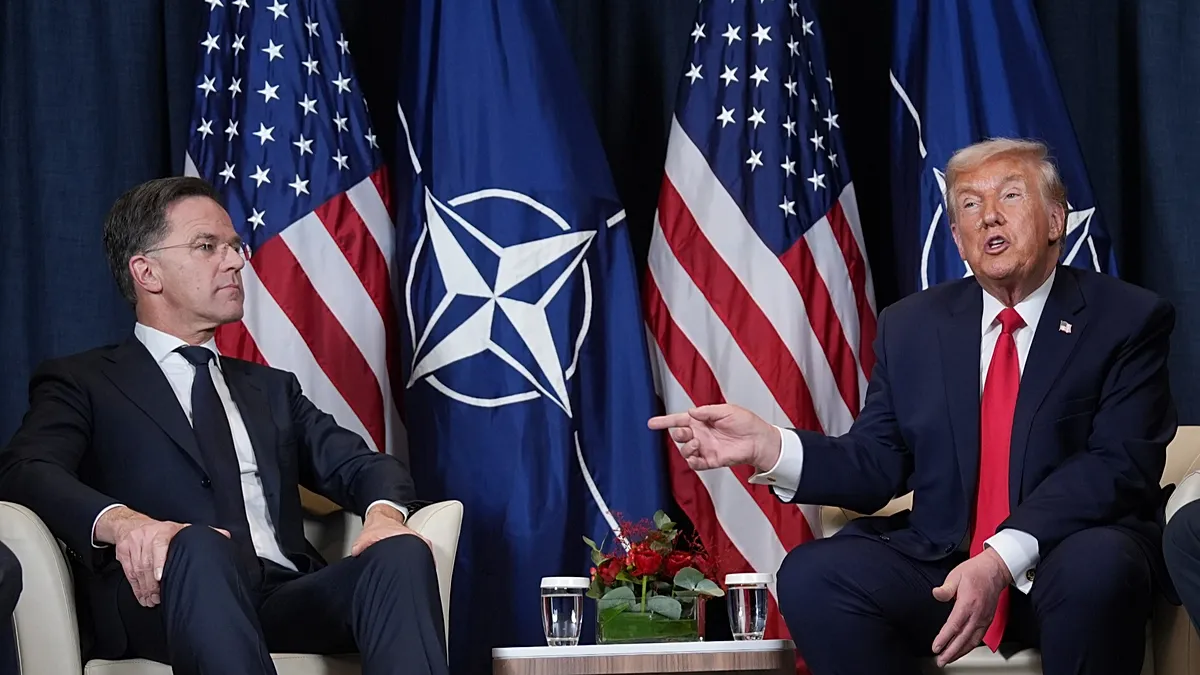
The latest announcement occurs amid strained relations between the U.S. and its NATO partners, largely due to President Donald Trump’s frustration with European countries’ reluctance to support his military actions in Iran. Trump has repeatedly criticized allies for not allowing U.S. planes to use their airspace and bases during the conflict, accusing them of being “cowards” who “don’t want to help.” In March, he tweeted about the need to reopen the Strait of Hormuz, stating that the U.S. must act decisively to ensure access to critical oil routes. His remarks underscore a broader ideological shift toward prioritizing Asian security over European defense commitments.
“Without the U.S.A., NATO IS A PAPER TIGER!” Trump wrote on social media, his frustration evident in the forceful tone of the message. “We will REMEMBER!” he added, referencing European nations like Spain, Italy, and France that had hesitated to back his campaign in Iran.
These criticisms have fueled a coalition of NATO allies and non-member states such as South Korea and Australia. The group has been working on a strategy to secure the Strait of Hormuz after hostilities subside, with several countries already deploying frigates and personnel to the region for pre-positioning. This proactive measure aims to ensure that the U.S. has alternative bases and routes to maintain its influence in the Middle East. However, the timing of the withdrawal has raised questions about whether the U.S. is preparing for a prolonged absence from Europe or simply adjusting its focus to meet new geopolitical demands.
Implications for European Deterrence
While the U.S. maintains that European allies are now capable of compensating for the reduced military presence, experts caution that the transition may not be seamless. The removal of deep strike capabilities, particularly the bombers and refueling assets, could leave NATO with a significant operational deficit. These assets have been crucial for rapid deployment and sustained air operations, especially in scenarios requiring quick intervention. Without them, NATO may need to rely more heavily on other nations’ forces or alternative strategies to maintain its deterrent posture.
The withdrawal also reflects a growing divergence in NATO’s strategic priorities. The alliance has long been a cornerstone of transatlantic security, but the U.S. is now positioning itself to focus on Asia, where it sees greater economic and military potential. This shift could lead to long-term consequences for Europe’s defense, as it becomes more dependent on its own resources. However, some analysts argue that the move is part of a necessary evolution, allowing NATO to adapt to modern security challenges while maintaining its core mission.
Despite the concerns, the U.S. remains committed to its role as a leader in NATO. The European Command’s statement highlights the importance of balancing contributions with strategic needs, ensuring that the alliance can effectively address global threats. As the details of the withdrawal are finalized, the focus will shift to how European allies respond. With tensions high and the future of NATO’s military structure in question, the next few months will be critical in determining the alliance’s ability to maintain its collective defense capabilities.
Europe’s defense posture is now at a crossroads. The U.S. has historically been the largest contributor to NATO’s military forces, and its reduction of long-range capabilities could force a reevaluation of the alliance’s strength. While European nations have made progress in bolstering their own defense spending and capabilities, the absence of U.S. assets may create a vacuum that needs to be filled. The question remains: can Europe stand alone, or will it require continued support from the U.S. to sustain its security in the face of evolving global threats?