Pakistan Train Bombing Kills At Least 24 People
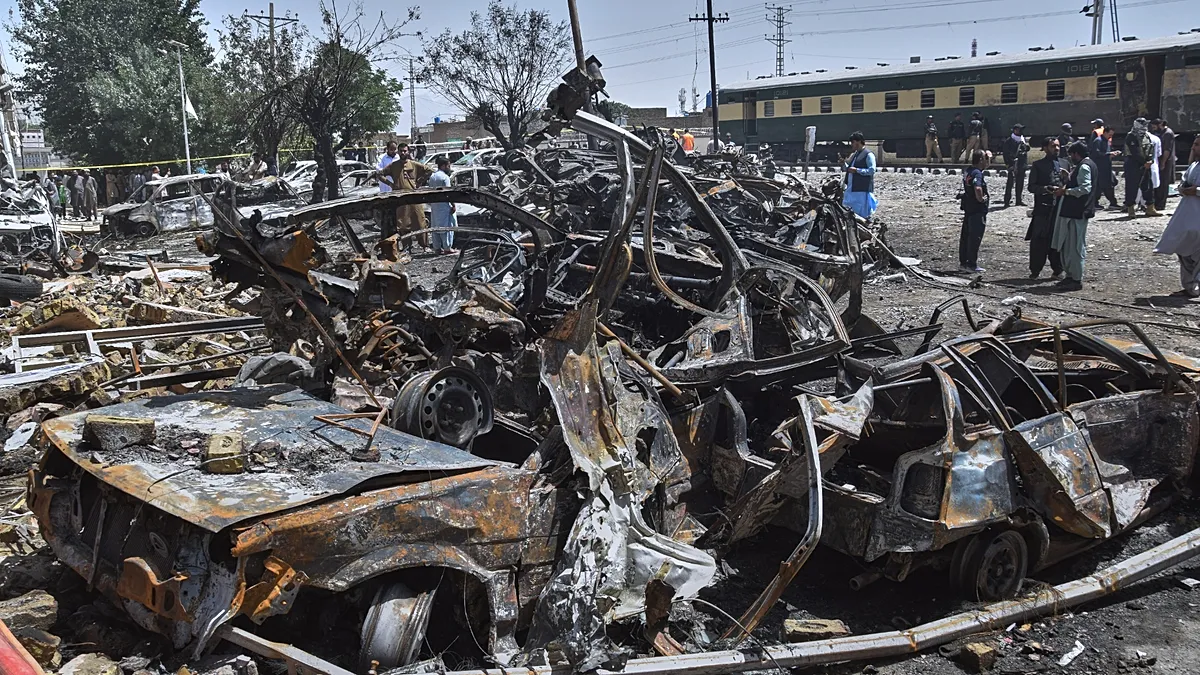
Pakistan train bombing kills at least 24 – On Sunday, a devastating bomb attack struck a train carrying military personnel in Pakistan’s southwestern Balochistan province, resulting in the deaths of at least 24 individuals. The incident, which occurred near Chaman Phatak in Quetta, the regional capital, has raised concerns about the security situation in the area and the ongoing threat posed by militant groups. Witnesses and officials described the aftermath as chaotic, with charred train carriages and debris scattered across the tracks, indicating the force of the explosion.
Initial reports suggest that the blast targeted the train as it was en route through Chaman Phatak, a region known for its history of separatist movements. According to a senior government official, the attack was executed by a vehicle loaded with explosives that collided with one of the train’s carriages. “An explosive-laden car hit one of the carriages,” the official stated to Agence France-Presse, “causing a significant blast.” The devastation left the area engulfed in flames and smoke, with survivors struggling to escape the wreckage.
The Balochistan Liberation Army (BLA), a separatist group striving to carve out an independent Balochistan, is believed to have carried out the attack. The BLA’s claim of responsibility underscores the region’s persistent struggle against central government authority. Such attacks are not uncommon in Balochistan, where militant groups have long targeted both civilians and security forces to destabilize the area. The latest incident has intensified calls for increased vigilance and security measures along the province’s transportation routes.
Prime Minister Shehbaz Sharif, who is currently leading the nation, issued a strong condemnation of the attack on social media platform X. In a statement, he referred to the explosion as a “heinous act” and emphasized its impact on the country’s collective morale. “Such cowardly terrorist acts cannot diminish the unwavering determination of the Pakistani people,” he said, vowing to support the families of the victims and aid the injured. The prime minister’s remarks reflect a broader political narrative of resilience in the face of adversity, a theme that has resonated throughout Pakistan’s history of dealing with insurgent threats.
Among those affected by the attack, Sherry Rehman, a prominent senator and former U.S. ambassador, highlighted the disproportionate impact on vulnerable groups. Rehman noted that the majority of the casualties were women and children who were en route to celebrate the Islamic festival of Eid. “The perpetrators of these atrocities should know that our citizens and security forces possess unbreakable resolve,” she added, urging the government to address the growing insecurity that plagues the region.
“An explosive-laden car hit one of the carriages,” the official stated to Agence France-Presse, “causing a significant blast.”
The incident has sparked renewed debate about the safety of public transportation in Balochistan, a province frequently cited as a hotspot for insurgency. Security experts warn that such attacks often occur during periods of heightened political tension or when militant groups seek to draw attention to their cause. The BLA, which has been active for decades, has previously claimed responsibility for bombings targeting government institutions, leaving a trail of casualties and disruption across the region.
Quetta, where the explosion took place, serves as a critical hub for military and administrative operations in Balochistan. The train route through Chaman Phatak is one of the busiest in the province, linking key urban centers and facilitating the movement of troops and supplies. The attack has disrupted daily routines and raised alarms about the potential for further violence in the area. Local authorities have begun investigating the incident, with preliminary findings pointing to the BLA as the likely perpetrators.
Rehman’s comments have drawn particular attention to the human toll of the attack, especially on the Eid celebrations. The festival, which marks the end of Ramadan, is a time of joy and communal unity, making the loss of life in such a context even more poignant. “The majority of the victims were women and children,” Rehman said, “a stark reminder of the indiscriminate nature of these attacks.” Her remarks also highlight the emotional and psychological impact on the families and communities affected by the violence.
“The perpetrators of such atrocities should know our citizens and security forces have spines of steel,” Rehman said.
As the investigation continues, the focus remains on understanding the motive behind the attack and ensuring accountability for those responsible. The BLA’s claim of responsibility not only confirms the group’s ongoing activities but also serves as a challenge to the Pakistani government’s authority in the region. Analysts suggest that the timing of the attack may have been chosen to maximize its symbolic and strategic impact, particularly during a period of national reflection following recent political developments.
In addition to the immediate casualties, the attack has caused widespread panic among commuters and military personnel. Emergency services were quickly dispatched to the scene, but the dense rubble and burning debris made rescue operations challenging. At least 24 people are confirmed dead, with several others reported missing, prompting fears of a higher toll as the situation is assessed. The provincial government has pledged to provide assistance to the affected families and to intensify security measures in the region.
The incident has also reignited discussions about the need for better coordination between security agencies and the local population to preempt such attacks. Balochistan’s rugged terrain and dispersed communities have historically made it difficult to monitor and control, creating opportunities for militant groups to operate with relative impunity. With the Eid celebrations in full swing, the attack has served as a somber reminder of the ongoing conflict and the risks faced by those in the region.
As the nation mourns the victims, the government has vowed to take decisive action against the BLA and other militant groups. Prime Minister Shehbaz Sharif’s statement on X reaffirmed the country’s commitment to eradicating terrorism, even as the attack underscored the challenges ahead. The emotional weight of the event has united Pakistanis in solidarity, with many expressing support for the victims and the resilience of the people in the face of such tragedies.
Meanwhile, international observers have expressed concern over the escalating violence in Balochistan, a province that has long been a focal point of separatist aspirations. The attack adds to a list of incidents that have drawn attention to the region’s political instability and the increasing militarization of its security forces. As the investigation progresses, the world will be watching to see how Pakistan responds to this latest act of terrorism and whether it can bring stability to the area.